Table of Contents
This updated guide explores OpenAI launches GitHub connector for ChatGPT deep research with practical details, clear explanations, and useful takeaways. OpenAI has just introduced a major new feature to its ChatGPT Deep Research tool: a connector that allows users to directly access and analyze content from their GitHub repositories.
Deep Research and New Capabilities from GitHub
Launched in February 2024, Deep Research is designed to automate multi-step research tasks, searching, analyzing, and synthesizing information from online sources, generating detailed reports — saving time compared to manual research. A stripped-down version was later made available for free and to paid users beyond the limit.
With the GitHub connector, Deep Research can now access private/public source code, README files, and technical documentation in connected repositories. OpenAI says ChatGPT will analyze live data in real time, allowing users to ask questions about source code repositories or technical documentation. The tool reads, interprets, and cites relevant code snippets in its responses.
Speaking about the new feature, Nate Gonzalez, Head of Enterprise Products at OpenAI, shared on LinkedIn:
I often hear feedback from users that they want Deep Research to connect to internal data sources, Along with web data. Now you can connect to a repository, ask a question, and ChatGPT will analyze the actual source code and technical documentation — returning a comprehensive, citation-filled report in just minutes.
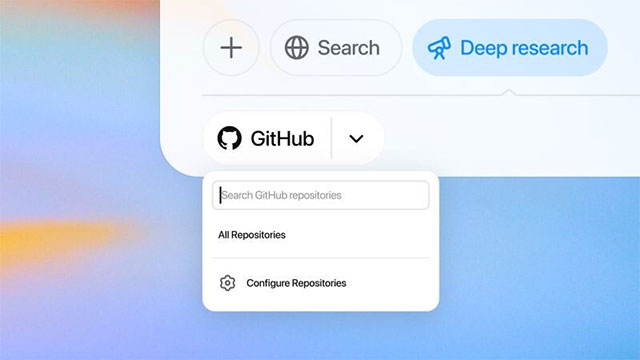
Availability and Setup
The GitHub Connector is currently in beta, rolling out first to ChatGPT Team users and gradually expanding to Plus/Pro globally (excluding the European Economic Area, Switzerland, and the UK). Enterprise access will be announced later.
To connect, just follow these steps:
- open Deep Research's editor interface or the " Connected apps " section in settings.
- Authenticate ChatGPT connector access on GitHub .
- Select the specific repository you want to connect to.
OpenAI notes that ChatGPT respects organizational permissions — you can only grant permissions to repositories you already have permission to view.
When it comes to privacy and usability, there are a few things users should remember:
- For enterprise customers (Team, Enterprise, Edu, API): Content is not used to train the default model.
- Free, Plus, Pro users: Content can improve models if the "Improve models for everyone" option is enabled (custom toggle in settings).
- After connecting, the archive may take ~5 minutes to show up on ChatGPT.
- Newly created or private repositories may require reconfiguration of access permissions via GitHub settings.
- GitHub admins sometimes need to approve connectors.
- Only search archive name, not specific file directly in ChatGPT.
GitHub integration makes Deep Research a powerful tool for programmers and development teams, optimizing the process of analyzing source code and technical documentation.
FAQ
What is the main takeaway about OpenAI Launches GitHub Connector for ChatGPT Deep Research?
The key is to understand the core idea, compare the available options, and apply the practical guidance that matches your situation.
What should beginners know about OpenAI Launches GitHub Connector for ChatGPT Deep Research?
Start with the essential steps and terminology. Avoid changing advanced settings until you understand how they affect performance, privacy, cost, or compatibility.
How can I use this information in practice?
Follow the relevant section in order, test one change at a time, and confirm the result before moving to the next step or recommendation.
Related Articles
 What Is ChatGPT Deep Research?6 minutes read
 OpenAI Unveils Deep Research, a New AI Agent That Can Complete4 minutes read
 OpenAI's Smartest ChatGPT Model Behaves Strangely4 minutes read
 ChatGPT Launches New Shopping Research Feature: Smarter, More Personalized4 minutes read
 8 Ways to Use ChatGPT's Deep Research Tool8 minutes read
 Microsoft Publicly Released MS-DOS Source Code on GitHub3 minutes read
Reader Comments 0
Sign in with email or Google to join the discussion.