Table of Contents
Jobs that are likely to be replaced by AI tend to share a few common characteristics: repetitive work, high levels of digitization, and low need for physical presence or deep personal connections.
Jobs that are likely to be replaced by AI Tend to share a few common characteristics: repetitive work, high levels of digitization, and low need for physical presence or deep personal connections. Here are The jobs that are likely to be replaced by AI in the future.

Legal: From Assistant to Attorney
Artificial intelligence excels at processing and summarizing legal documents, making paralegals, legal assistants, and junior associates prime targets for replacement. Tools like Allen & Overy's AI "Harvey" are helping thousands of lawyers draft contracts and sift through case law, for example.
That said, AI also has its drawbacks. In a widely publicized case in the United States, a law firm was forced to apologize to a judge after ChatGPT falsified legal citations. For now, human oversight remains essential. On the other hand, to survive, the legal system needs to be leaner, with lawyers focusing on strategy and client relations while AI handles the day-to-day tasks.
Education: AI tutors and comprehensive online teaching technology
Chegg announced it would cut 22% of its workforce by 2025 after students began using free AI tools like ChatGPT to help with homework. Private tutors, test prep teachers, and content writers are also losing ground as AI becomes more adept at creating custom tests, essays, and language practice sessions.
The World Economic Forum predicts that education will create more jobs overall, but these roles will likely shift toward consulting and face-to-face interactions. In fact, the ability of education to integrate AI into personalized learning will open up even more possibilities.
Customer Service: Chatbot in Call Center
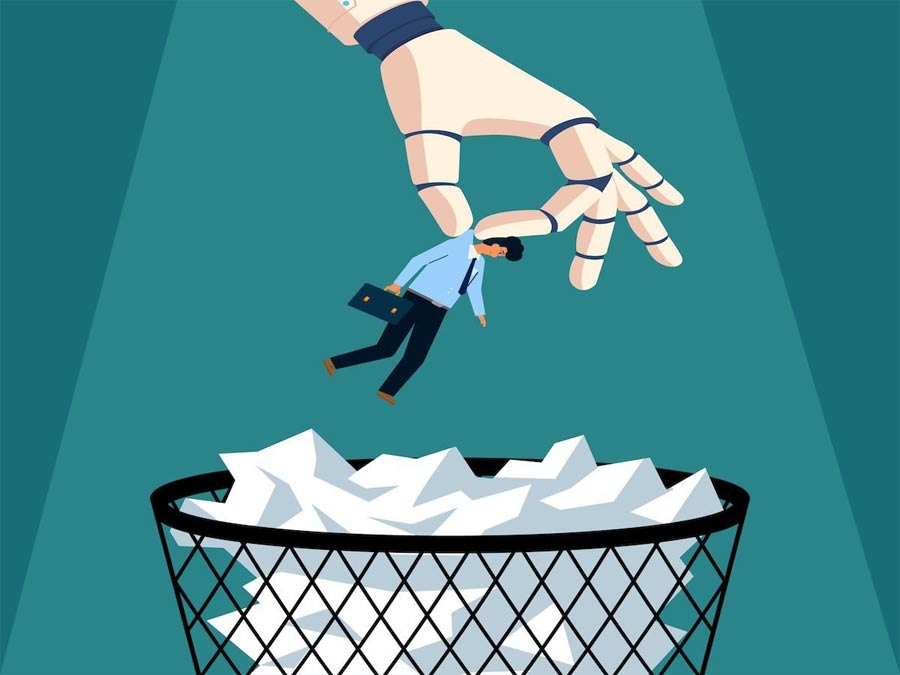
This is clearly the profession most vulnerable to AI. Startups and large telecoms are deploying chatbots for level 1 queries (basic frequently asked questions), cutting out a huge amount of support staff.
After Dukaan cut staff and switched to AI agents, the company reported response times dropped from hours to under two minutes. Seemingly overnight, AI tools could help handle FAQs in multiple languages, respond quickly, and even collect live account data.
Media: Creative Writer and Reporter
Many media companies have already experimented with AI-powered content creation. BuzzFeed, for example, switched to AI-generated quizzes while shuttering its news division. But, as with legal matters, this transition and use has not been without its flaws: CNET has published dozens of AI-generated articles that were later found to contain factual errors and plagiarism.
Microsoft's own research ranks journalists, writers, and authors as the professions most exposed to AI. Formulated content—SEO blogs, sports recaps, product descriptions—and anything that's easy to produce at scale puts pressure on writers.
Human journalists focus on investigative and creative work that AI can never match. But the risk is that the cost-cutting benefits will push newsrooms toward using 'good enough' machine content.
KOL on Instagram and TikTok
Just three months ago, you could still tell a photo was generated by AI; now you can't. Videos generated by advanced tools like VEO3 are becoming nearly indistinguishable from reality, especially given the limited maximum resolution of Instagram Reels, which hides fine details.
In practice, the era of the smartphone as a staple blogging tool is coming to an end. You no longer need a camera, or even a real person, to create celebrity-quality images. All you need is an idea, and the AI platform will take care of the rest.
Three years ago, charisma and looks could get you the attention of a large audience. Today, that path is rapidly closing. AI is dominating the space, with young creators being recruited to help create hyper-realistic 'fashion influencers' that can surpass real people in both popularity and engagement.
The upcoming career transition may occur in three stages:
1. Augmentation: AI boosts individual productivity. Recruitment needs decrease as each employee's productivity increases.
2. Partial automation: A significant portion of roles are delegated to AI; humans focus on monitoring, complex cases, or creative strategies.
3. Complete transformation: In some fields, entire roles disappear or occupations shrink.
In short:
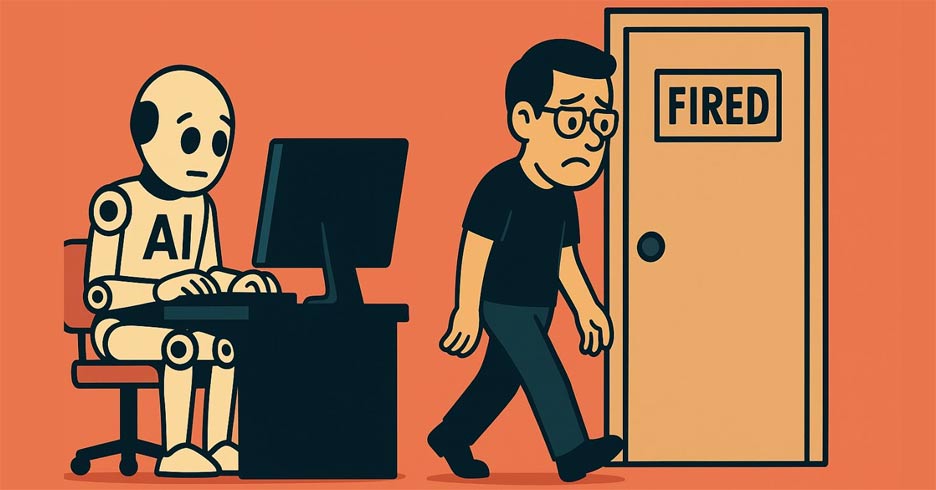
As AI continues to innovate, professions built on routine knowledge tasks — from call center agents to paralegals and copywriters — face immediate risk , while others are being reshaped to work in tandem with AI.
Whether this transition becomes a story of mass displacement or a " Springboard " for new opportunities will depend on the pace at which individuals, companies and policymakers move.
FAQ
What should you know about jobs at risk of being eliminated by AI in the future?
In practical terms, jobs that are likely to be replaced by AI tend to share a few common characteristics: repetitive work, high levels of digitization, and low need for physical presence or deep personal connections.
Why does jobs at risk of being eliminated by AI in the future matter?
The article highlights that here are the jobs that are likely to be replaced by AI in the future.
What is the main takeaway?
The main takeaway is that in short: As AI continues to innovate, professions built on routine knowledge tasks — from call center agents to paralegals and copywriters — face immediate risk , while others are being reshaped to work in tandem with.
Related Articles
 Robots Take Away Their Current Jobs, but They Also Create 20 New8 minutes read
 E-Mail Is in Danger of Being Deleted1 minutes read
 Microsoft CEO: Robot Will Never Replace People in the Future7 minutes read
 Steve Jobs and Eight Words of 'Thunder' Have Come True in the18 minutes read
 By 2028, 45% of Jobs in the Technology Sector Will Be Freelance5 minutes read
 7 Signs That Its Time for You to Switch Jobs Before Its Too Late9 minutes read
Reader Comments 0
Sign in with email or Google to join the discussion.