Table of Contents
Intel confused everyone when it launched the Core i5-110 in 2025, which is actually just a renamed 10th-generation Core i5-10400.
In an extremely confusing move, Intel has just re-released a processor model from the 10th generation and re-released it after… 5 years.
Core i5-10400 returns as Core i5-110
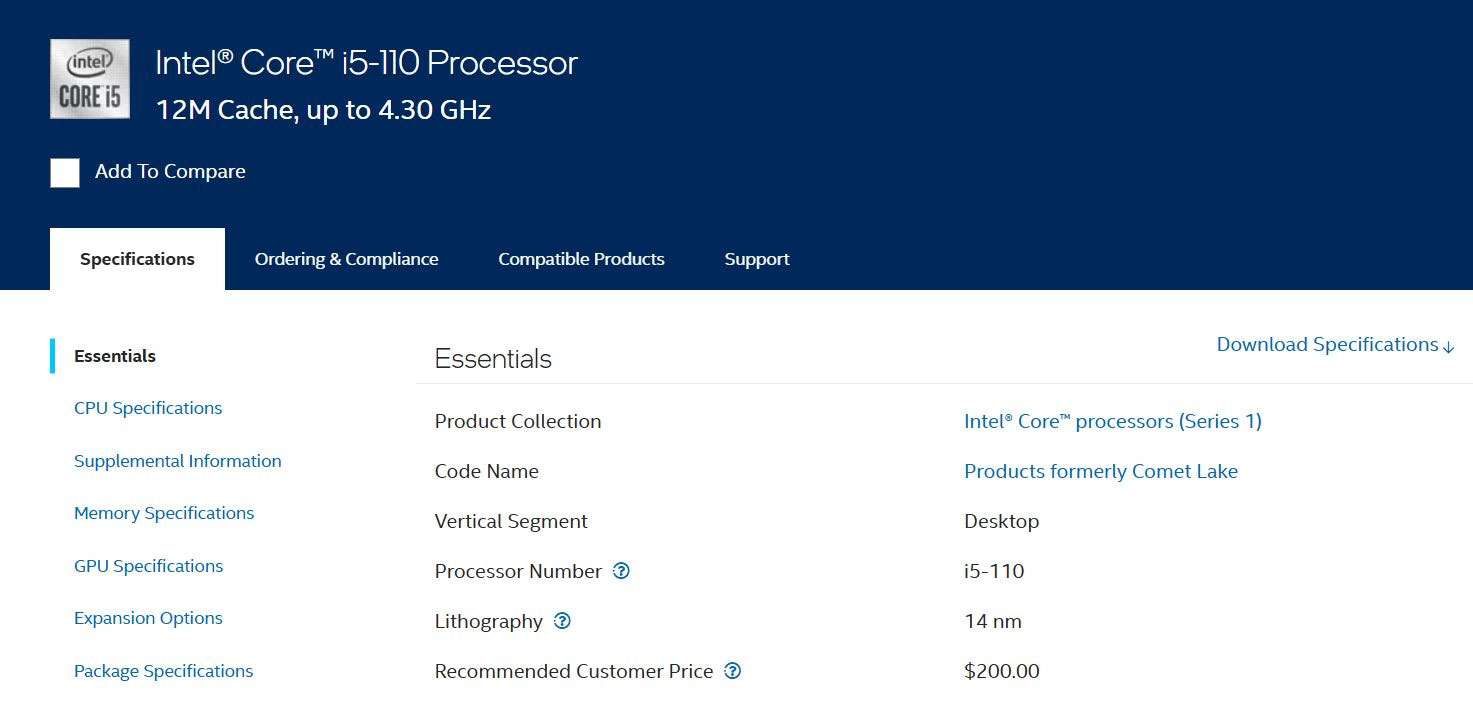
According to the official product page, Intel has just announced a new CPU called Core i5-110. But in fact, this is not the Core Ultra 5 or Core 5 (Raptor Lake Refresh) series, but belongs to the 10th generation Comet Lake, which was launched in 2020.
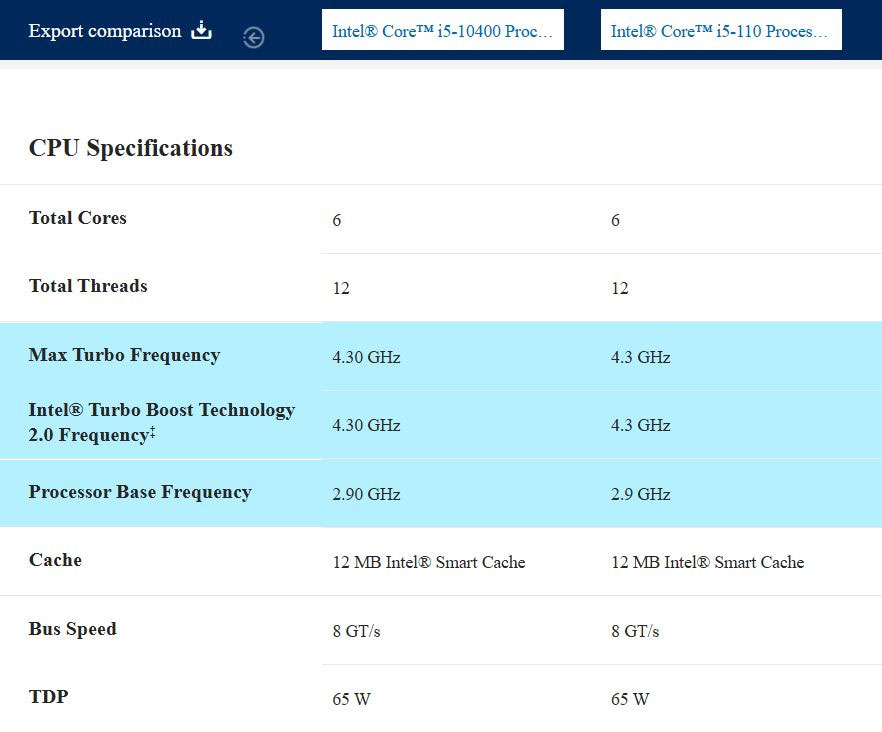
In other words, Intel has 'reborn' the Core i5-10400 and just renamed it the Core i5-110. This chip has a 6-core, 12-thread configuration, manufactured on a 14nm process, and is completely identical to the original. When comparing the parameters, there is no difference at all — meaning this is not even an upgrade or refresh, but just. a rebranding.
Launched but not for sale yet
Intel's website says the Core i5-110 will be released in Q3 2025. However, we haven't seen it in retail stores yet. And even if it did, spending around $200 on an older Comet Lake CPU on the (now discontinued) LGA 1200 socket would be almost unreasonable.
Perhaps the only reasonable choice is if the user already has an LGA 1200 motherboard, or can buy a CPU + motherboard combo for only about 100 USD. In addition, the Core i5-110 has almost no appeal.
This move has the tech community wondering: Why would Intel want to revive a platform that has been 'dead' for 5 years? There is no official answer yet, but this is certainly one of Intel's strangest moves in recent times.
FAQ
What should you know about intel unexpectedly revives core I5-10400 as core I5-110 after 5?
In practical terms, intel confused everyone when it launched the Core i5-110 in 2025, which is actually just a renamed 10th-generation Core i5-10400.
Why does intel unexpectedly revives core I5-10400 as core I5-110 after 5 matter?
The article highlights that core i5-10400 returns as Core i5-110 According to the official product page, Intel has just announced a new CPU called Core i5-110.
What is the main takeaway?
The main takeaway is that in other words, Intel has 'reborn' the Core i5-10400 and just renamed it the Core i5-110.
Related Articles
 Top 5 Best Intel Cpus 20228 minutes read
 What's the Difference Between Intel Core and Intel Core X Cpus?8 minutes read
 What Is Intel's New Core i9 CPU Line?6 minutes read
 Learn About E-Core and P-Core in Intel Cpus8 minutes read
 Should I Choose Intel Core i9, Core i7 or Core i5 CPU?10 minutes read
 Does Your Computer Need Intel Core i3, i5 or i7?12 minutes read
Reader Comments 0
Sign in with email or Google to join the discussion.