Table of Contents
This updated guide examines How to Zoom in and Out of Word Documents and organizes the essential facts, background, and practical takeaways in clear American English.
- Zoom in, zoom out computer screen with Magnifier on Windows 7
- Tricks showing the Ribbon toolbar in Word 2013
- How to reduce image sizes in Word 2007, 2010, 2013, 2016
- How to reduce the size of the Word file
Method 1: Zoom in and out of Word with the Zoom bar
The zoom bar is located just below the Word interface on the left for users to use and quick access when needed. If you drag to the right, you increase the zoom level . At this time the page interface will increase in size so we can see better.

If we reduce the percentage of zooming in the Word page , then we will be able to track multiple pages of documents on one screen.

Method 2: Zoom in and out with the Zoom tool
This Zoom tool has more options to zoom in or out of the Word document interface. At Word interface, click on View tab and click on Zoom tool as shown below.
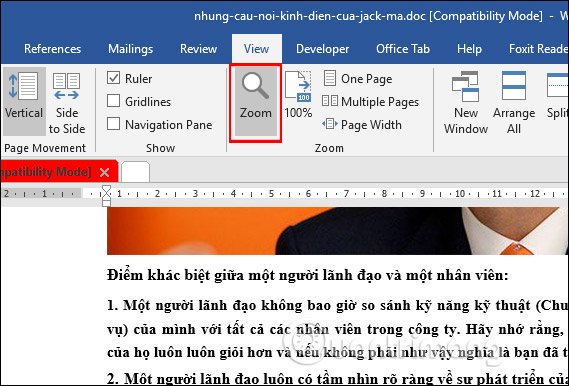
This time display interface Zoom dialog box as shown below. Here users will see the option to enlarge or reduce the Word document page at the given percentage, or you enter the specific percentage in the Percent box. Besides, users also have many display options depending on the screen size of the device such as full screen or half screen, or choose to view multiple pages. Finally click OK to apply.

In addition, we can also press the Ctrl key and use the middle mouse wheel to zoom in or out on the screen interface. This action is applicable to the browser interface, not just the Word document.
In case we use the touch screen, just use two fingers to zoom in and out of the interface on the touch screen.
Zooming in on Word is very simple and you can do it in many different ways. Depending on the convenience of the user, we choose the appropriate operation.
Hope this article was helpful to you!
FAQ
What is How to Zoom in and Out of Word Documents about?
It provides a structured overview of zoom in and out of words, explains the main context, and highlights practical takeaways for readers.
Why does this topic matter?
Understanding the main concepts helps readers evaluate the issue, avoid common mistakes, and make better-informed decisions.
How should readers use this information?
Use the guidance as a practical starting point, confirm details that may have changed, and follow current product, safety, or security recommendations.
Related Articles
 How to Fix Zoom in and Out Error in Word?4 minutes read
 How Does the Word in Microsoft Word Jump?: Word Error Jumps Word4 minutes read
 How to Zoom in and Out of Text in Word3 minutes read
 Word Cannot Zoom, What Should I Do: Key Facts6 minutes read
 Microsoft Adds a New Zoom Shortcut in Word3 minutes read
 How to Print Documents, Print Files Word 2013, 2016, 2010, 20075 minutes read
Reader Comments 0
Sign in with email or Google to join the discussion.