Table of Contents
An air fryer can give food a crisp surface with less added oil than deep-frying. To use it well, leave room for hot air to circulate, follow instructions for the food and appliance, and check meat with a food thermometer. A browned exterior does not guarantee a safely cooked center.
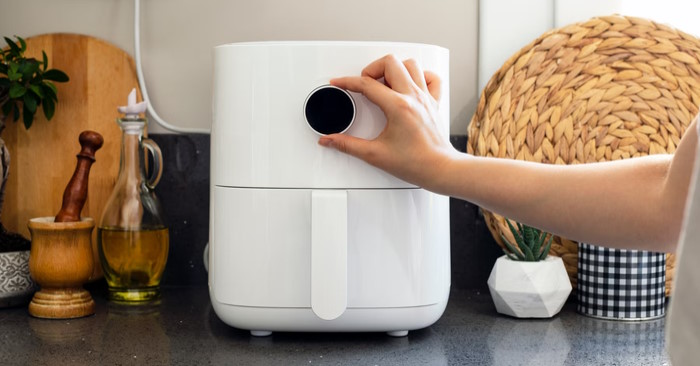
What air frying changes about a meal
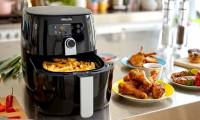
An air fryer is a small convection oven: a fan moves hot air around the food. The principle of air-fryer cooking differs from immersing food in hot oil.
Using less oil can reduce the fat and energy added during cooking. The final nutritional value still depends on ingredients, portions, coatings and sauces. Pre-fried frozen snacks do not become nutritionally equivalent to vegetables simply because they are air-fried.
Choose food and oil for the recipe
Firm vegetables such as cauliflower, broccoli, peppers and sweet potato work well when cut into similar-sized pieces. Chicken, turkey and fish are also options, but each requires its own cooking method and safety checks.
Apply a thin coating of oil when a recipe needs it, rather than filling the basket with oil. Foods already coated in oil or rich in fat may need little or none. Olive oil and avocado oil are options; they are not the only suitable oils. Choose an oil intended for the recipe’s temperature and avoid letting it smoke.
Loose leafy greens, wet batter and ingredients that need to absorb water can behave poorly in a basket-style appliance. See examples of foods that need extra care in an air fryer, then check your model’s instructions rather than treating every example as a universal ban.
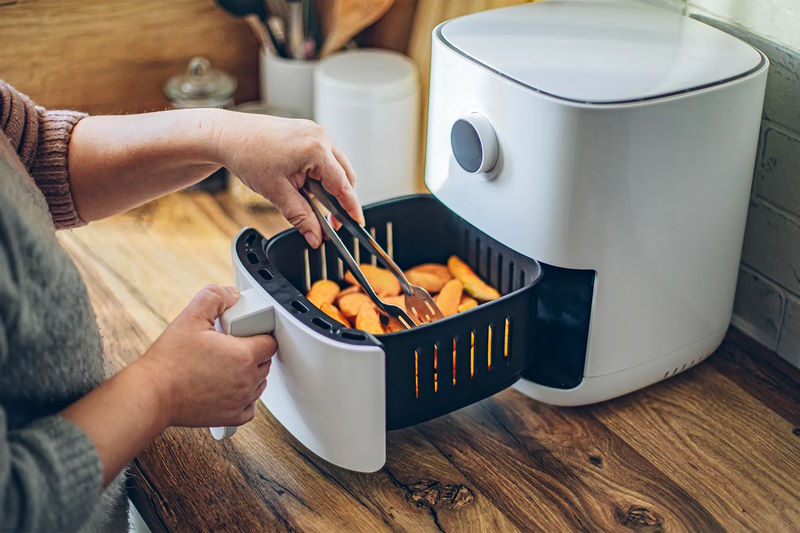
Set up for even cooking
- Follow the appliance manual. Use a stable, heat-resistant surface and leave the specified clearance around vents. Preheat only when the instructions or recipe require it.
- Avoid overcrowding. Use an even layer with space between pieces where practical. Cook in batches if the basket is too full.
- Use the correct temperature. There is no single setting for all foods. For reference, 350°F is about 177°C, 375°F about 190°C and 400°F about 204°C.
- Turn or shake when instructed. Handle the hot basket carefully and check progress before the end of an unfamiliar recipe.
Use internal temperature for food safety
The USDA’s air-fryer safety guidance recommends checking these minimum internal temperatures with a food thermometer:
| Food | Minimum internal temperature |
|---|---|
| Chicken and other poultry, including ground poultry | 165°F / 74°C |
| Ground beef, pork, veal or lamb | 160°F / 71°C |
| Fish | 145°F / 63°C |
| Whole cuts of beef, pork, veal or lamb | 145°F / 63°C, followed by a 3-minute rest |
Check the thickest part, away from bone, and check multiple pieces when sizes vary. A universal “20 minutes at 400°F” rule is unsafe. For raw stuffed breaded chicken products, USDA advises against air-fryer cooking: follow the package’s tested method.
Limit over-browning and keep the appliance clean
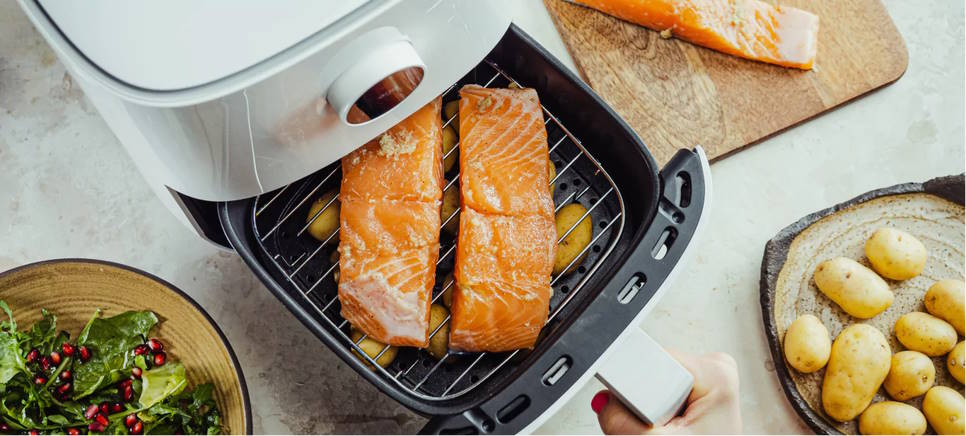
For potatoes and other starchy foods, aim for golden yellow or lighter rather than dark brown or burnt. This follows Food Standards Agency guidance on reducing acrylamide. Lower browning does not replace the internal-temperature checks for meat.
After use, unplug the appliance, let it cool and clean accessible surfaces as the manual directs. Remove grease and crumbs; do not immerse the electrical unit. Refrigerate leftovers within two hours.
University of Birmingham experiments found lower cooking emissions than other frying methods under the conditions tested, but food type and residue affected emissions. Keep kitchen ventilation running during cooking and clean the appliance regularly.


Reader Comments 0
Sign in with email or Google to join the discussion.