Table of Contents
Chen Tianqiao – China's first gaming billionaire – is investing over $2 billion to develop AI that can surpass human intelligence.
Chen Tianqiao conquered China's gaming industry in the early 2000s and beorangee one of the country's richest people. However, after experiencing mental health issues, he abandoned his business empire.
Currently, Chen is embarking on a new journey in the US with a far more ambitious goal: to find the 'source code' of human consciousness in order to create artificial intelligence that is smarter than humans.
From Gaming Billionaire to AI Researcher
Chen used the wealth accumulated from his previous successes — including Shanda Interactive Entertainment's 2004 Nasdaq listing following the success of the game The Legend of Mir II — to develop a type of AI he called 'discoverative AI'.
According to Chen, this is a form of artificial intelligence capable of independently discovering new knowledge, rather than simply imitating how humans create content like current large-scale language models.
He explained that his goal was not to create AI to replace humans, but to build systems that could do things that humans could not.
"I want to create AI not just to replace humans, but to do things that humans can't do, to help humans advance further," Chen said.
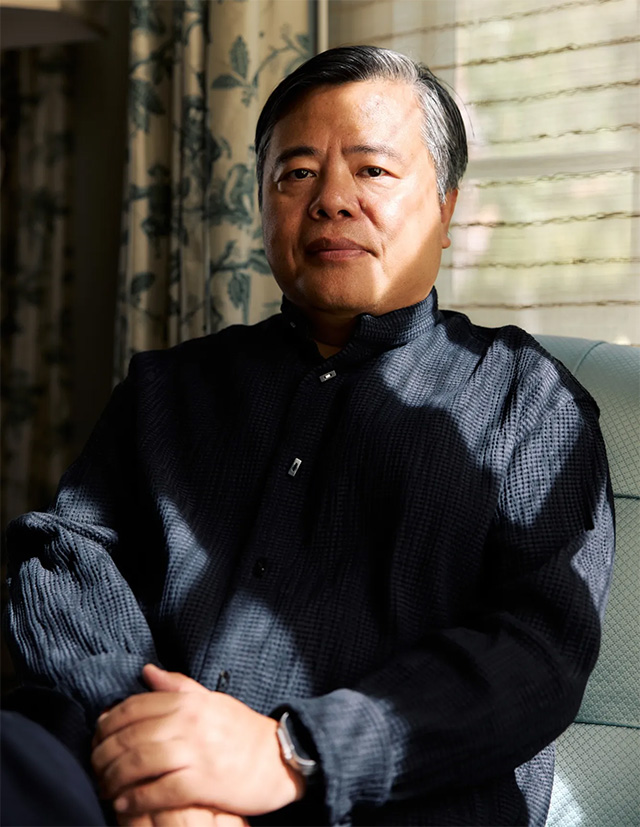
In his first interview with international media in nine years, he stated that the goal of discoverative AI is to uncover new knowledge and predict complex real-world events by combining long-term memory, causal reasoning, and predictive modeling.
Chen and Shanda Group plan to invest more than $2 billion in this project, including incubating AI startups and developing their own technology.
Ambition Towards AGI
The technology that Chen pursues is often referred to as Artificial General Intelligence (AGI) — a form of AI that can perform many intellectual tasks similar to those of humans.
If achieved, AGI could help humans plan responses to natural disasters, discover new drugs, or solve complex scientific problems.
Chen said he is also experimenting with using AI to make smarter investment decisions, predict geopolitical events, or even forecast outcomes on prediction betting platforms like Polymarket.
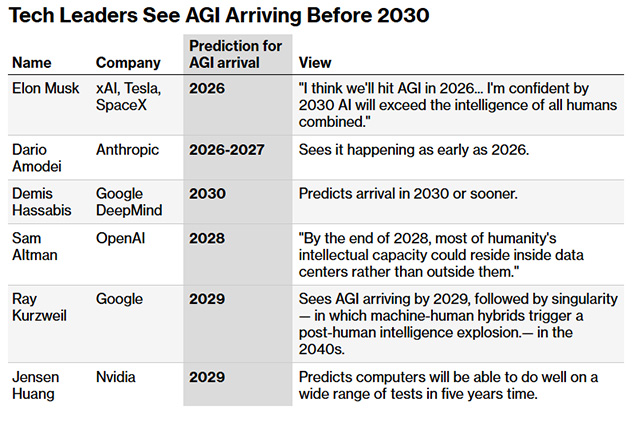
While many experts remain skeptical about when AGI will emerge, fewer and fewer people believe that this technology will take decades to become a reality as previously predicted.
The Ups and Downs of a Tech Billionaire's Career
As the leader of Shanda in the early 2000s, Chen emerged as a highly influential tech entrepreneur, at one point even surpassing Alibaba Group's Jack Ma in terms of industry attention.
However, panic attacks forced him to withdraw from the media spotlight. Chen took his gaming company private in 2012 and sold it in 2014.
After living in Singapore for a while, he moved to the United States and transformed Shanda into a technology investment platform with a portfolio ranging from the stock market to venture capital.
Chen has invested in companies such as Legg Mason, LendingClub, and Sotheby's. However, due to regulations related to his Chinese nationality, he cannot participate in the boards of directors or have a significant influence on the management of these businesses.
As US-China tensions escalated during Donald Trump's first term, Chen shifted to passive financial investing. While this helped increase his wealth, it didn't bring him much personal meaning.
In the US, Chen has become increasingly interested in research on the human brain. He has committed $1 billion to this field and is collaborating with the California Institute of Technology.
Shanda has also become a major investor in brain-computer interface (BCI) technology, a field that Elon Musk is pursuing through Neuralink.
This technology allows the conversion of neural signals into digital commands, thereby stimulating specific brain regions to aid in the treatment of neurological conditions such as epilepsy and Parkinson's disease.
Build Your Own AI Infrastructure
As the wave of generative AI exploded in recent years, Chen began to focus on developing advanced AI.
Although his investment is much smaller than that of companies like OpenAI, Chen says his goal is not just to scale the model but to achieve breakthroughs in AI's cognitive architecture.
He also allocated an additional $1 billion to build data processing and computing infrastructure.
Chen plans to utilize the approximately 700,000 acres of forest he purchased in 2018, primarily in Oregon (USA) and Ontario (Canada), to provide a stable source of clean energy for his AI data centers.
He said he is researching the possibility of using geothermal energy to build a computing center in the US and open it up to AI scientists worldwide.
The initial phase will be a pilot computing center with a capacity of a few megawatts, costing approximately $300–500 million.
Chen believes that developing AI that is more powerful than humans could be the biggest turning point in the history of technology.
According to him, humanity is creating a form of intelligence that can surpass its own capabilities.
He also rejected the notion that AI is currently in a 'technological bubble'.
Chen even joked that in the future, history might no longer be divided into before and after Christ, but rather into 'Before ChatGPT' and 'After ChatGPT' — alluding to the advent of ChatGPT.
"We're only in the third year of the post-ChatGPT era," he said. "The future of AI is still a very long journey."
FAQ
What is the main point of china's first gaming billionaire wants to create ai?
Chen Tianqiao – China's first gaming billionaire – is investing over $2 billion to develop AI that can surpass human intelligence.
Why is this development important?
Key takeaway: Chen Tianqiao – China's first gaming billionaire – is investing over $2 billion to develop AI that can surpass human intelligence.
What are the key takeaways?
Chen Tianqiao conquered China's gaming industry in the early 2000s and beorangee one of the country's richest people.
Related Articles
 Dogs Have the Ability to Think Like Humans, Even Smarter Than Children5 minutes read
 Play Monopoly Plus, Ubisoft's 'Billionaire Chess' Free3 minutes read
 The Secret to Being Smarter Than the Smarter Person Than You5 minutes read
 Less Than Surfing Facebook, the Following 16 Daily Routines Will9 minutes read
 AI Platforms Can Learn from Experience Just Like Humans11 minutes read
 Interesting Things You May Not Know at Billionaire Jack Dorsey8 minutes read
Reader Comments 0
Sign in with email or Google to join the discussion.