Table of Contents
This updated guide examines Mice: How to Teach Children How to Use the Mouse? and organizes the essential facts, background, and practical takeaways in clear American English.
Being able to use a mouse proficiently is useful for many things, from playing games, navigating the Internet to creating digital artwork and potentially a child's future career.
However, initially, the use of the mouse is not easy because children need to understand and develop good cursor control, along with many other skills such as click, double click, right click, drag, scroll, etc.. Children often need a bit of time to learn and practice these skills. Luckily, there are some great options available to help kids do this!

How to hold the mouse properly
Learning how to hold the mouse properly is very important in helping children can use the mouse quickly and effectively. It is important to learn this early because improperly manipulating mouse movements can become a habit to be difficult to quit later.
To keep the mouse properly, you should:
- Place your palm on the mouse body.
- Place your thumb next to the mouse closest to the computer.
- Place your index finger on the left button.
- Place your middle finger on the right button.
- Place the remaining fingers on the far side of the mouse.
- The wrists should be straight at the angle of the arm and not crooked to the sides or higher or lower.
Here are some images that help visualize mouse holding correctly:

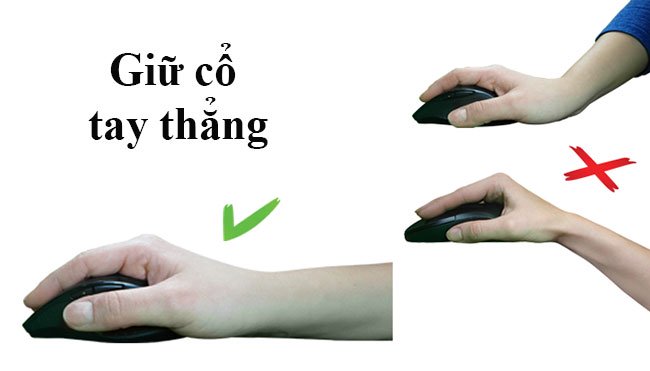
Use mouse
Here are some tips for using the mouse:
- When moving the cursor, look at the screen, not your hand.
- To click once, use your index finger to press and release the left mouse button.
- To double-click, quickly press the same button twice without pulling your finger out.
- To drag an item, click it and hold the left mouse button, then move the mouse.
- To drop an item, drag it to the position you want, then release the mouse button.
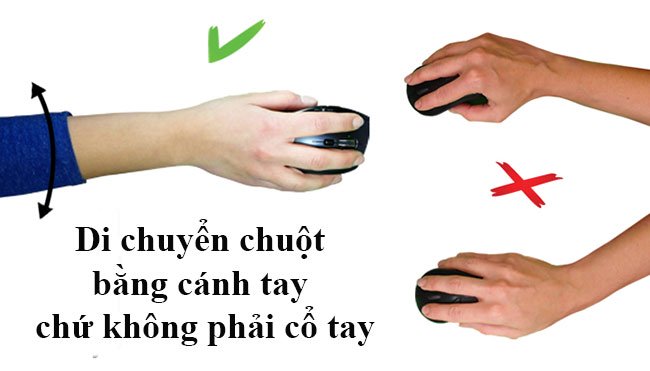
Remember when using a mouse, keep the wrists straight and move the mouse with your arms, not your wrists, as in the following image:
Develop mouse skills
The best way to help your child develop mouse skills is through practice. This means giving your child the opportunity to use a computer with a mouse. Instead of giving them more time to use electronics, you might consider swapping your tablet time for practice time on a PC or laptop.
Using the mouse to open files or navigate the Internet is a good way to get started. Kids also like using programs like Paint, great for developing cursor and mouse control skills, and also for lots of fun, creative experiences!

Practice using the mouse
There are many great online resources and games available to help children practice their mouse skills. Here are just a few suggestions you can try:
- Mouse and Pointer Tutorial
- My Computer Mouse
http://learnenglishkids.britishcouncil.org/songs/my-computer-mouseFAQ
What is Mice: How to Teach Children How to Use the Mouse about?
It provides a structured overview of mice, explains the main context, and highlights practical takeaways for readers.
Why does this topic matter?
Understanding the main concepts helps readers evaluate the issue, avoid common mistakes, and make better-informed decisions.
How should readers use this information?
Use the guidance as a practical starting point, confirm details that may have changed, and follow current product, safety, or security recommendations.
Related Articles
 Learn How Jews Teach Children to Communicate from a Young Age5 minutes read
 How to Talk and Confide in Your Children Effectively4 minutes read
 8 Important Things That Every Father Must Teach His Son7 minutes read
 The Story Is Worth Pondering About an American Mother Who Teaches7 minutes read
 Old - fashioned Manners That Every Parent Should Teach Their Children8 minutes read
 Ask Your Child These 4 Questions Every Day, if You Want4 minutes read
Reader Comments 0
Sign in with email or Google to join the discussion.