Table of Contents
This updated guide examines How to Automatically Open Google Search Results in a New Tab and organizes the essential facts, background, and practical takeaways in clear American English.
That is why it is advisable to open the search results in a new window tab whenever you click on a prominent link among Google search results. This is how you can set Google to do so automatically.
Open link in new tab
Open the browser and go to the Google homepage.
At the bottom of the page are some options related to how you interact with the site. The last of these options, on the right, is Settings .
Select this option and a new window will appear right above it.

Select the Search Settings tab from the pop-up list and you will be taken to the Google settings page to control various aspects of the search engine for the browser.
Scroll down this page until you see a section titled 'When Results Open' . Below this section is the 'Open Each Selected Result in a New Window' option .

Click the box next to the option and a checkmark will appear there. Scroll to the bottom of the page and select the 'Save' option highlighted in blue.
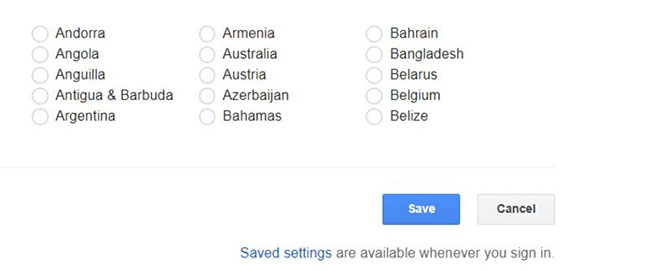
A message will appear on the screen confirming that the new setting has been saved. The next time you open the Google search results link, it will automatically open in a new tab next to the opened window.
Alternative method
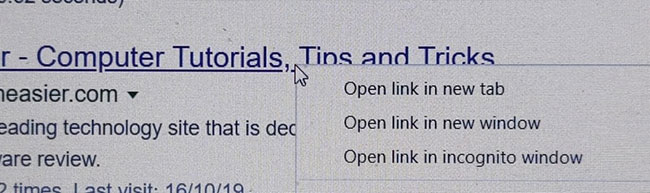
There is another way to open certain links in a new tab. You can click the link with the middle mouse button (or mousewheel). Alternatively, move the mouse pointer over the link you want to open in a new tab, and then right-click the link. A list of options will appear containing things you can do with the link. Here you can choose any of the 3 options:
- Open link in new tab : The link opens in a new tab.
- Open link in new window : The link will open in another window. You can use this option, if you have opened multiple tabs in one window and want to start a new search line on another research topic.
- Open link in incognito mode : This option means the link will open in an incognito window. Incognito mode prevents the browser from keeping a log of websites you visit during the current session or the password you use and prevents the website from downloading cookies to the device.
Note that the first method in this guide to opening links in new tabs will only work for Google search results, while the alternative method will work on any link, with any which website you visit.
With so many interesting links you might want to search at once, the option to open results automatically in new tabs can be an effective way to keep things organized. It also helps keep track of what you originally searched for, before diving into the information hidden in every link embedded on the site.
Hope you are succesful.
FAQ
What is How to Automatically Open Google Search Results in a New Tab about?
It provides a structured overview of Google, explains the main context, and highlights practical takeaways for readers.
Why does this topic matter?
Understanding the main concepts helps readers evaluate the issue, avoid common mistakes, and make better-informed decisions.
How should readers use this information?
Use the guidance as a practical starting point, confirm details that may have changed, and follow current product, safety, or security recommendations.
Related Articles
 Google Improves Search to Provide More In-depth Results for Questions3 minutes read
 The Fast Google Search Tips You Should Know16 minutes read
 Japan Requires Google to Delete 122 Search Results4 minutes read
 Google Stops Displaying Content Authors in Search Results4 minutes read
 Google: Complete Guide: Internet Users Can Now Ask Google to Remove3 minutes read
 Google Search Failed to Index New Content3 minutes read
Reader Comments 0
Sign in with email or Google to join the discussion.