Table of Contents
AI is an indispensable part of the technological world and perhaps of many people today. However, should parents expose their children to AI early?
AI is an indispensable part of the technological world and perhaps of many people today. However, should parents expose their children to AI early?

This is a question that many people are grappling with as artificial intelligence (AI) becomes a core part of everyday life. The answer is not simply 'yes' or 'no,' but rather how and why. Exposing children to AI is inevitable, but it needs to be done intentionally and with parental guidance. It is important to teach children how to be critical users of AI, not just passive consumers.
The dangers of letting children use AI unchecked
While AI offers enormous benefits, it also poses serious risks, especially for developing intelligences. The most dangerous consequence is cognitive offloading, or the tendency to outsource thinking and problem-solving to machines.
Studies show that relying too much on AI for tasks like writing or math problems can lead to a decline in critical thinking, memory, and creativity. The brain is like a muscle; if you don't use it, it can weaken. When children constantly rely on AI chatbots like ChatGPT, Perplexity, or Gemini to write an essay or solve a complex equation, they skip the brainstorming, reasoning, or thoughtful process of thinking about the problem. This can lead to a " Dead " or uncreative thought process, and reduce the ability to recall information later.
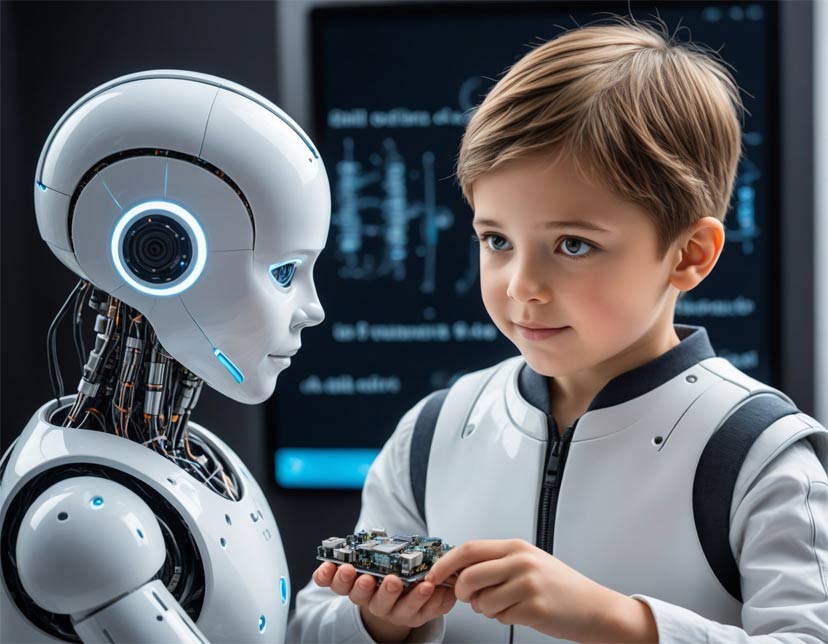
In addition to cognitive impairment, other risks of children using AI include:
- Bias and Misinformation : AI systems are only as good as the data they are trained on. They can perpetuate biases or even create false or misleading information. A child who blindly trusts an AI can absorb this inaccurate information.
- Harmful content: Without proper filtering, AI can be manipulated to produce inappropriate, violent, or adult content. AI chatbots can also give dangerous or unverified advice on sensitive topics, which is especially dangerous for vulnerable children seeking help.
- Loss of human connection: Over-reliance on AI companions can lead to social withdrawal and lack of emotional development. Chatbots cannot provide true empathy or human connection, which are essential for children's social development.
Things parents should do when letting their children use AI
Navigating this new realm requires a proactive and balanced approach. Instead of banning children from using AI, parents should become guides, helping their children use these tools responsibly.
Educate yourself and your child: Start an open conversation about AI. Explain what AI is, how it works, and its limitations. Teach your child that AI is a tool, not a person, and that its answers should always be verified. Ask questions like, " Does that sound right? How do you know? "
- Set clear boundaries and expectations: Establish family rules around AI use. For example, require your child to do their own homework before using an AI assistant. Encourage your child to use AI to brainstorm or solve problems, not as a way to avoid effort.
- Encourage a balanced approach: Balance screen time with offline activities. Make sure your child spends time reading physical books, engaging in hands-on activities, and engaging in face-to-face social interactions. The goal is to ensure your child develops skills that AI can't replicate, such as creativity, empathy, and ethical behavior.
- Encourage critical thinking: Teach your child to be skeptical. Ask your child to compare the AI-generated answers with information from a trusted source. Encourage your child to ask questions that challenge the AI, forcing them to think critically about the information they receive.
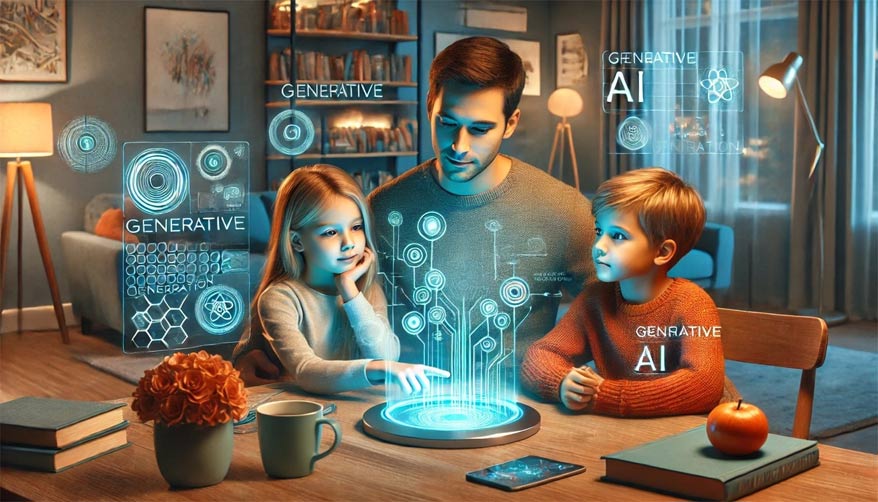
By adopting these strategies, you can help your child grow up digitally literate, resilient, and ready to thrive in an AI-driven world.
FAQ
What should you know about AI and children?
In practical terms, AI is an indispensable part of the technological world and perhaps of many people today. However, should parents expose their children to AI early.
Why does AI and children matter?
The article highlights that things parents should do when letting their children use AI Navigating this new realm requires a proactive and balanced approach.
What is the main takeaway?
The main takeaway is that instead of banning children from using AI, parents should become guides, helping their children use these tools responsibly.
Related Articles
 Things Parents Should Not Do for Their Children4 minutes read
 The Mouthful Statements of Parents Accidentally Depress the Child6 minutes read
 The Danger When Saying 'be Careful' to Young Children That Parents9 minutes read
 Scientifically Proven: the More Time You Spend with Your Parents4 minutes read
 Teach Parents How to Raise Healthy, Smart, Scientific Children11 minutes read
 In Order for Children to Succeed, Parents Should Implement These 1010 minutes read
Reader Comments 0
Sign in with email or Google to join the discussion.