Table of Contents
Explore 5 warning signs that your account isn't as secure as you think.
However, over the years, several warning signs have emerged indicating that your account may not be as secure as you think. Even without experiencing a major hack or having your bank account emptied, a series of warning signs suggest your digital life is more vulnerable than you realize. And while tools can help detect risks, your own behavior and awareness are key to mitigating these threats.
Google and Microsoft's security activity pages
Login history reveals things you wouldn't expect
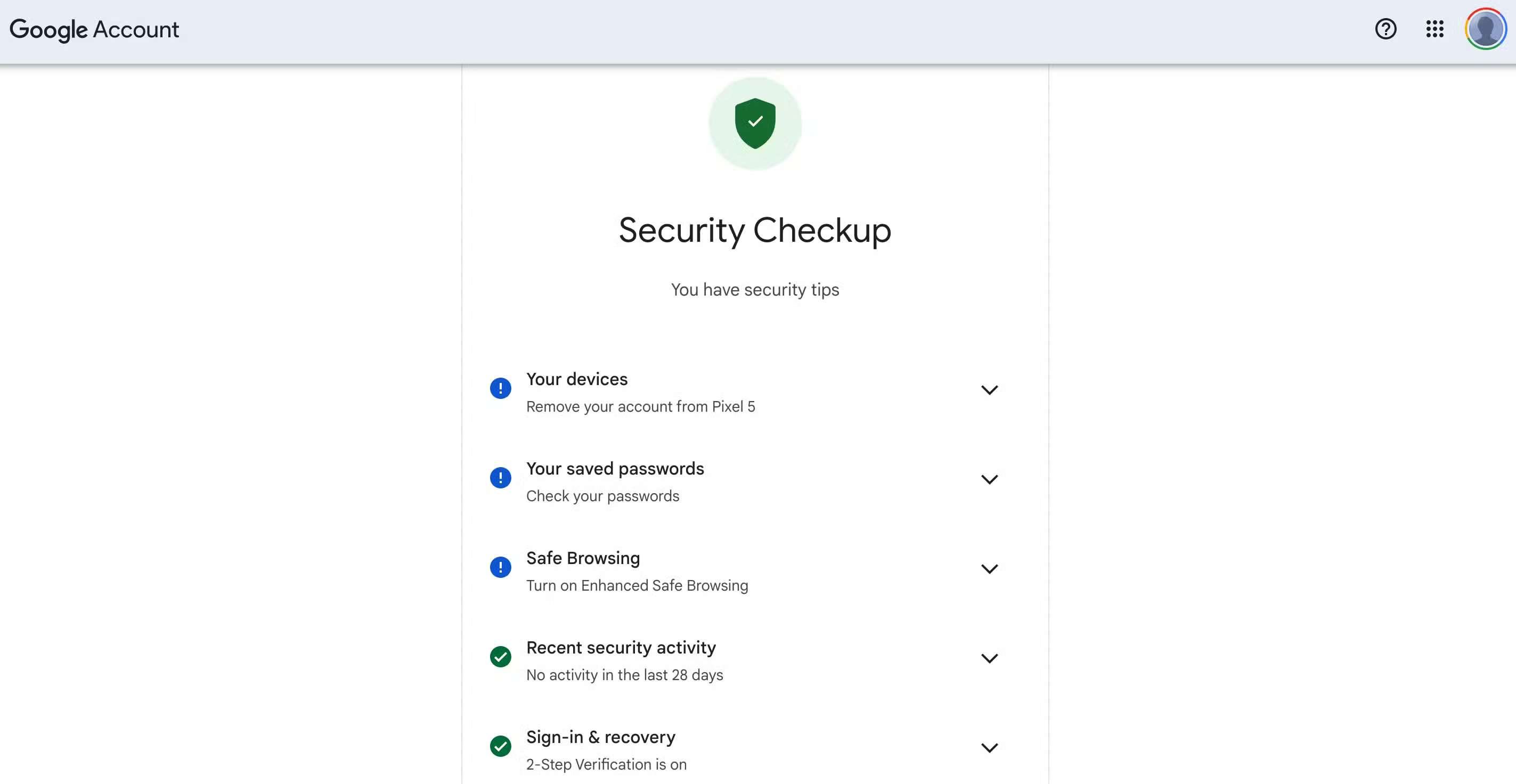
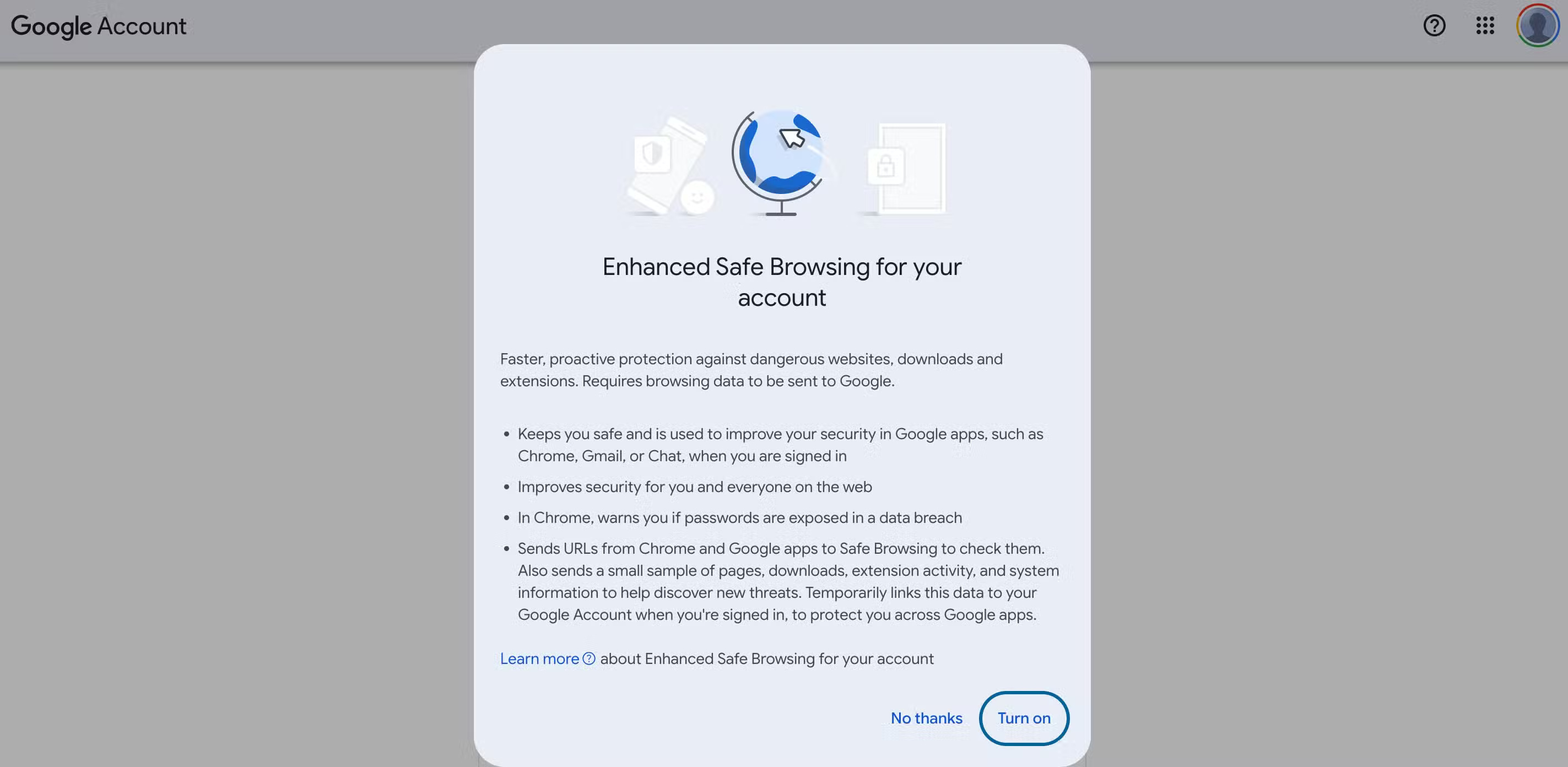
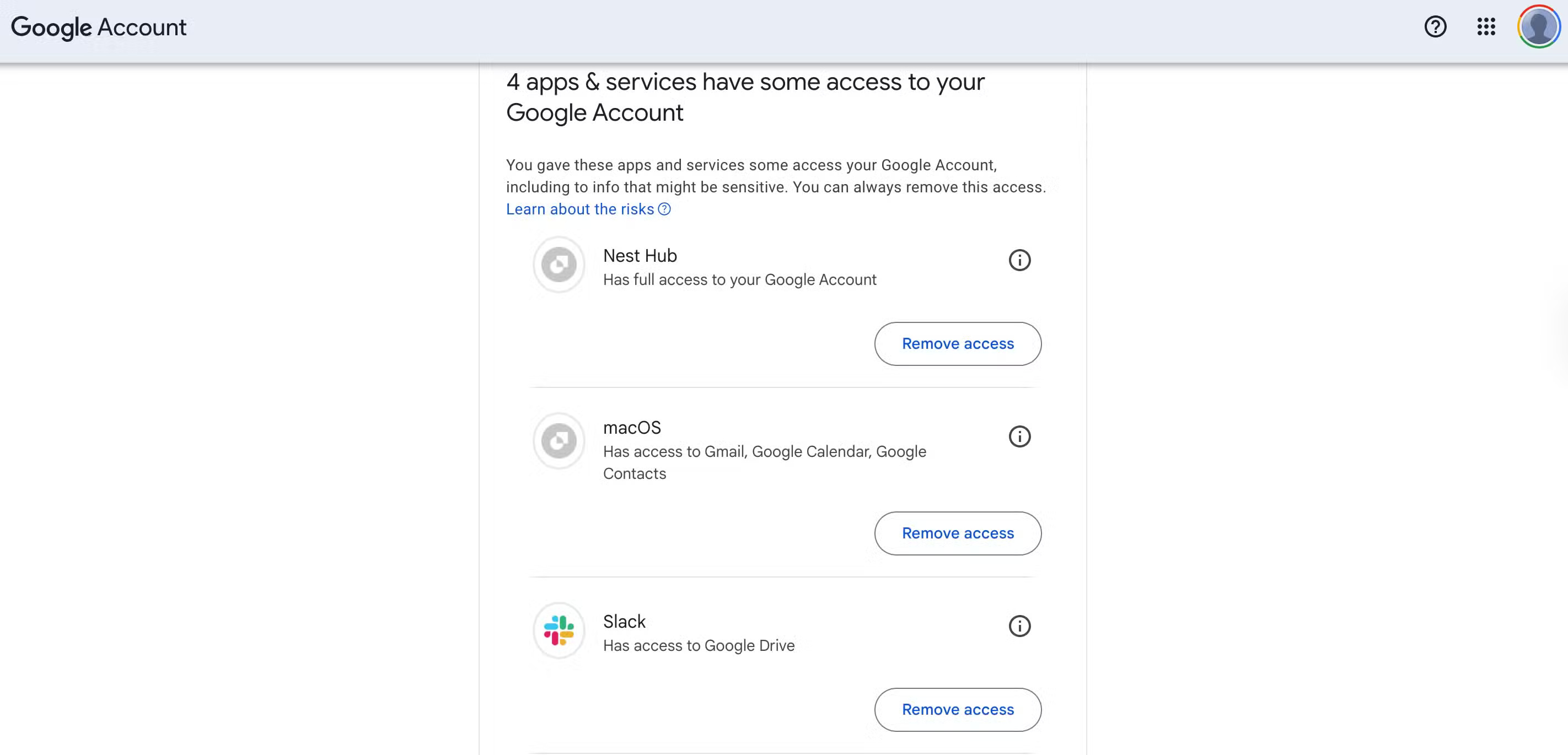
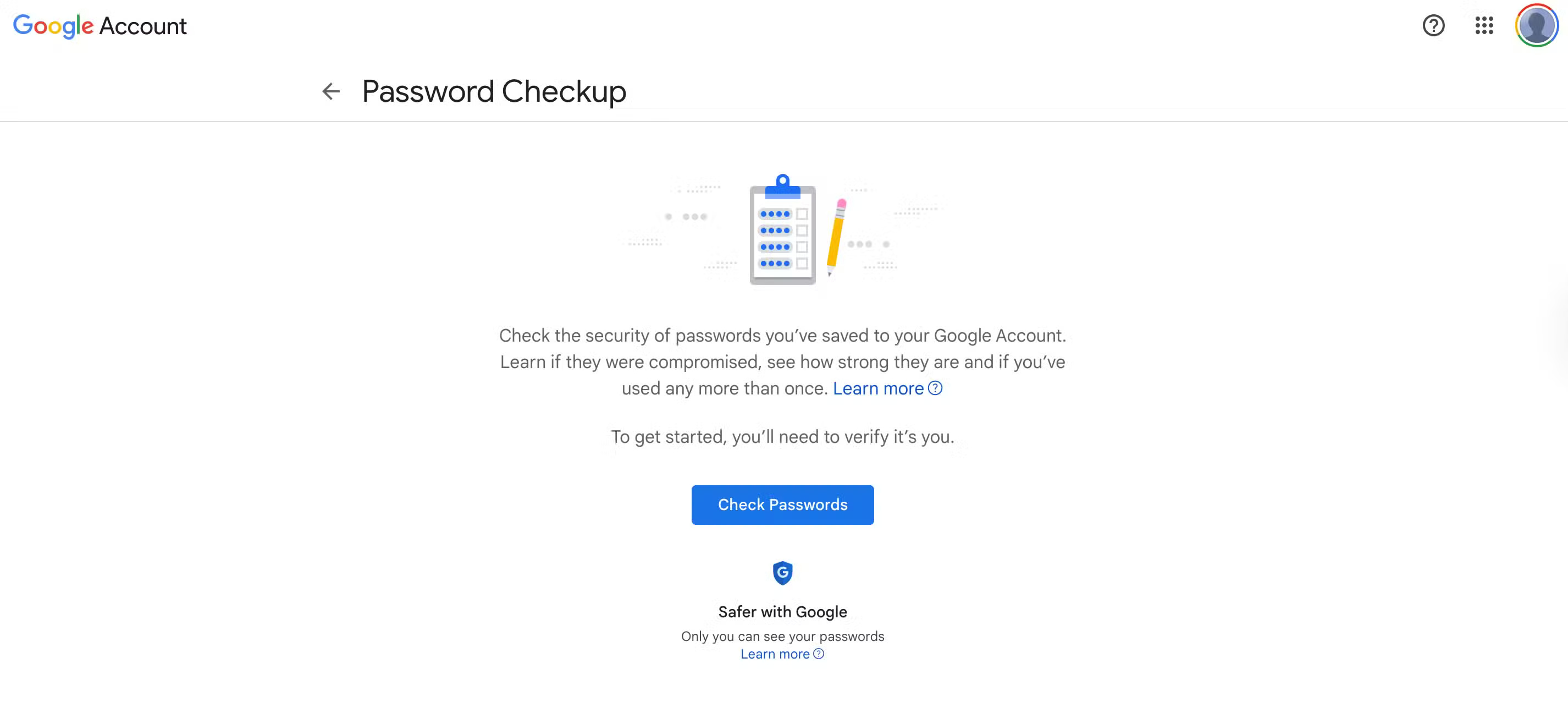
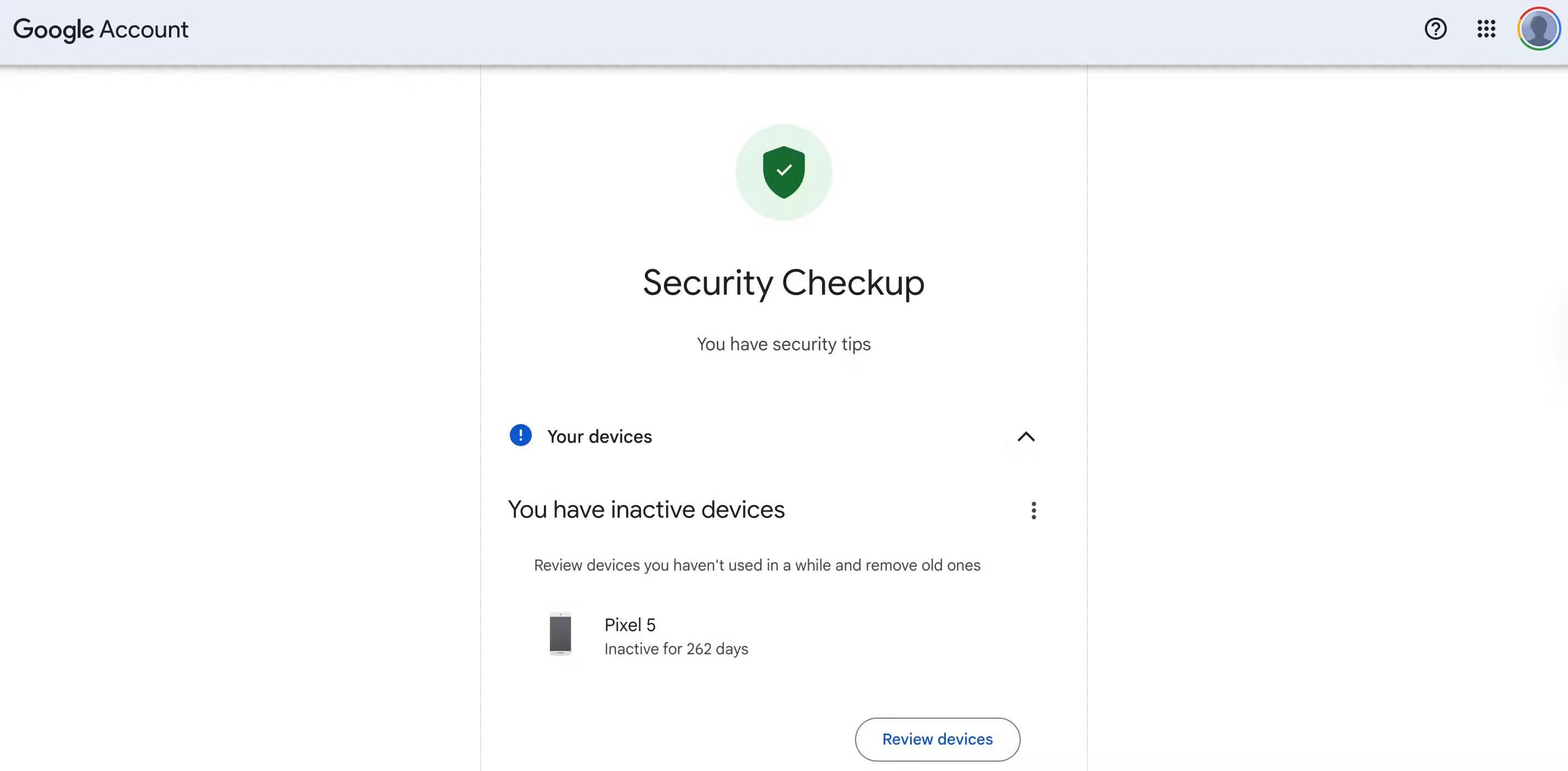
Both Google and Microsoft provide detailed security dashboards, and aside from checking them occasionally when prompted, people almost always ignore them. When paying attention, you'll notice some logins that don't match your usual routine, with IP addresses from unfamiliar locations. Other dangers to look for include unidentified devices and logins at unusual hours.
As it turns out, none of these events were confirmed as data breaches. Some may have been related to travel, VPN use, or background services. However, these dashboards highlight normal behavior, so with regular checks, you can easily identify changes in your habits that might signal an account has been compromised.
Violation warning from Have I Been Pwned
Seeing your emails leaked will change your way of thinking
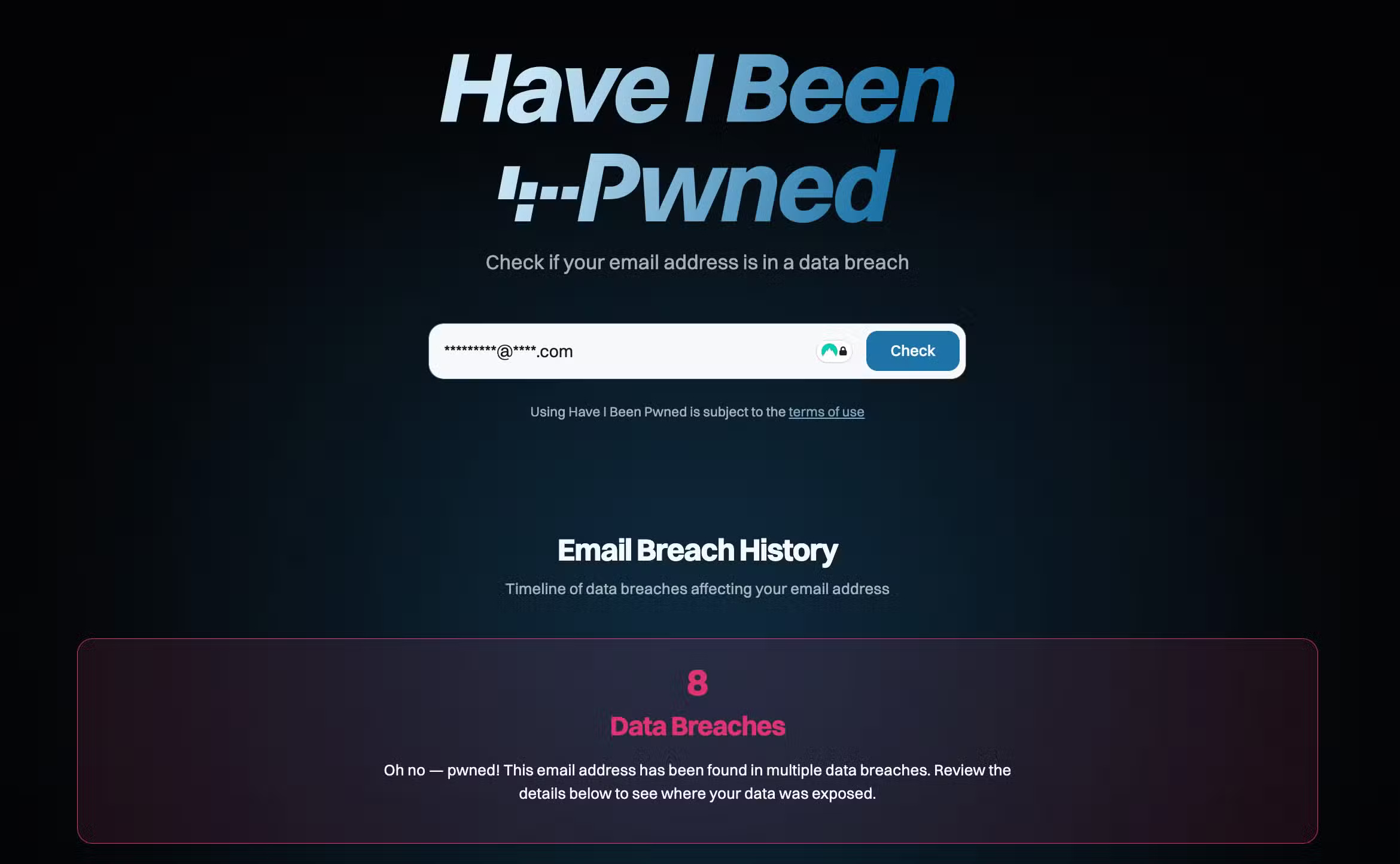
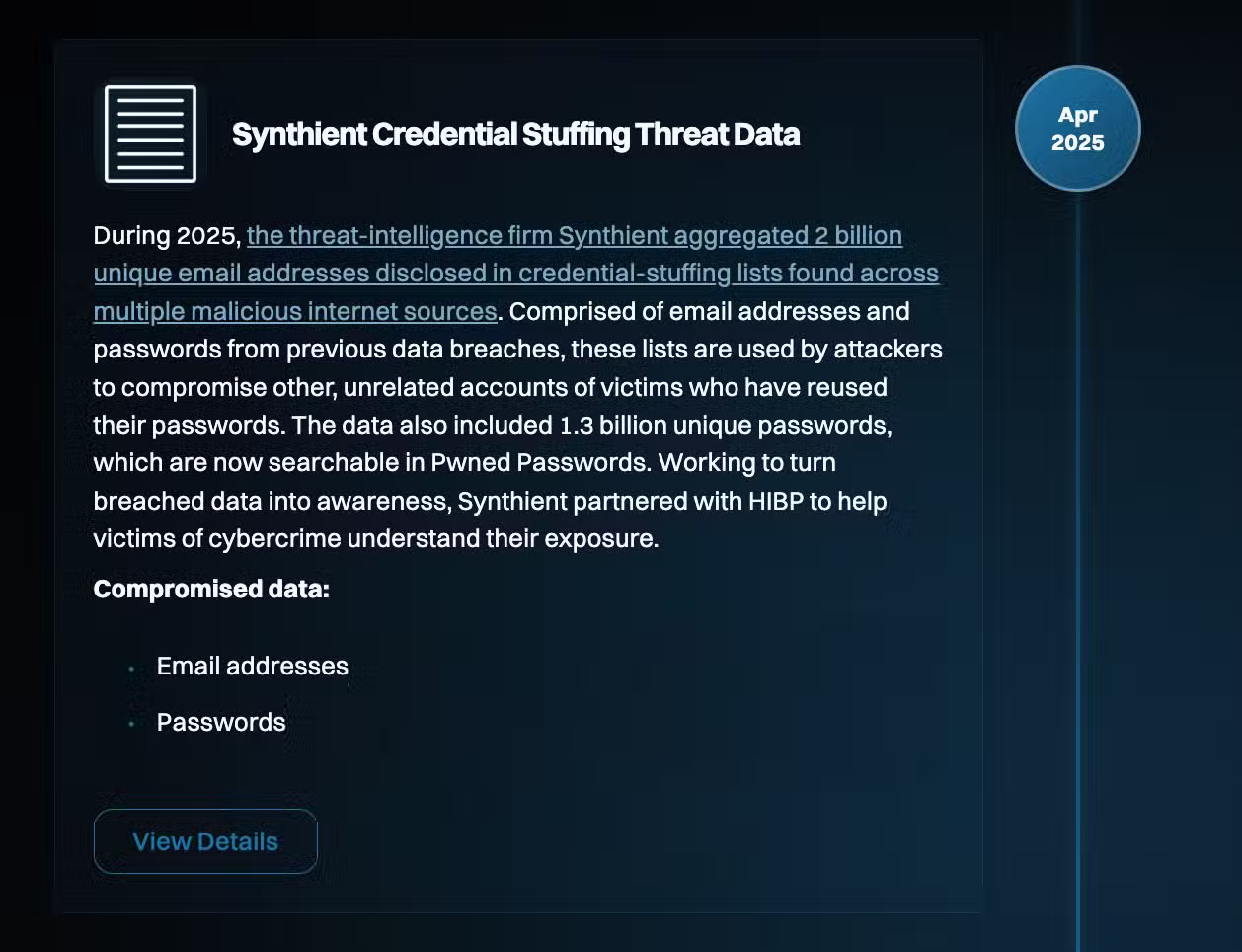
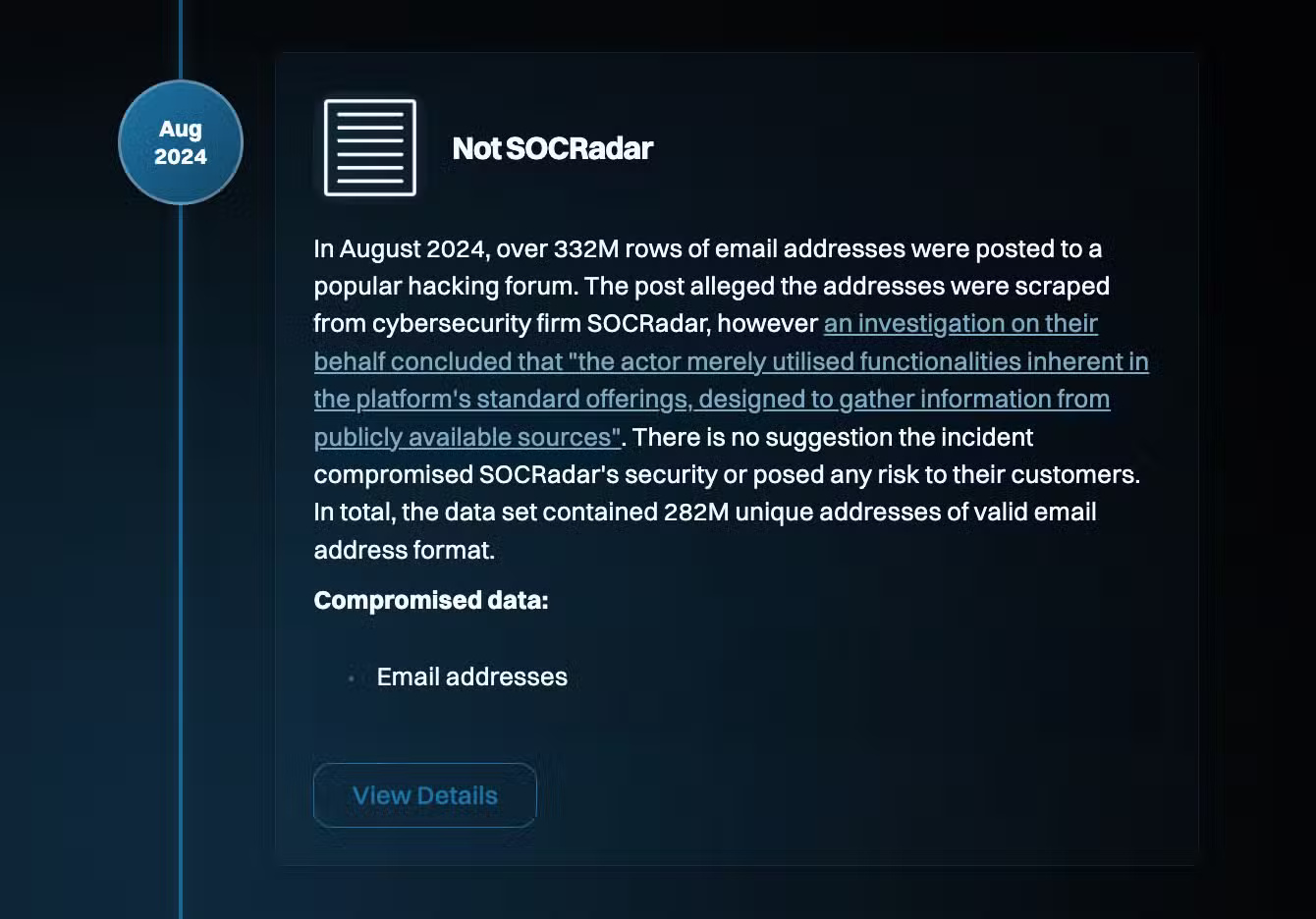
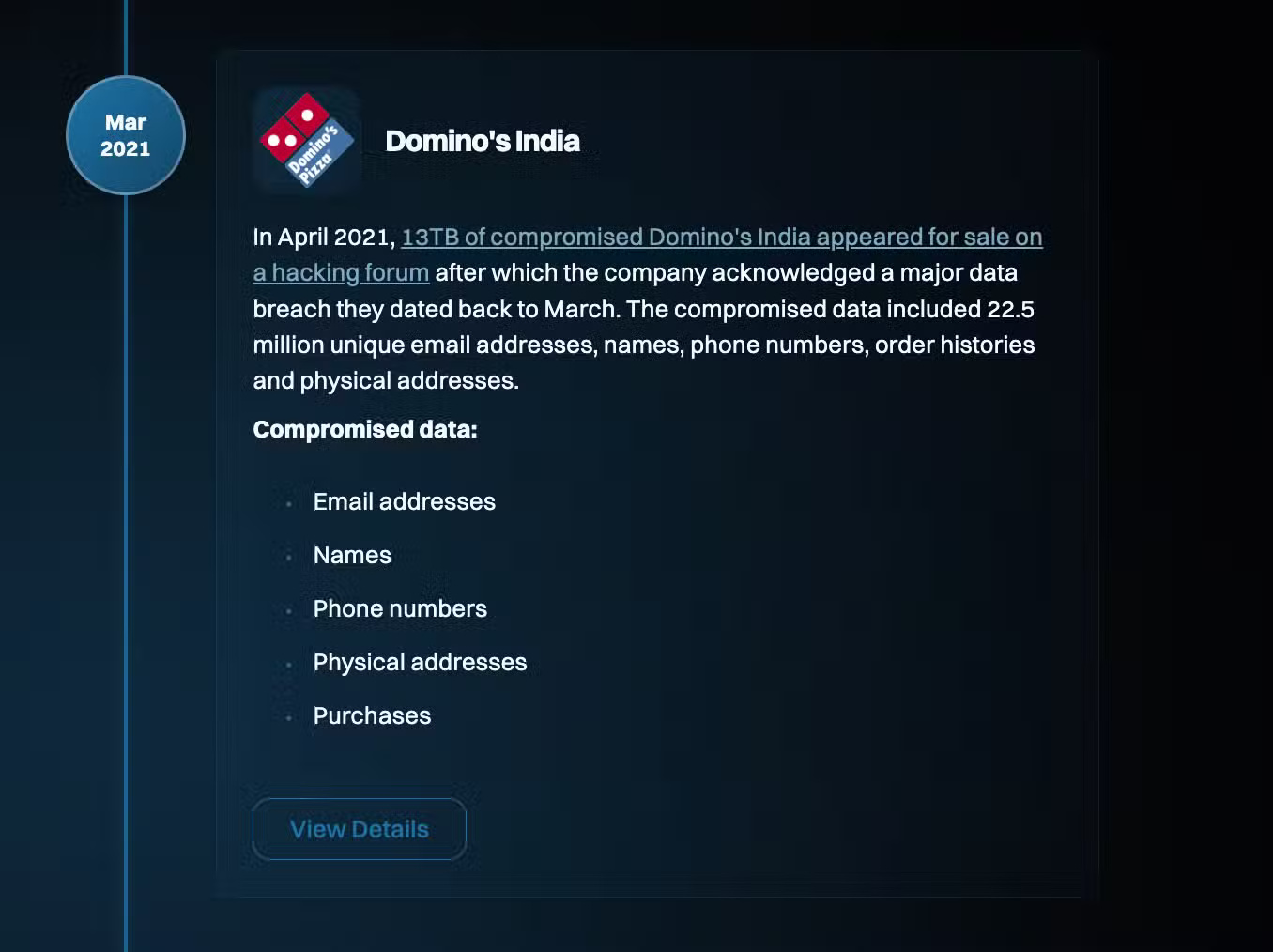
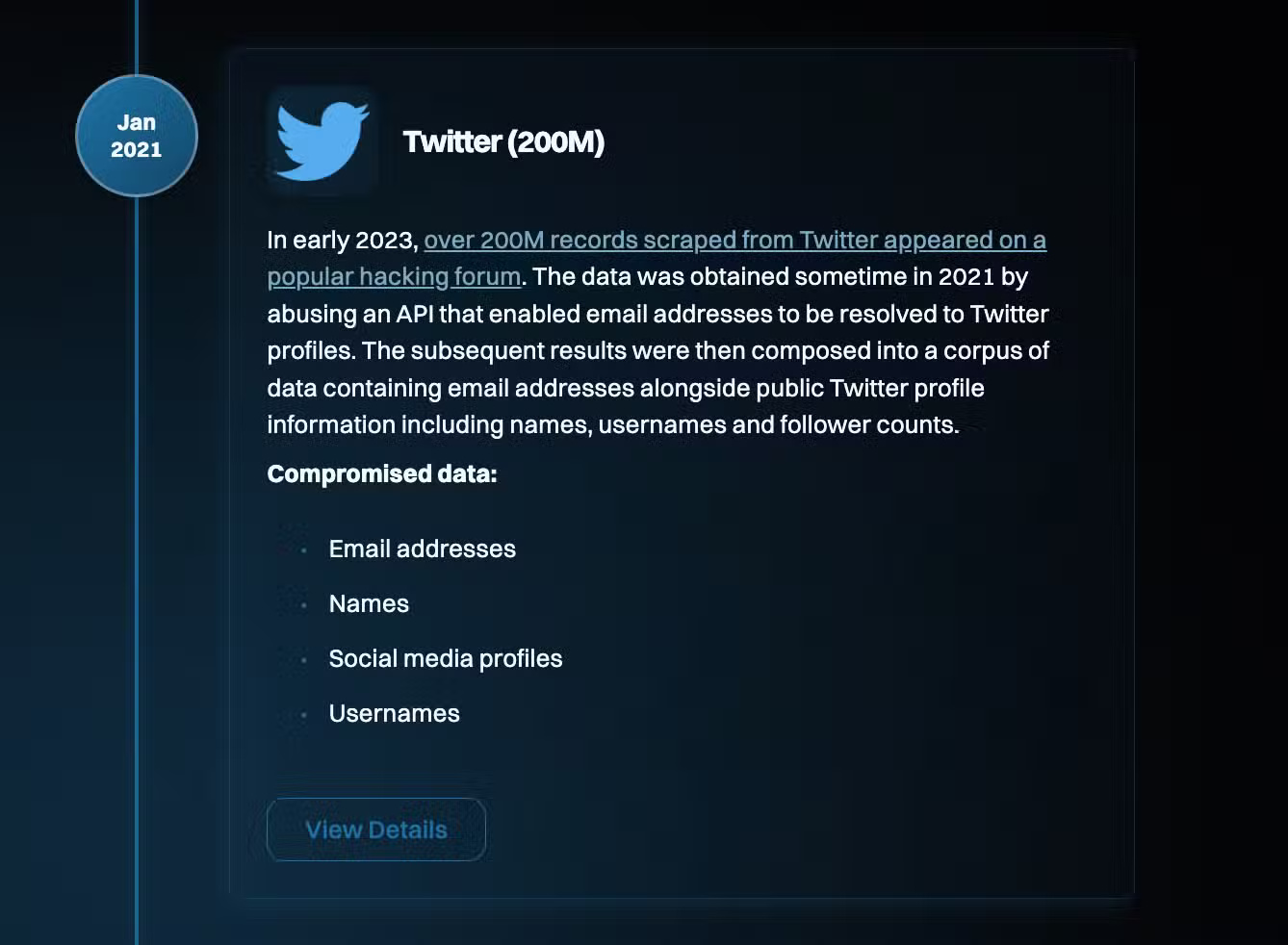
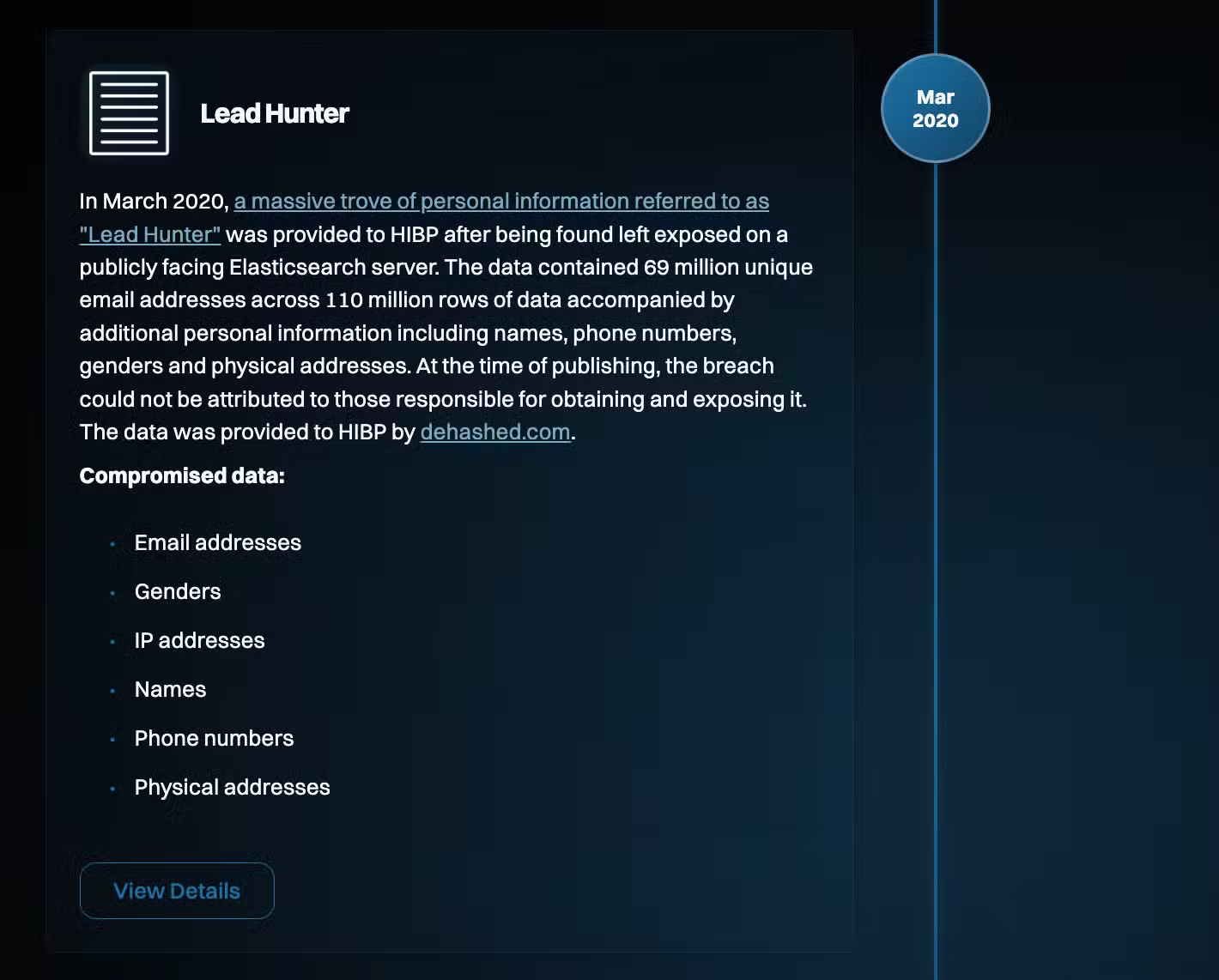
One of the most important warnings comes from the data breach checking website Have I Been Pwned. In this context, the slang term "Pwned" means that your online accounts (email, username, password) have been compromised. In the example, entering the email addresses associated with the accounts revealed a worrying number of data breaches.
This is a useful tool for detecting how your data has been compromised. Leaked email addresses, usernames, and metadata can be reused in phishing attacks, login hijacking attacks, and social engineering attacks. You are given context about where your information was leaked, which allows you to decide how best to respond by changing your habits and, if necessary, your login credentials.
New login notifications from unfamiliar locations
Notifications are only useful if you don't ignore them
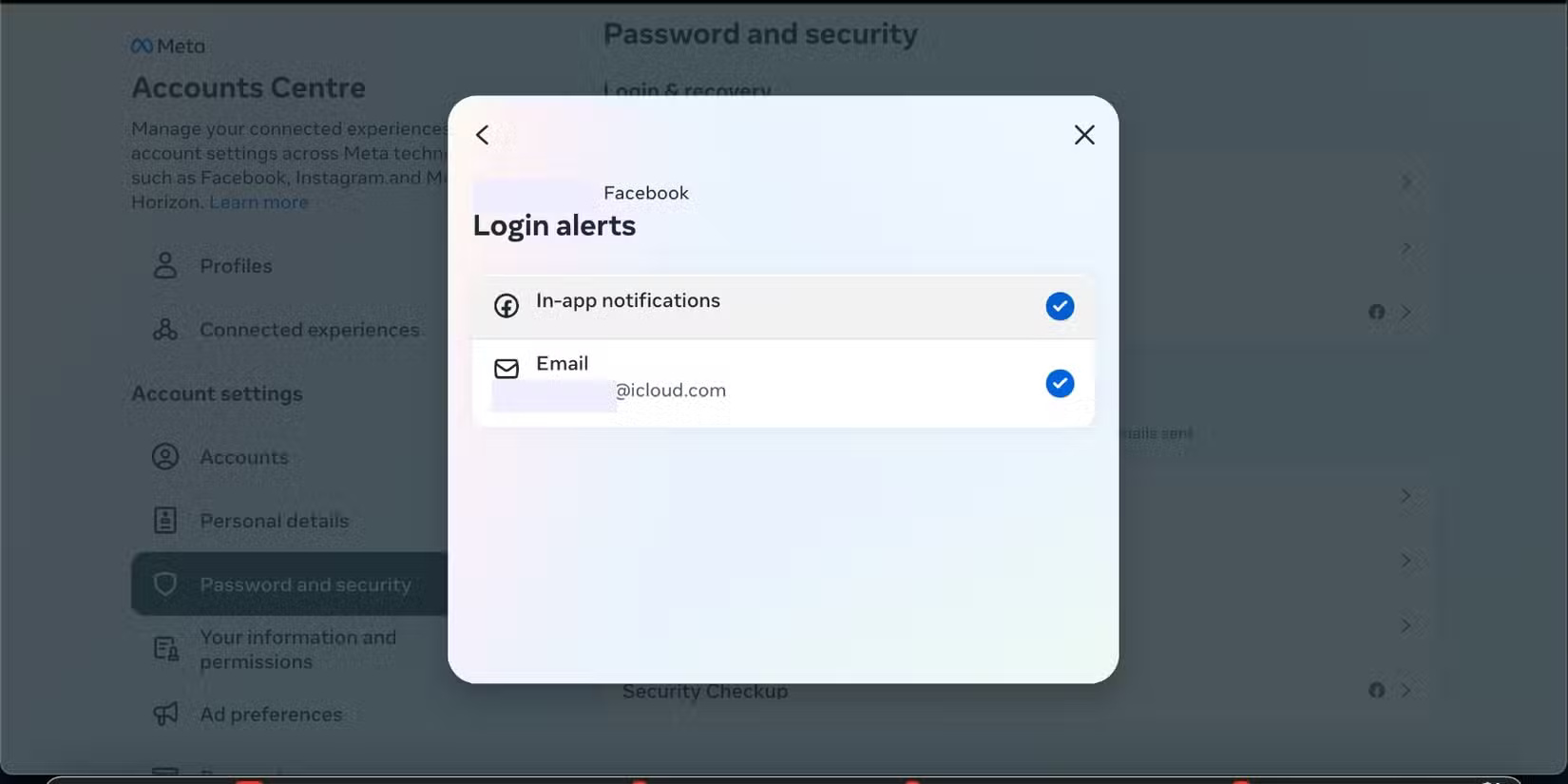
We're all familiar with the fable of 'The Boy Who Cried Wolf,' and similarly, login notifications, instead of providing reassurance, become background noise. People always have notifications on, but often just scroll past them. All of this changes the day you receive a login notification from a country you've never been to, on a device you don't own, for an account you rarely use.
Although access was blocked in this case, the effort itself is significant, as it shows your login credentials are being tested somewhere. Now, whenever you see anything unusual, check recent activity, log out of all sessions, and consider updating your login credentials. Login alerts are a useful tool, especially with the increasing number of login scams, but the speed and nature of the response will determine whether they escalate into a serious cybersecurity breach.
Unexpected password reset email
Sometimes password reset requests have ulterior motives
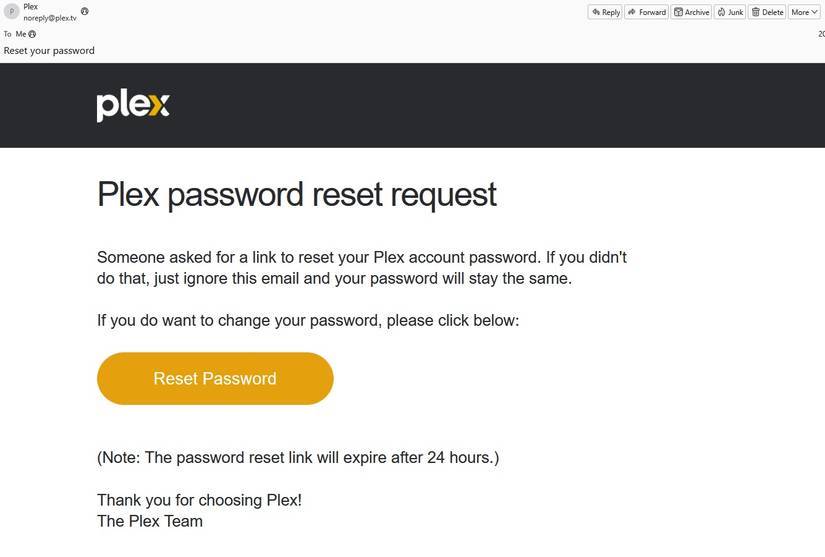
Occasionally receiving password reset emails is normal as part of routine digital maintenance, or if your account may have been compromised. However, there are times when you receive multiple password reset requests from different services in a relatively short period.
This is important because it could indicate a login verification attempt using data from elsewhere. Even if the attacker was unsuccessful, that very attempt means your email address is on a list of actively used accounts. In this case, you must assess whether this is a harmless error, bot noise, or a warning sign of an attack. Ultimately, decide whether receiving multiple password reset emails in quick succession is sufficient reason to change your password and reconsider your account security measures.
Account recovery email that you didn't request
The restoration efforts are a sign of malicious intent, not an accidental incident
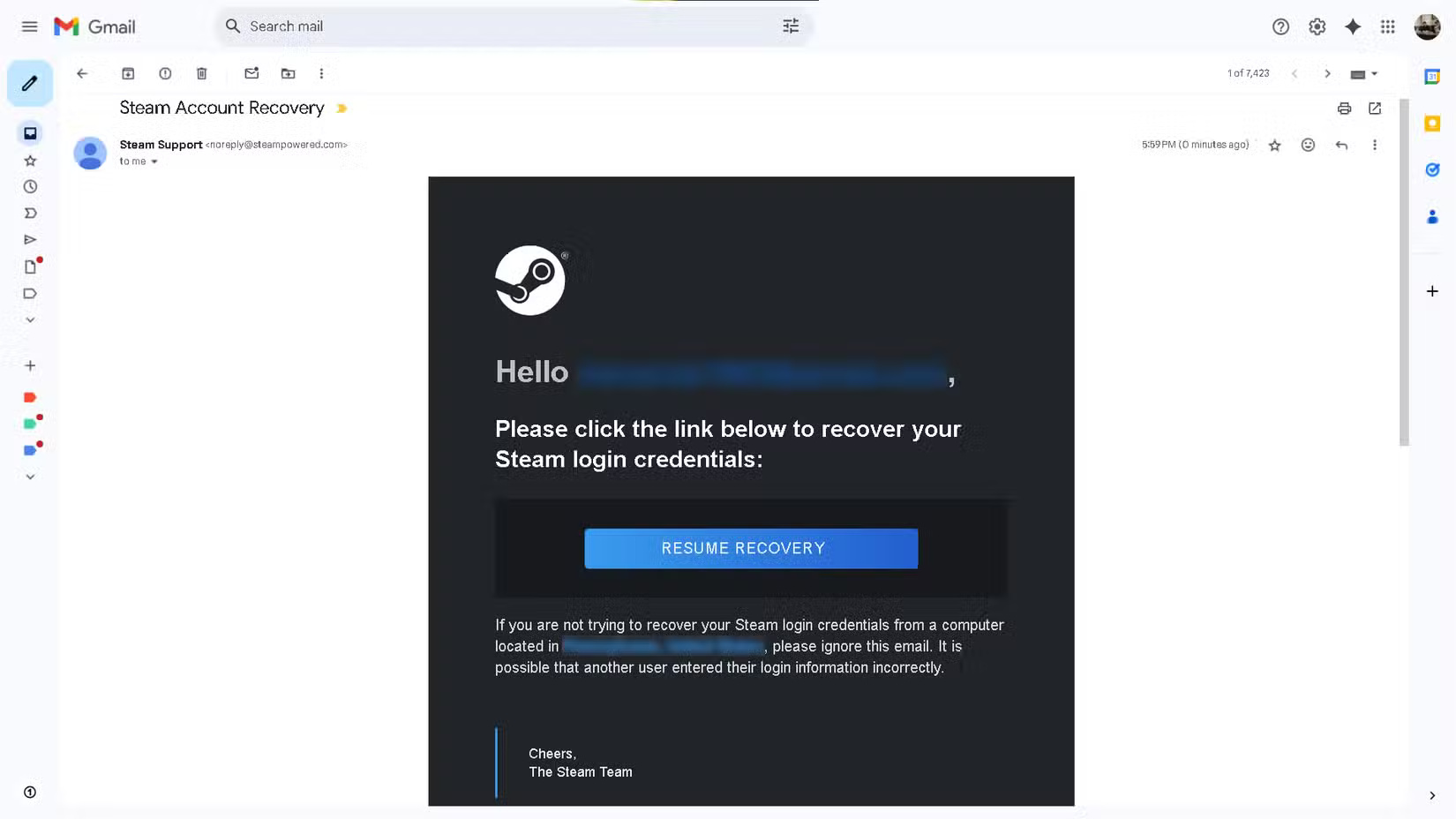
Account recovery emails are more serious than password reset emails because they indicate someone is trying to completely bypass your normal login process. The first time someone receives an unsolicited account recovery email, they assume it's just a mistake. The second time, they're forced to pay attention.
Recovery procedures are often required after attackers obtain personal information from data breaches or public sources. Receiving this type of email lets you know that someone isn't just guessing your password; they're trying to take control of your account.
In this case, it's best to take all necessary precautions. Double-check your recovery settings, delete outdated phone numbers or email addresses, and confirm that two-factor authentication is enabled and working on all devices. Ignoring such warnings could very well result in losing access to that account and other linked accounts.
Final Thoughts
Understanding 5 warning signs that your account isn't as secure as you think makes it easier to evaluate the information and apply the most relevant recommendations. Focus on the key points above and verify details that may change over time.
FAQ
What is 5 warning signs that your account isn't as secure as you think?
Explore 5 warning signs that your account isn't as secure as you think.
What key points does this article cover?
The article focuses on Google and Microsoft's security activity pages, Login history reveals things you wouldn't expect, Violation warning from Have I Been Pwned, with practical explanations and examples.
How can you use this information in practice?
Use the explanations to compare options, verify important details, and make a more informed decision. Apply the recommendations that best match your goals and situation.
Related Articles
 If a VPN Has These Warning Signs, Stay Away from It!9 minutes read
 If Your Body Has These 12 Signs, You Are Eating Too Much Sugar7 minutes read
 Your 10 Kidney Warning Signs Are Having Problems: Kidney Disease9 minutes read
 Eye Changes May Signal Cancer, Diabetes and High Blood Pressure6 minutes read
 7 Warning Signs Your Body Is Calling for Help4 minutes read
 10 Signs Appear on the Body of Health Warning You Should Not Be4 minutes read
Reader Comments 0
Sign in with email or Google to join the discussion.