Table of Contents
Explore should you use dental floss before or after brushing your teeth.
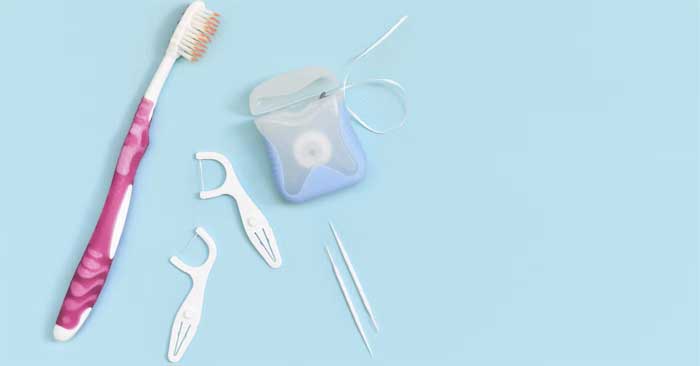
You probably already know that flossing and brushing are both essential. But which step should you do first? Dentists say there's a correct order to flossing and brushing. Doing one before the other can help remove food particles, making the second step more effective.
Here's what experts say about whether you should use dental floss before or after brushing your teeth.
Why do we need to use dental floss?
Using dental floss involves threading a thin object (usually a special string) between the teeth and moving it around to help remove any debris that shouldn't be there, thereby supporting overall oral health.
" Using dental floss is a simple but crucial step in maintaining oral health, as it removes debris and plaque from places a toothbrush can't reach ," says Ashley Boling, dentist and owner of Aspen Dental in Hixon, Tennessee. " This reduces the risk of cavities, gum disease, and other oral health problems. " As mentioned above, those oral health problems can also put you at risk for other systemic health issues.
Should you use dental floss before or after brushing your teeth?
It might sound counterintuitive to floss between teeth that you know are still dirty, but it's best to floss first and then brush . 'Flossing first helps remove food debris and plaque between teeth—areas a toothbrush can't reach. Cleaning those spaces not only reduces the risk of cavities and gum disease, but also allows the fluoride in toothpaste to reach more tooth surfaces. That means stronger enamel, healthier gums, and better protection against cavities.'
You can use dental floss before or after brushing your teeth as long as you do it thoroughly and reach areas that a toothbrush can't. However, flossing beforehand can help remove food particles and plaque, making brushing more effective.
Common mistakes to avoid
- Improper flossing technique: Pulling floss forcefully against the gums can damage the mucous membrane. Gently thread the floss in a C-shape along each tooth.
- Using too much pressure when using a water flosser: Start with low pressure and gradually increase it. Too much pressure can irritate the gums or cause bleeding.
- Brushing too hard: Brushing too hard or using a hard-bristled toothbrush can wear down tooth enamel and irritate the gums. Use a soft toothbrush with gentle, circular motions.
Final Thoughts
Use this guide as a practical checklist for should you use dental floss before or after brushing your teeth. Work through the steps in order, verify each result, and adjust the options to match your needs.
FAQ
What do you need before following this Should You Use Dental Floss Before or After Brushing Your Teeth guide?
Review the required tools, accounts, settings, or materials mentioned in the article. Explore should you use dental floss before or after brushing your teeth.
What are the main steps for should you use dental floss before or after brushing your teeth?
Follow the sections in order, especially Why do we need to use dental floss?, Should you use dental floss before or after brushing your teeth?, Common mistakes to avoid. Complete each step before continuing and verify the result as you go.
What should you do if the process does not work as expected?
Recheck the prerequisites, update the relevant app or service, review the settings, and repeat the step that caused the issue. Use any troubleshooting notes included in the guide.
Related Articles
 How to Use Dental Floss4 minutes read
 8 Common Mistakes in Dental Care: Dental Teeth9 minutes read
 10 Mistakes Are Often Made When Taking Care of Your Teeth6 minutes read
 Brushing Your Teeth at Any Time of the Day Is the Best4 minutes read
 Tips to Help You Brush Your Teeth Better According to Experts5 minutes read
 Beautiful White Teeth without Using Chemicals6 minutes read
Reader Comments 0
Sign in with email or Google to join the discussion.