Table of Contents
The massive F5 hack has left companies scrambling to contain the fallout, but people need to be prepared if hackers start taking advantage.
A recent hack could leave some of the world's top companies vulnerable to imminent attacks. The massive F5 hack has left companies scrambling to contain the fallout, but everyone needs to be prepared if hackers start taking advantage.
What is the F5 hack?
If your first thought is why would a hacker care about the F5 key, you're not alone. F5 is actually a Seattle-based company responsible for networking software used by many Fortune 500 companies and government agencies around the world.
F5 publicly announced the hack on October 15, 2025, saying hackers used a sophisticated attack to penetrate the company's systems. The hack went undetected for "a long period of time," although the company did not say exactly how long that was. Some experts believe it could have lasted anywhere from several months to several years.
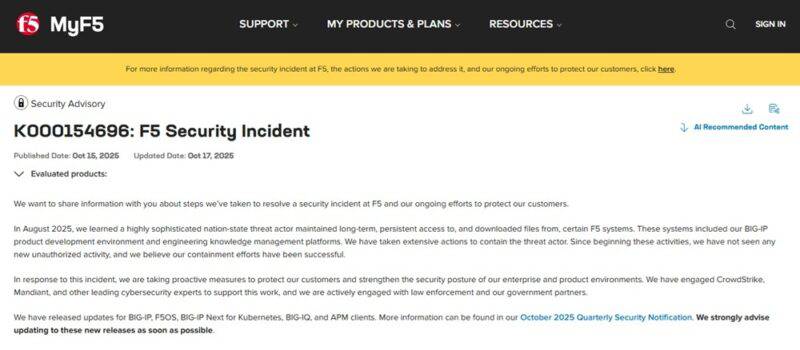
During this time, the threat actor downloaded files from multiple F5 systems. Including:
- BIG-IP
- F5OS
- BIG-IP Next for Kubernetes
- BIG-IQ
- APM
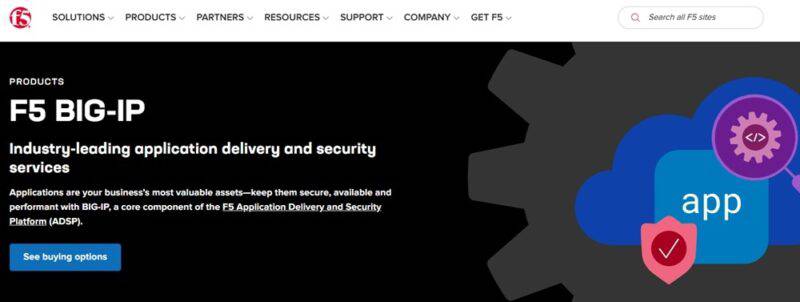
The worst threat right now, according to F5, is downloads for BIG-IP. These include source code and details of unpatched vulnerabilities, making them a target for hackers.
Additionally, BIG-IP, a line of server appliances, is used by 48 of the world's top 50 companies.
In simple terms, thousands of networks could be affected by the F5 attack. What's worse, hackers could also have access to customer user credentials and configurations, making it easy for them to infiltrate undetected.
F5 releases security updates immediately
While F5 assures customers that there is no further unauthorized activity and no known exploits, the company has created updates for all known vulnerabilities to help protect the company and its users.
The most important thing for any potentially affected company to do is to download and install any relevant updates immediately. Waiting will put you, your employees and customers at risk of data theft, ransomware attacks and even complete network takeover.
F5 has recently rotated cryptographic keys and signing certificates to prevent this issue, but this only applies to companies running the latest versions of affected systems and software.
Things you should do now to protect yourself from F5 attacks
Obviously, you can't control whether companies or government agencies install security updates, nor can you control what data they have access to.
That said, there are some simple yet extremely effective things you can do immediately to start protecting yourself in case something goes wrong.
1. Monitor your credit report
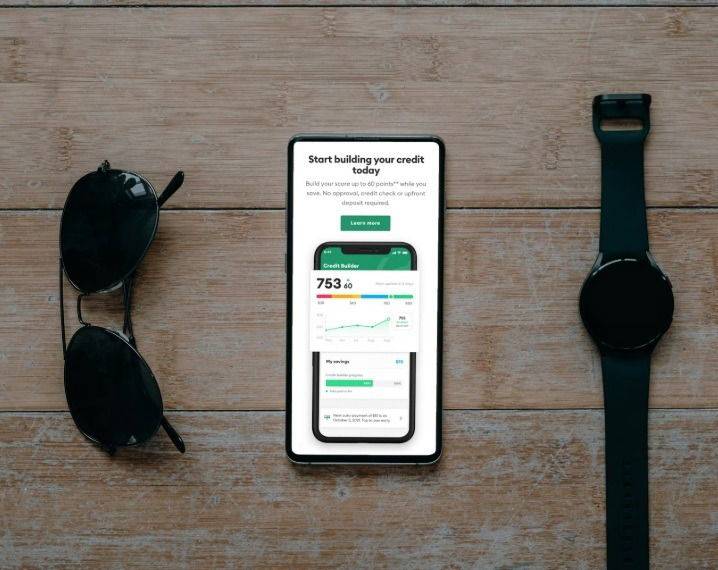
You can check your credit report for free at any time using a credit reporting website. Most of these websites also offer premium services, such as real-time alerts. Monitoring your credit report lets you know if someone is trying to open a new account in your name. When caught early, it is much easier to deny, close the account, and protect your identity.
2. Credit freeze
Unless you're planning on applying for new credit, such as a credit card or car loan, freeze your credit. No one can open a new account while your credit is frozen. You'll need to lift the freeze to apply for credit yourself.
It's free with Experian, TransUnion, and Equifax. The FTC walks you through what to do, what a freeze means, and why it's beneficial.
3. Change your password and do not reuse it
Consider changing your passwords for any website that contains sensitive information. This includes everything from banking and tax preparation sites to email and e-commerce sites.
While changing your passwords, make sure you don't reuse any of them. Use a password manager to help keep track of all your passwords.
4. Monitor email for violations
If a company is breached, you may never know it. They may post a notice on their website but never contact you. At least once a week, check your email address for any potential breaches. There are many websites and services that compare your email address to lists of stolen credentials. They are free and help you take control of your digital identity.
5. Pay attention to emails and messages
If your network is hacked, your data could be used to create sophisticated scams. An email that appears to be from your insurance company may ask for personally identifiable information. It seems legitimate, so you reply to the email, text message, or click on a link to log into a fraudulent website.
Personalizing the message makes it easier for you to be scammed. Remember, it's always best to contact the company directly rather than engaging with suspicious emails or messages.
FAQ
What should you know about what does the F5 hack mean?
In practical terms, the massive F5 hack has left companies scrambling to contain the fallout, but people need to be prepared if hackers start taking advantage.
Why does what does the F5 hack mean matter?
The article highlights that F5 publicly announced the hack on October 15, 2025, saying hackers used a sophisticated attack to penetrate the company's systems.
What is the main takeaway?
The main takeaway is that including: BIG-IP F5OS BIG-IP Next for Kubernetes BIG-IQ APM The worst threat right now, according to F5, is downloads for BIG-IP.
Related Articles
 How to Hack Name in Among Us, Naming Tips Among Us5 minutes read
 4 Ways to Hack Facebook You Should Know to Protect Your Facebook12 minutes read
 Can Cybercriminals Use Chatgpt to Hack Your Bank or PC?6 minutes read
 How to Use the Grepolis Hack Tool (Pro V2)3 minutes read
 Here's How I Hack 40 Websites in 7 Minutes12 minutes read
 How to Speed Hack or Break Through Walls in ROBLOX: Practical Guide7 minutes read
Reader Comments 0
Sign in with email or Google to join the discussion.