Table of Contents
This updated guide explores washing machines may harbor antibiotic-resistant bacteria with practical details, clear explanations, and useful takeaways. Healthcare workers who wash their uniforms at home could be inadvertently spreading antibiotic-resistant bacteria, increasing the risk of hospital-acquired infections, a new study has found.
The team tested six different household washing machines to see how well they could clean fabrics contaminated with Enterococcus faecium, a bacteria associated with hospital-acquired infections. They found that only half of the machines (three out of six) properly disinfected uniforms at 60°C when run on a full wash cycle, while quick wash cycles were often inconsistent, making them less effective at killing germs on clothes.
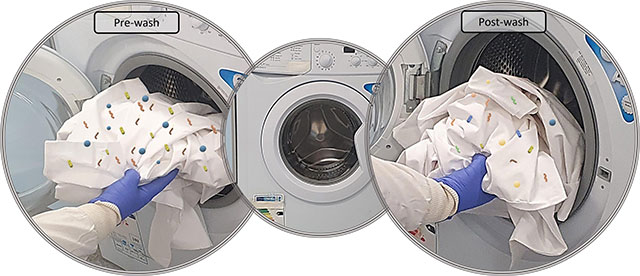
To better understand the bacteria inside washing machines, the team used shotgun metagenomics analysis to study biofilms in 12 different washing machines. The results showed that some machines contained potentially harmful bacteria, including Mycobacterium sp., Pseudomonas sp., and Acinetobacter sp., as well as antibiotic resistance genes that help the bacteria survive treatments designed to kill them.
The study also looked at the effectiveness of household cleaners against Staphylococcus aureus, Klebsiella pneumoniae, and Pseudomonas aeruginosa, three bacteria that cause serious infections. The findings are concerning: Some bacteria are becoming resistant to cleaners, which also makes them more resistant to powerful antibiotics.
Further genetic testing found mutations in efflux pump genes, particularly in S. aureus (MrgA) and K. pneumoniae (AcrB), after exposure to detergents. These pumps help bacteria get rid of harmful substances, and changes to them can make antibiotic treatments less effective.
These results suggest that home washing machines may not be able to adequately clean medical uniforms, which could contribute to hospital-acquired infections (HAI) and antimicrobial resistance (AMR). Many healthcare workers use home washing machines to wash their work uniforms, and if bacteria survive the wash, they can spread to patients.
Professor Laird and her team believe guidelines on proper laundering procedures need to be updated to ensure medical uniforms are properly disinfected. They also recommend that hospitals consider switching to industrial washing machines, which are much more effective at killing germs.
Professor Laird explains the importance of this issue:
Our research shows that household washing machines often fail to disinfect fabrics, allowing antibiotic-resistant bacteria to survive. If we are serious about the transmission of infectious diseases through fabrics and tackling antibiotic resistance, we need to rethink the way healthcare workers wash their clothes.
With antibiotic resistance becoming a serious concern worldwide, ensuring hygiene in hospital environments is an urgent requirement to keep the public health safe in general. Healthcare facilities may need to reconsider how they clean uniforms to prevent the spread of dangerous bacteria and reduce hospital-acquired infections.
FAQ
What is the main takeaway about Washing Machines May Harbor Antibiotic-Resistant Bacteria?
The key is to understand the core idea, compare the available options, and apply the practical guidance that matches your situation.
What should beginners know about Washing Machines May Harbor Antibiotic-Resistant Bacteria?
Start with the essential steps and terminology. Avoid changing advanced settings until you understand how they affect performance, privacy, cost, or compatibility.
How can I use this information in practice?
Follow the relevant section in order, test one change at a time, and confirm the result before moving to the next step or recommendation.
Related Articles
 Using AI to Develop Super Strong Antibiotics That Can Kill4 minutes read
 How Did Bacteria Learn to Fight Antibiotics?7 minutes read
 Komodo Dragon Blood Helps Fight Antibiotic Resistant Bacteria5 minutes read
 Accidentally Discovered a Drug That Kills Antibiotic-resistant Bacteria in...4 minutes read
 10 Reasons Why Antibiotic Resistance Is Scary Right Now9 minutes read
 Warning: Detecting New Bacteria Resistant to Antibiotics to Treat Kidney Disease3 minutes read
Reader Comments 0
Sign in with email or Google to join the discussion.