Table of Contents
This updated guide explores warning: your DNA data can be hacked and misused with practical details, clear explanations, and useful takeaways. A new study published in IEEE Access has revealed vulnerabilities in next-generation DNA sequencing (NGS) technology – a key tool in precision medicine, cancer research and infectious disease monitoring.
NGS enables rapid and affordable DNA and RNA sequencing, driving advances in drug development, forensic science, and agriculture. Still, the sequencing process involves complex steps such as sample preparation, sequencing, and data analysis. These steps rely on advanced tools, software, and connected systems, creating many opportunities for hackers to engage in malicious behavior such as falsifying genetic profiles or conducting unethical research.
Lead author of the study, Dr Nasreen Anjum from the School of Computer Science, University of Portsmouth (UK), highlighted the need for advanced security methods: "Our research is a wake-up call. Protecting genomic data is not just about encryption – it is about anticipating attacks that have never existed before. We need a paradigm shift in how we secure the future of precision medicine."
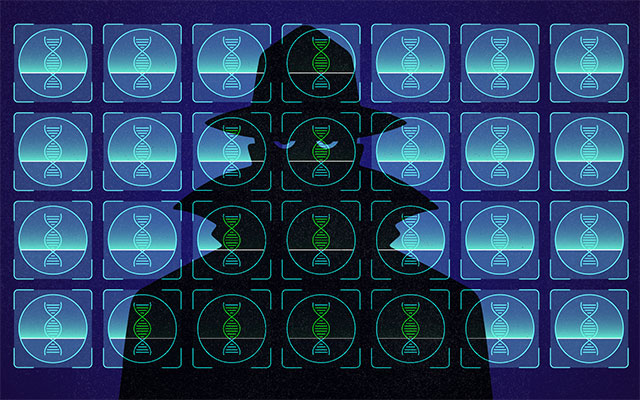
The study highlights potential threats, including malware encoded in synthetic DNA data, AI-based manipulation of genomic data, and techniques to identify identities from genetic information. These risks go beyond the typical data breach, potentially harming individual privacy, scientific output, and even national security. 'Genomic data is one of the most private forms of personal data we have. If compromised, the consequences would be far greater than a typical data breach.'
The study calls for urgent measures to improve cybersecurity in genomics. Suggested solutions include secure sequencing methods, encrypted data storage, and AI tools to detect anomalous activity. Dr. Anjum stressed the need for multidisciplinary collaboration between fields such as computer science, biotechnology, and security. She noted that experts in these fields often work in silos but must now work together for a common goal.
Without concerted action, personal genomic data could be exploited for surveillance, discrimination, or even bioterrorism. Current protections are fragmented, leaving serious gaps in global biosecurity.
FAQ
What is the main takeaway about Warning: Your DNA Data Can Be Hacked and Misused?
The key is to understand the core idea, compare the available options, and apply the practical guidance that matches your situation.
What should beginners know about Warning: Your DNA Data Can Be Hacked and Misused?
Start with the essential steps and terminology. Avoid changing advanced settings until you understand how they affect performance, privacy, cost, or compatibility.
How can I use this information in practice?
Follow the relevant section in order, test one change at a time, and confirm the result before moving to the next step or recommendation.
Related Articles
 Twitch Hacked, 125GB of Data Including Source Code Shared on3 minutes read
 What Is DLP? Top Popular DLP Tools and Technologies8 minutes read
 The Un Acknowledges That Cyberattacks Are Extremely Sophisticated3 minutes read
 Suspected FBI Hacked, Leaked Top Secret Data on the Internet3 minutes read
 Warning of Duplicate Values in Excel - Warning of Data3 minutes read
 Signs Show Clearly That Your System Is Being Hacked3 minutes read
Reader Comments 0
Sign in with email or Google to join the discussion.