Table of Contents
The Glider is a fast vehicle designed for crossing the large 8×8 map in Rules of Survival. The basic technique is to find it near a known spawn area, build speed on open ground, use a slope or elevated position for a safer launch, and climb gradually while watching fuel and enemy fire.
Version note: this guide reflects the map and vehicle behavior shown in the original release. Spawn points, controls, and vehicle statistics can vary between game versions.
Where to look for the Glider
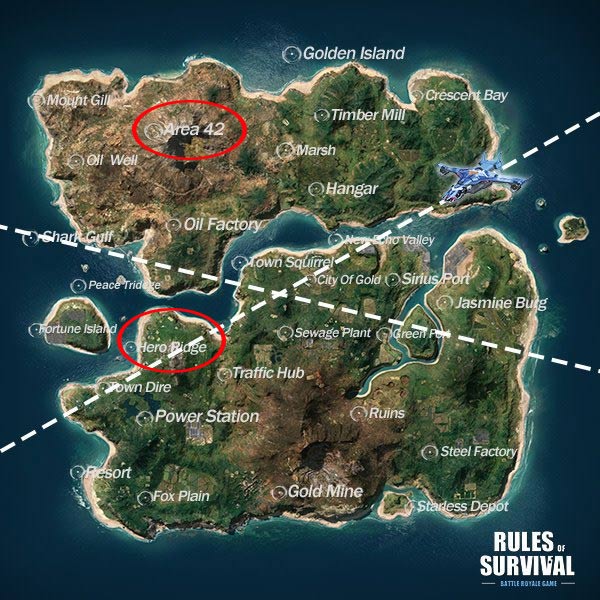
The original map placed Gliders around Area 42 and near the island below Hero's Ridge. Area 42 was the more practical place to search because its higher terrain and open approaches made launching easier. A spawn is not guaranteed, so scan the surrounding roads and open ground before committing to the area.
Prepare before takeoff
Check the fuel level, plan a route away from dense buildings, and look for a slope or clear stretch of ground. The Glider needs room to accelerate; trees, rocks, walls, and uneven terrain can stop the launch before the vehicle becomes airborne.

- Carry fuel if the match version allows it.
- Avoid beginning the run directly toward water or a cluster of buildings.
- Tell teammates where you intend to land before taking off.
- Use the terrain to gain height rather than trying to climb sharply at low speed.
How to take off and control the Glider
- Enter the vehicle and accelerate smoothly on open ground.
- Keep the Glider straight while it gathers speed.
- Use the on-screen takeoff control near the end of the run or as the vehicle reaches a slope.
- Raise the nose gradually. A steep climb can cost speed and make control less predictable.
- Once airborne, make small steering corrections and maintain enough speed to clear obstacles.
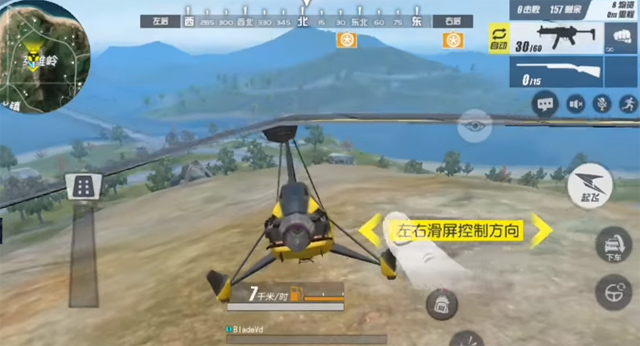
The controls resemble those of other vehicles, but flight requires more anticipation. Sudden steering changes can expose a large side profile to enemies or cause an awkward approach to the landing area.
Combat risks while flying
The Glider is large and easy to spot. Occupants may be unable to return fire effectively while the vehicle is being controlled, so mobility is the main defense. Avoid circling over populated compounds or flying a predictable straight line above opponents.
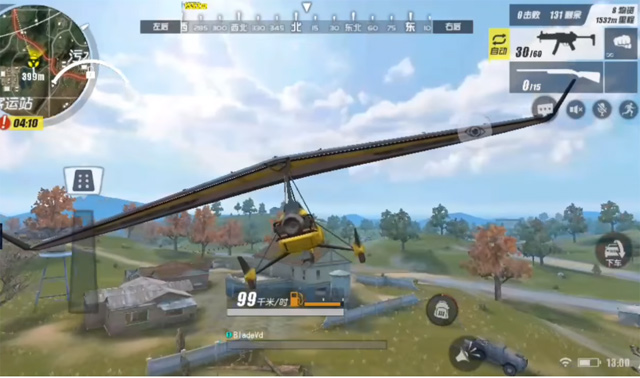
If players on the ground begin shooting, turn away from the firing lane, gain speed, and leave the area. Do not make repeated passes over the same position. When traveling with teammates, use the Glider for relocation rather than as a stationary attack platform.
Avoid water and choose a landing zone early
The original vehicle could be lost if it touched water. When crossing a river, gain sufficient height before reaching the bank and leave a margin for steering corrections. If the route looks unsafe, follow the shoreline and cross at a narrower point.
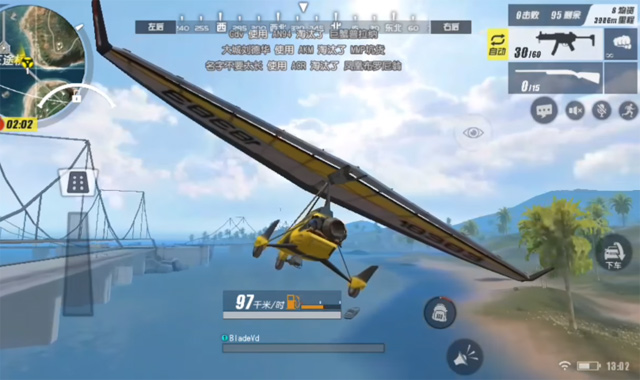
Choose the landing zone while you still have altitude and fuel. Prefer flat, open ground with a clear runout path. Approach in a straight line, reduce altitude gradually, and avoid sharp last-second turns near trees or buildings.
Common mistakes
- Accelerating into obstacles: inspect the launch path before entering the vehicle.
- Climbing too aggressively: build speed first, then gain altitude gradually.
- Ignoring fuel: plan the landing before the gauge becomes critical.
- Flying directly over enemies: use distance and route changes to reduce exposure.
- Entering water: maintain clearance during crossings and avoid low approaches over rivers.
Practice takeoff and landing in a quiet part of the map before relying on the Glider during a pressured rotation. Once the control timing feels familiar, it becomes most useful for covering long distances quickly and moving a team away from a closing zone.
Related Articles
 Types of Vehicles Move in Rules of Survival5 minutes read
 How to Turn on Tilt Mode in Rules of Survival7 minutes read
 How to Change the Player's Name on Rules of Survival4 minutes read
 What to Do When Being Sniped Remotely in Rules of Survival?5 minutes read
 How to Adjust Sensitivity for Rules of Survival8 minutes read
 Situations Should Escape Quickly in Rules of Survival5 minutes read
Reader Comments 0
Sign in with email or Google to join the discussion.