Table of Contents
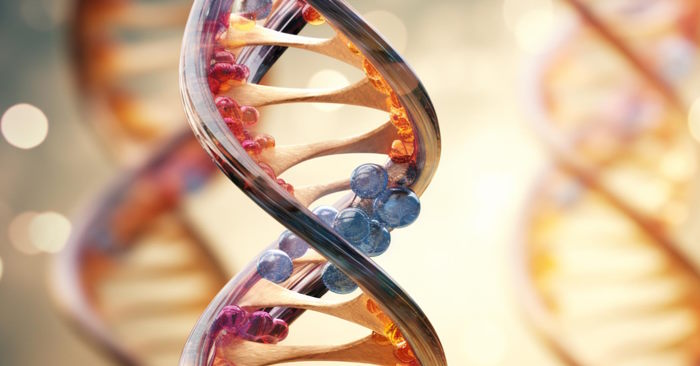
DNA is more than a carrier of inherited information. Researchers can encode other data in its sequence, use complementary strands to assemble structures, or introduce a gene that gives an organism a new biochemical capability.
These five research projects illustrate those different approaches. They are experiments with specific results and limitations, rather than a list of finished consumer products.
1. Storing movie frames in bacterial DNA
In 2017, researchers used a CRISPR-based system to encode images and a short sequence of a galloping horse into the DNA of a population of Escherichia coli. They translated pixel and frame information into DNA sequences, supplied that information over time, and later reconstructed the sequence by reading DNA from the bacterial population.
The important distinction is that the bacteria stored a movie supplied by researchers. They were not miniature cameras filming the inside of a cell, and the demonstration did not show doctors watching events inside a patient.
The Wyss Institute's account explains the experiment and its longer-term motivation: developing molecular recorders that might eventually preserve information about cellular events. Storing a prepared image sequence was a controlled way to test the recording approach.
2. A fluorescent nanoantenna for protein changes
A DNA-based sensor described in Nature Methods uses a fluorescent molecule to report changes in a protein's behavior. The researchers developed an antenna about five nanometers long, designed so that interactions with the protein alter the light signal scientists can measure.
Here, “antenna” refers to receiving and emitting light, not broadcasting a radio signal. DNA provides a programmable molecular structure for positioning the fluorescent reporter and tuning its interaction with the target.
The research paper concerns monitoring protein conformational changes. It should not be described as a general-purpose device already observing all proteins inside living cells or as a proven medical treatment. Its value is as a research tool for investigating molecular behavior.
3. A reconfigurable DNA tic-tac-toe board
In 2018, Caltech researchers demonstrated a microscopic tic-tac-toe board made with DNA nanostructures. This was not a checkers board or simply a computer simulation of a tiny game.
DNA origami uses designed strands and complementary base pairing to build shapes. The team combined self-assembling tiles with strand displacement, allowing special tiles to change an already assembled pattern. Adding the appropriate DNA tiles produced moves represented by Xs and Os.
As Caltech explains, the broader advance was reconfiguration: a molecular structure could change after it was built. The game made that capability visible. It was a laboratory demonstration, rather than a fast miniature replacement for an ordinary board game.
4. Using DNA placement to make a glowing Starry Night
Caltech's 2016 reproduction of Vincent van Gogh's The Starry Night used DNA origami to position fluorescent molecules inside microfabricated light resonators called photonic crystal cavities. Controlling the placement and number of emitters controlled each tiny light source's brightness.
The resulting image was monochrome and about the width of a dime. The nanoscale precision was in positioning the components; the entire picture was not a multicolored painting only a few nanometers across.
The project report presents it as a proof of concept for placing molecular components in chip-based structures. That is a step toward potential optical devices, not evidence that the artwork itself was a working molecular computer.
5. Engineering pothos to process specific air pollutants
In 2018, University of Washington researchers modified pothos ivy, Epipremnum aureum, to produce the rabbit form of the protein cytochrome P450 2E1. They introduced a synthetic version of the gene carrying the instructions for that protein.
The modified plants reduced concentrations of chloroform and benzene in controlled glass-tube experiments. Ordinary pothos plants in the comparison did not show the same effect. This example uses DNA to change a plant's chemistry, rather than building a filter directly from DNA strands.
The university's report also describes the limits: test concentrations were higher than typical household levels, and a practical system would need air moved past the leaves. The two pollutants decreased at different rates; the results do not mean every toxin disappeared after eight days.
The experiment does not establish that placing an ordinary houseplant in a room replaces ventilation or a suitable air-cleaning system. Its significance is the demonstrated biochemical capability under the conditions tested.
Related Articles
 Russian and Chinese Scientists Do Incredible Things with Nvidia GPUs
 30 surprising facts in the world surprise both 'smartest' people
 Humanity’s Last Exam: What the AI Benchmark Measures
 7 surprising truths you may not know yet
 The surprising truth behind the strange circles under the ocean startled the scientists
 How to Create Stranger Things-Inspired Fan Art with Gemini
Reader Comments 0
Sign in with email or Google to join the discussion.