Table of Contents
This guide provides a practical overview of Task View Key, Virtual Desktop on Windows 10, including its main features, benefits, limitations, and important considerations.
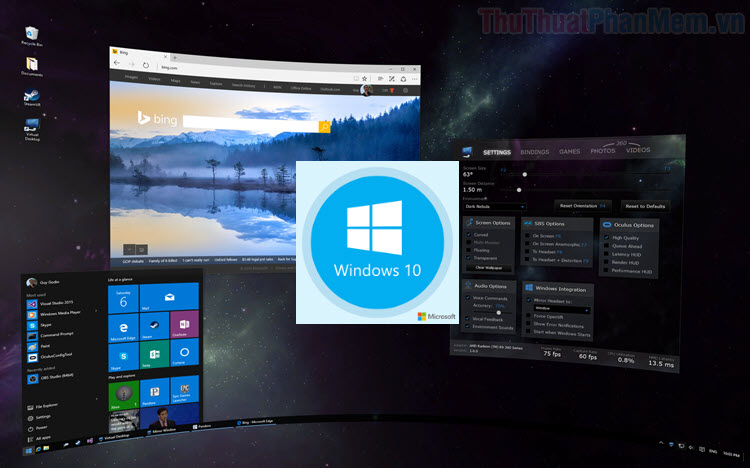
I. Task View key, Virtual Desktop on Windows 10
To access Task View, create a virtual Destop we have a lot of ways from Manual to keyboard shortcuts. This guide will learn all the ways:
1. Launch Task View via the Taskbar
The Taskbar is always available on the Taskbar of Windows 10, but unfortunately you lose it, you can display the Task View button again as follows:
Right-click on the Taskbar and select the Show Task View button to display the Task View button .

When the Task View button appears, click to use Task View to create a virtual Desktop.

After Task View appears, select New Desktop to create a virtual Desktop on the computer.

2. Start Task View with a shortcut
To launch Task View quickly, you can use the keyboard shortcut Windows + Tab .

After Task View appears, select New Desktop to create a virtual Desktop on the computer.
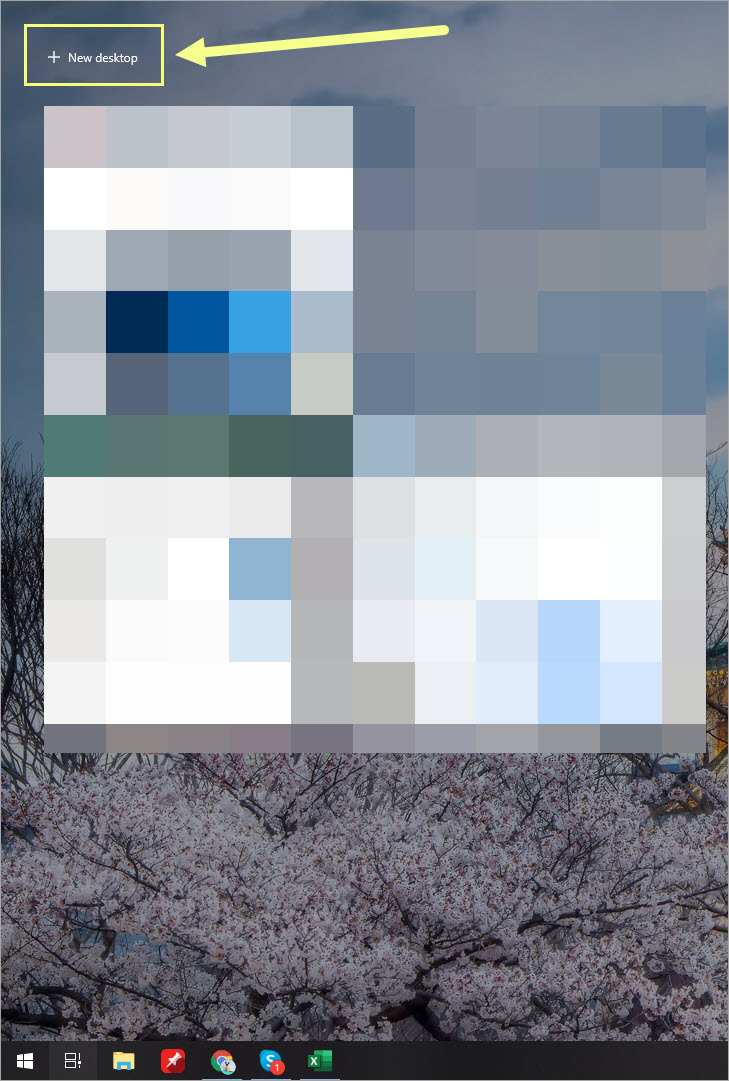
3. Create a virtual Desktop with keyboard shortcuts
To create the fastest virtual desktop, you use the keyboard shortcut Windows + Ctrl + D . Immediately, a new virtual Desktop is created for you and you are automatically transferred to the newly created virtual Desktop.

Immediately, a new virtual Desktop is created for you. If you are using the virtual desktop and click this combination, you will create the next virtual desktop.
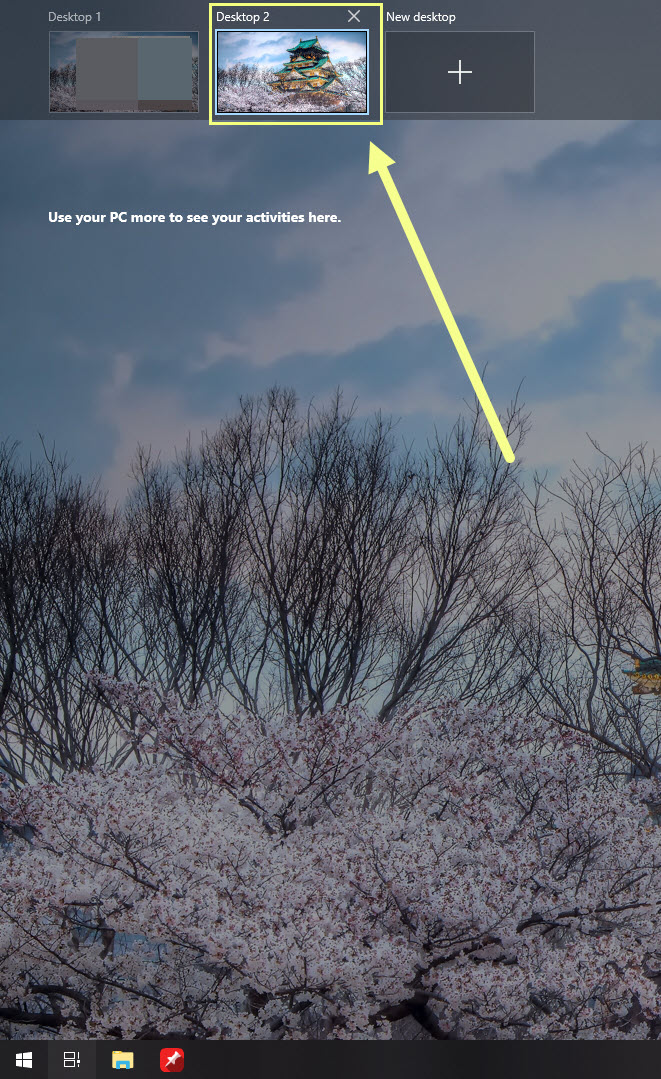
II. Some operations with virtual Desktop on Windows 10
1. Switch applications between Desktop
To transfer applications between desktops, you have 2 ways as follows:
- Hold and drag the application from Task View to the virtual Desktop you want to use.
- Right-click the application in Task View and select Move to -> Virtual Desktop you want to use.
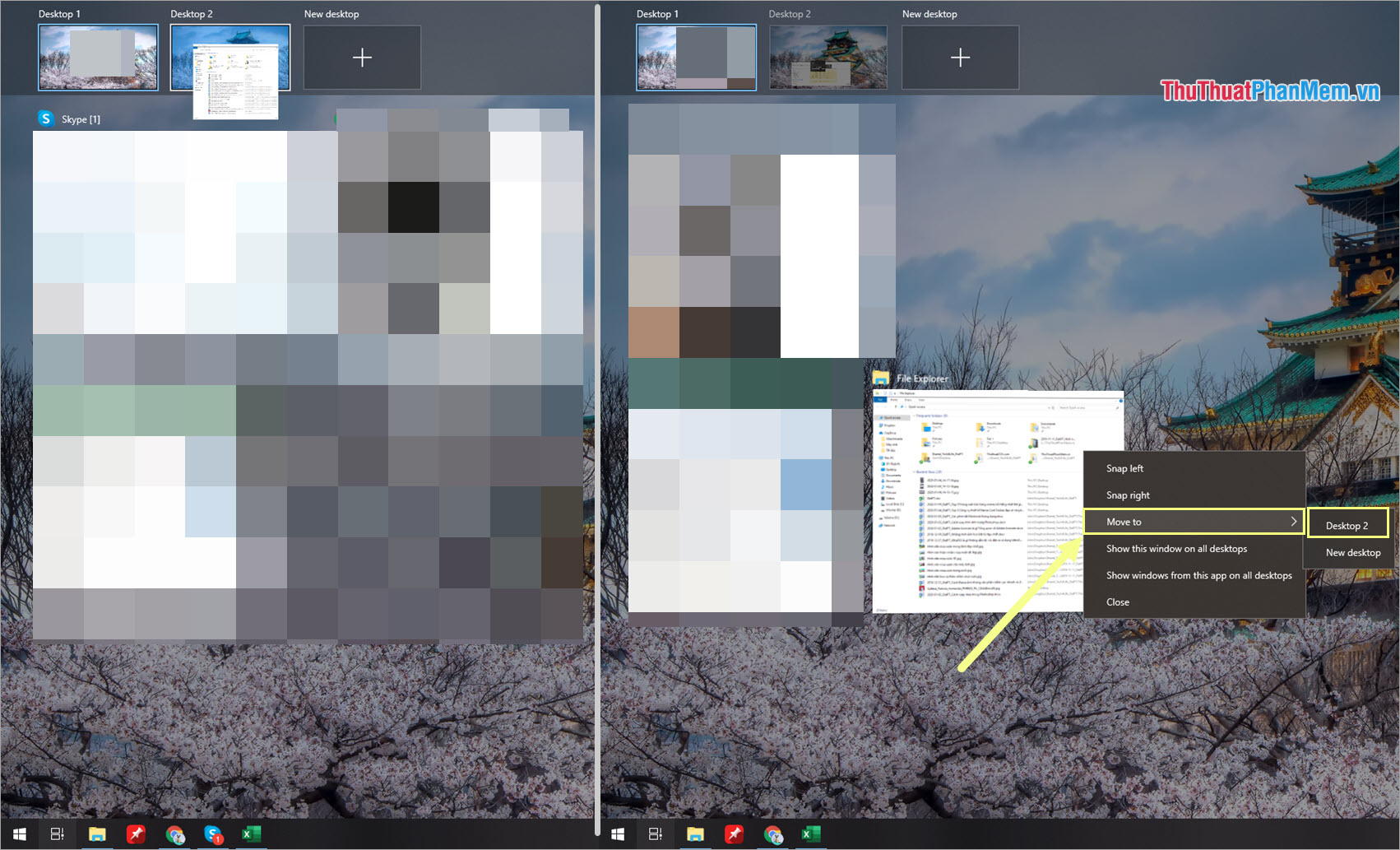
2. A number of application multitasking operations on Task View and Virtual Desktop
When you right-click on the application, the folder is starting on the computer you will see the following options:
- Snap Left: Display the application / folder in 1⁄2 screen on the left
- Snap Right: Display the application / folder in 1⁄2 screen on the right
- Move to: Move applications between virtual desktops
- Show this windows on all Desktop: Show application / folder windows on all Desktop screens (including virtual and real Desktop computers)
- Show windows from this app on all desktops: Show all application windows on all Desktop screens (including virtual and real Desktop)

3. Turn off the Virtual Desktop
To turn off the virtual Desktop, click the X button on each Desktop window in Task View. When you turn off the virtual desktop, all applications / windows in the virtual desktop will be moved to the main desktop for you to continue working.

In this article, the Software Tips guide you on Task View keys and how to create virtual Desktop in Task View quickly and effectively. Good luck!
FAQ
What should I know about Task View Key, Virtual Desktop on Windows 10?
Focus on the key features, requirements, limitations, and practical use cases explained in this guide.
How do I get the best results with Task View Key, Virtual Desktop on Windows 10?
Follow the recommended steps, use current software or information, confirm compatibility, and review settings before major changes.
Are there any risks or limitations?
Potential limitations depend on compatibility, data quality, cost, privacy, support, and how the product or method is used.
Related Articles
 How to Rename Virtual Desktop in Windows 102 minutes read
 How to Use Task View on Windows 11: Practical Guide11 minutes read
 How to Open a File or an Application on a Virtual Windows 106 minutes read
 How to Hide the 'Task View' Button on Windows 113 minutes read
 How to Use Multiple Virtual Desktops in Windows 106 minutes read
 How to Use Virtual Desktop on Windows 10?7 minutes read
Reader Comments 0
Sign in with email or Google to join the discussion.