Table of Contents
This guide provides a practical overview of Spacing Lines, including its main features, benefits, limitations, and important considerations.

Here are the line spacing in Excel, please follow along.
Option 1 : Select the lines that need to be indented in Excel (can be 1 line or adjacent lines or non-adjacent lines) and move the mouse to the number of lines and stretch at one position.
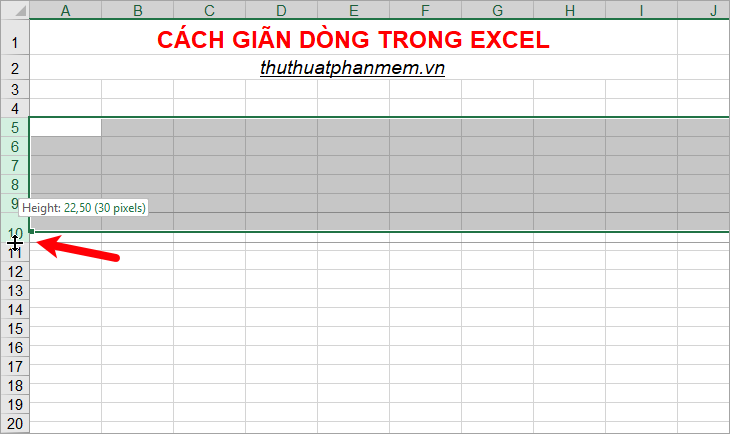
So all the lines you choose will be stretched the way you adjust them.

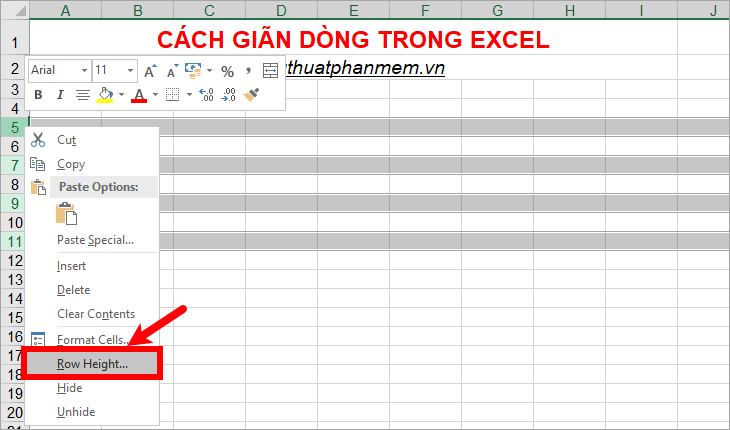
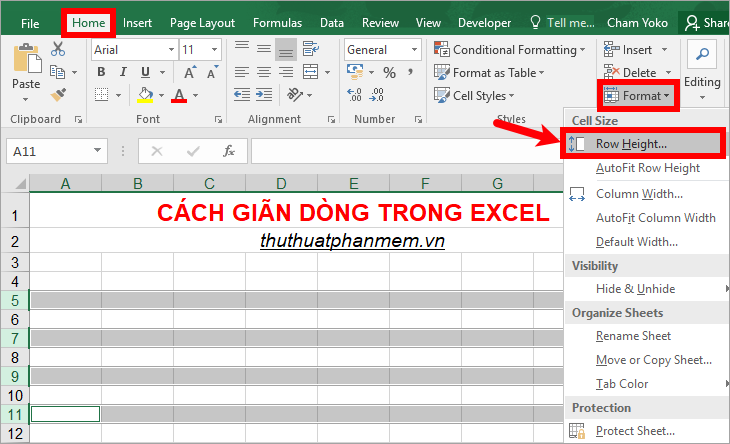
Method 2 : Select the lines that need to be indented in Excel (it can be 1 line or adjacent lines or non-adjacent lines), right-click and select R ow Height.
Or you choose Home -> Format -> Row Height.
The Row Height dialog box appears, enter the size you want to stretch and click OK to close the dialog box.

So all the lines you choose will be spaced the same.

Method 3: Automatic line spacing.
Select the lines that need to be stretched in Excel (can be 1 line or adjacent lines or non-adjacent lines), next you choose Home -> Format -> AutoFit Row Height.
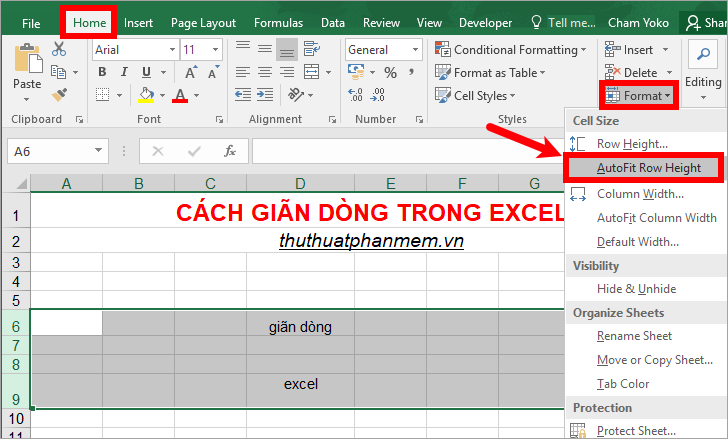
So automatically line will be spaced in words in the line you choose.

Above are the line breaks in Excel, you can choose the fastest and most appropriate line spacing. Hope this article will help you. Good luck!
FAQ
What should I know about Spacing Lines?
Focus on the key features, requirements, limitations, and practical use cases explained in this guide.
How do I get the best results with Spacing Lines?
Follow the recommended steps, use current software or information, confirm compatibility, and review settings before major changes.
Are there any risks or limitations?
Potential limitations depend on compatibility, data quality, cost, privacy, support, and how the product or method is used.
Related Articles
 How to Number the Lines in Excel: Complete Guide6 minutes read
 How to Adjust Line Spacing and Line Spacing in Excel2 minutes read
 How to Create Double Spacing Between Lines in Google Docs7 minutes read
 Excel with Hidden Lines - How to Hide Lines and Display Hidden Lines in3 minutes read
 Instructions on How to Fix Excel Line Spacing Error: Main Insights6 minutes read
 Full Word Tutorial 2016 (Part 7): Use LINE and Paragraph Spacing4 minutes read
Reader Comments 0
Sign in with email or Google to join the discussion.