Table of Contents
Explore signs to recognize a boss with low emotional intelligence through 3 simple.

Emotional intelligence is an important quality, both at work and in life. The ability to recognize and understand emotions, regulate behavior, adapt to different social contexts, and empathize with the people around you can help strengthen relationships and even boost your self-esteem.
Emotional intelligence, also known as emotional quotient (EQ), is especially valuable for leaders who shape teamwork and communication at work.
According to Daniel Goleman, a Harvard-trained psychologist and author of 'Optimal: How to Sustain Personal and Organizational Excellence Every Day': A lack of EQ can significantly damage your mental health and stunt your growth.
Specifically, Goleman suggests that strong and effective leaders should avoid the following three bad habits:
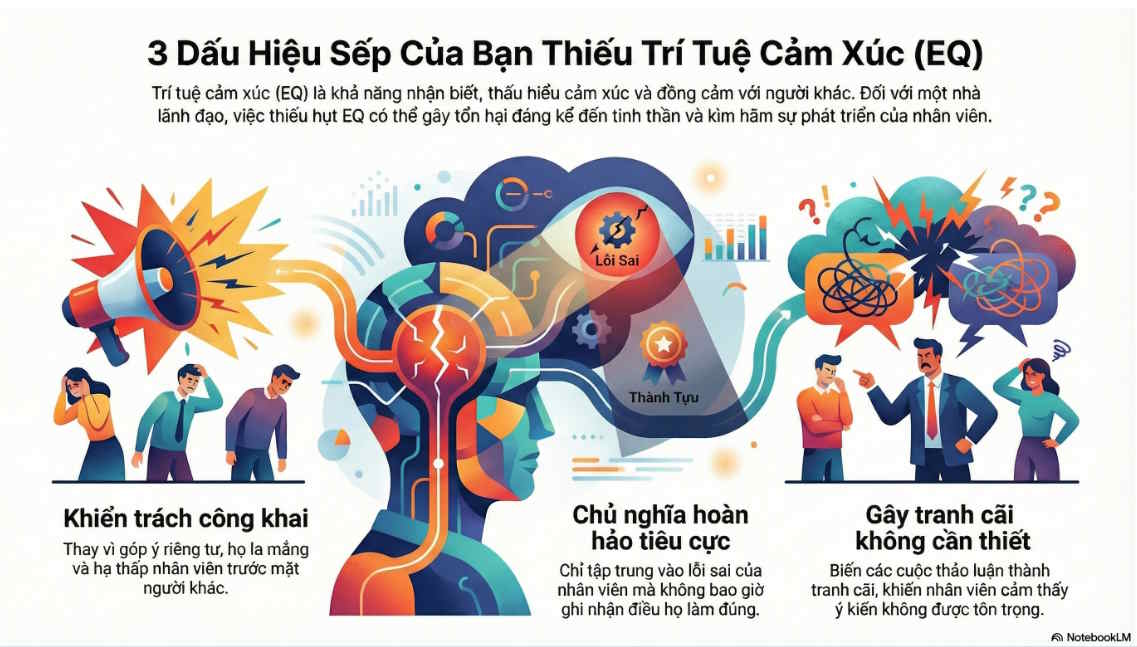
Public reprimand
Let's say you make a mistake in an important presentation. Instead of taking some time to discuss the issue privately, your boss publicly reprimands you for what you did wrong - trying to set an example for others.
Obvious signs of low emotional intelligence include ' getting angry and letting others know ,' or a boss who openly yells at and belittles direct reports , Goleman says. Research shows this alienates employees, and they then dislike that boss.
Perfectionism
Motivating employees to improve is a necessary part of any boss's job. But when it becomes a constant "drumbeat," without positive feedback, it's a bad sign.
Leaders who only see ' what is wrong with others, and never what is right, ' will lower employee morale. They may 'direct this criticism at themselves, or at themselves, ' Goleman said.
For example, former IBM CEO Ginni Rometty was nicknamed ' Red Pen ' for her constant grading and correction of employees' work, she shared at last year's World Business Forum summit in New York. A wake-up call from a colleague helped her realize that her obsessive search for errors was a problem.
One person said something like, ' You know, people don't even want to try their best, because you're going to change and fix it. It's never going to be good enough ,' she said. ' It's quite disempowering for people. I was disempowering them. Of course, that was never my intention, but I learned to stop. '
If you want to change, start by helping your perfectionist boss realize that they are creating a negative environment—for both the workplace and themselves. They will either burn out or trap themselves in an endless cycle of procrastination.

Unnecessary arguments
Workplace arguments are common. People who turn those conversations into arguments often lack emotional intelligence – especially bosses – who are supposed to be leaders in the workplace and should understand.
Leaders who " always argue and never agree " can make employees feel like their opinions aren't valued, or that they're incapable of getting the job done.
" Continuous arguing weakens the group ," he added. " It's better if a leader can help resolve disputes ."
Instead of fighting, people with high EQs will acknowledge the feelings and experiences of others. They are also willing to change their own perspective.

Emotional intelligence is about your ability to change over time as you learn and grow. People with low emotional intelligence tend to be more rigid and will resist efforts to change or grow. Remember that strong beliefs are important, but so is being open to new possibilities.
Final Thoughts
Understanding signs to recognize a boss with low emotional intelligence through 3 simple habits makes it easier to evaluate the information and apply the most relevant recommendations. Focus on the key points above and verify details that may change over time.
FAQ
What is signs to recognize a boss with low emotional intelligence through 3 simple habits?
Explore signs to recognize a boss with low emotional intelligence through 3 simple.
What key points does this article cover?
The article focuses on Public reprimand, Perfectionism, Unnecessary arguments, with practical explanations and examples.
How can you use this information in practice?
Use the explanations to compare options, verify important details, and make a more informed decision. Apply the recommendations that best match your goals and situation.
Related Articles
 11 Clear Signs That You Are a Low EQ9 minutes read
 13 Signs That You Have a High Emotional Intelligence Index7 minutes read
 Six Important Criteria Help Increase the Emotional Intelligence8 minutes read
 Improve Everyday Intelligence with 10 Super Simple Habits6 minutes read
 12 Signs That You Are Smarter Than I Thought6 minutes read
 These 2 Interview Questions Will Reveal Which Candidates Have8 minutes read
Reader Comments 0
Sign in with email or Google to join the discussion.