Table of Contents
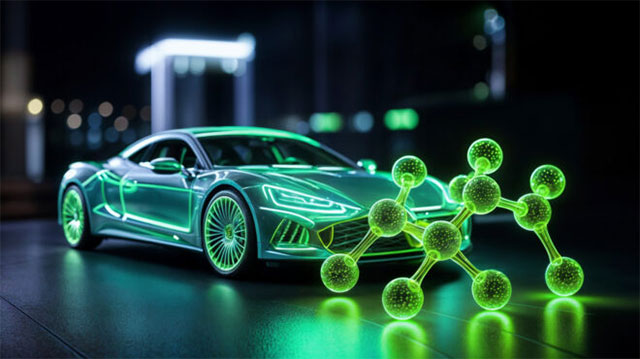
In the race to develop electric cars, drones and spacecraft, 'weight reduction' is a key goal. Less weight means less energy is wasted, allowing batteries to operate more efficiently and travel further. Importantly, better performance also means less carbon emissions.
Electric motors are at the heart of this effort. The windings make up a large portion of the motor's mass, and most of them are made of copper. Copper is a good conductor of electricity, but it comes with a host of problems: limited supply, volatile prices, and especially large mass due to its high atomic density.
A research team led by Dr. Dae-Yoon Kim at the Composite Materials Research Institute (KIST – Korea Institute of Science and Technology) has successfully created an electric motor that uses coils made entirely of carbon nanotubes (CNTs), without any metal. In testing, the team was able to adjust the motor's rotations per minute (RPM) according to the input voltage, proving that the motor can perform its basic function – converting electrical energy into rotational force – without the need for a metal conductor.
CNTs – nanomaterials open a new era
Carbon nanotubes (CNTs) are one-dimensional, tubular materials in which carbon atoms are arranged in a honeycomb lattice. CNTs are much lighter than conventional metals, and have high electrical conductivity, superior mechanical strength, and good thermal conductivity. However, the practical application of CNTs has encountered a major obstacle: residual catalyst metal particles from the manufacturing process often adhere to the surface of CNTs, reducing electrical conductivity and directly affecting engine components.
To solve this problem, the KIST team developed a new CNT purification process based on the 'alignment' phenomenon of liquid crystals – a special state of matter that lies between liquid and solid. When CNTs are aligned, the natural particle clusters are broken down and metal impurities are removed from the surface, without damaging the nanostructure. This is a major advantage over many current liquid or gas phase purification methods. As a result, the purified CNTs achieve significantly higher electrical conductivity, enough to be applied to motor coils.
The future of metal-free engines
After refining, the team created coils from CNTs and tested them in motors. The results showed that the motors operated stably, adjusting RPM flexibly according to voltage. If the technology is scaled up, the lighter coils would help reduce the weight of the motors and the entire system. It could also reduce dependence on copper, limiting risks related to price and supply.
Future research will need to compare in more detail the power density, performance, heat dissipation, and cost against copper-based designs under real-world conditions.
' By developing high-quality pure CNT technology – which has never existed before – we have maximized the electrical performance of CNT coils, allowing electric motors to operate without metal ,' said Dr Dae-Yoon Kim. ' Based on this breakthrough, we will expand into many areas, from conductive materials for batteries, semiconductor cladding, to robot cables. '
Final Thoughts
Overall, Scientists Invent Electric Motor That Uses No Metal at All is best understood by considering the main facts, practical context, and limitations together. Use the details above as a clear starting point and confirm time-sensitive information when necessary.
FAQ
What does this article explain about Scientists Invent Electric Motor That Uses No Metal at All?
In the race to develop electric cars, drones and spacecraft, 'weight reduction' is a key goal. Less weight means less energy is wasted, allowing batteries to operate more efficiently and travel further.
What should you know about CNTs – nanomaterials open a new era?
Carbon nanotubes (CNTs) are one-dimensional, tubular materials in which carbon atoms are arranged in a honeycomb lattice.
Should time-sensitive details be verified?
Yes. Software features, game codes, product specifications, prices, and research findings can change. Confirm important details with an official or primary source when accuracy affects your decision.
Related Articles
 Successfully Formulated, Programmable, Liquid Metal Fabrication3 minutes read
 Pin: How to Repair an Electric Fan14 minutes read
 How to Make Your Powerwheels Faster: Step-by-Step Guide7 minutes read
 Flying Electric Cars Can Reach Speeds of 300 Km/h to Help You Fly Anywhere4 minutes read
 The World's Largest Electric Motorbike Can Travel 720 Km on a Full Charge4 minutes read
 Scientists Have Created the World's First Liquid Metal Lattice5 minutes read
Reader Comments 0
Sign in with email or Google to join the discussion.