Table of Contents
Explore reactos turns 30: the 'open-source Windows' continues to develop quietly.
After years of development, the project has made considerable progress, from supporting Microsoft's FAT file system, Registry caching, native.zip file handling, to the ability to run the classic Hover! game in full-screen mode. And now, ReactOS officially celebrates its 30th anniversary.
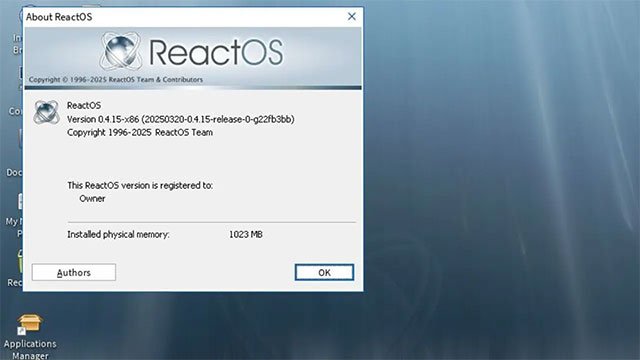
In a commemorative blog post, Carl Bialorucki – a core ReactOS developer – reviewed the operating system's development history, noting that the first commit to the source code repository was made exactly 30 years ago.
The period from 1996 to 2003 was a time when ReactOS was still "finding its footing," after the FreeWin95 project – which aimed to create a clone of Windows 95 – stalled. ReactOS then adjusted its direction, focusing on building an operating system kernel based on the Windows NT architecture, before developing drivers around that platform. Eric Kohl, who wrote the first stored driver for ReactOS, shared that he learned about the project while searching for sample code for his WINE contributions. After observing community discussions, he began porting FreeDOS command.com to a Win32 console application, with the goal of extending it to be compatible with 4DOS – a very powerful command-line interpreter at the time.
On December 4, 1998, Eric officially introduced himself and proposed using a modified command.com script as the future cmd.exe for ReactOS. After submitting source code and patching bugs, he was granted direct write access to the code repository. According to Eric, the working atmosphere at the time was very open and friendly, without the conflicts or 'internal wars' that had occurred in some other projects.
ReactOS reached version 0.1.0 in February 2003, featuring a command-line interface (CLI) that could boot directly from a CD. Between 2003 and 2006, the project saw significant progress, including a new graphical desktop interface and additional drivers. However, development was halted due to concerns that some contributions might use proprietary Windows code. This led to a comprehensive source code audit to avoid potential legal action from Microsoft.
Between 2006 and 2016, ReactOS 0.3.x was developed with many important features such as network support, a package manager and UniATA drivers, allowing work with SATA drives and partitions larger than 8GB. Currently, the ReactOS 0.4.x series supports kernel debugging using WinDbg when compiled with MSVC, has a new graphical shell with an architecture very similar to Windows Explorer, and many other improvements.
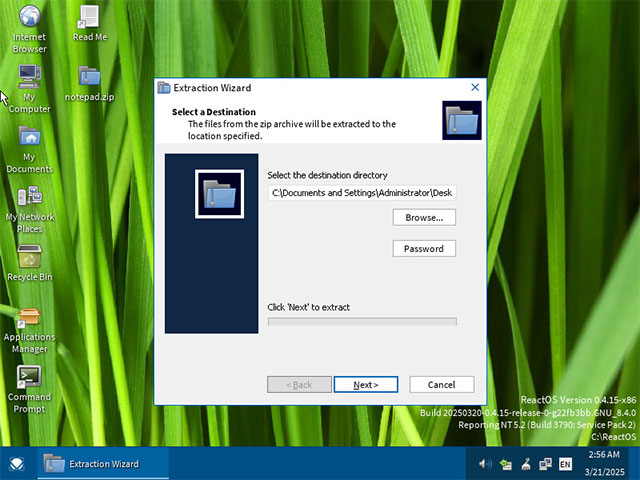
Despite its 30-year history, ReactOS continues to generate community interest. Looking to the future, Bialorucki stated that the development team is considering integrating several 'off-tree' projects into the operating system, including a new build environment for developers, new NTFS and ATA drivers, an address space randomization (ASLR) mechanism for the kernel and user mode, and support for modern GPU drivers based on WDDM. For those interested, ReactOS currently allows financial contributions or direct participation in development on GitHub.
Final Thoughts
Understanding reactos turns 30 makes it easier to evaluate the information and apply the most relevant recommendations. Focus on the key points above and verify details that may change over time.
FAQ
What is reactos turns 30?
Explore reactos turns 30: the 'open-source Windows' continues to develop quietly.
What key points does this article cover?
The article explains the core concept, important considerations, and practical details readers should understand.
How can you use this information in practice?
Use the explanations to compare options, verify important details, and make a more informed decision. Apply the recommendations that best match your goals and situation.
Related Articles
 Reactos -- 'an Unauthorized Copy of the Windows Research Kernel'5 minutes read
 How to Create Live USB or Cd Reactos5 minutes read
 Can Open Source Technology Make Money?5 minutes read
 Linux Is Everywhere: Tips and Examples11 minutes read
 Try Switching Everything to Open Source for a Week, You'll Be Amazed!6 minutes read
 What Is Open Source Software?7 minutes read
Reader Comments 0
Sign in with email or Google to join the discussion.