Table of Contents
This updated guide explores nine puzzles: a korean thriller that weaves together crime psychology with practical details, clear explanations, and useful takeaways. Nine Puzzles is not your average Korean drama. Nine Puzzles is a crime thriller, a psychological maze built around hidden and repressed memories, unanswered doubts, and a "path" of puzzle pieces that reappear after a decade.
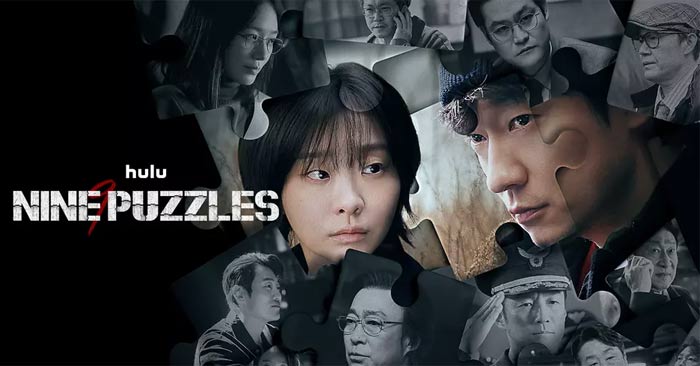
- Genre : Crime thriller, psychological mystery, drama
- Actors : Kim Da-mi, Son Suk-ku, Kim Sung-kyun, Hyun Bong-sik, Hwang Jung-min, Park Sung-woong, Lee Hee-jun, Park Gyu-young, Ji Jin-hee
- Director : Yoon Jong-bin
- Release Date : May 21, 2025 (Disney+)
Nine Puzzles excels at creating an atmosphere thick with paranoia and emotional weight. Kim Da-mi and Son Suk-ku deliver layered, mesmerizing performances that elevate the film beyond its genre roots. The visual storytelling is striking—stylized just enough—and creates a world where trauma shapes every scene. The narrative structure, with its broken timelines and shifting suspicions, keeps the viewer constantly off-balance in the best way. Perhaps most refreshing is that Nine Puzzles refuses to 'sanitize' its characters; everyone is flawed, damaged, and hiding something, making each revelation feel truly earned. The dynamic between profiler and detective isn't about resolution, it is about reckoning. it is something that lingers long after the credits roll.
Main Content of Nine Puzzles
A decade after being the sole suspect in her uncle's unsolved murder, criminal profiler Jo I-na finds herself drawn into a series of new murders—each marked by the same puzzle piece left at the original crime scene. Still suspected by Detective Han-saem and surrounded by a group increasingly involved in the case, I-na must confront old wounds, hidden truths, and a growing mystery that forces her to question not only others, but herself.
At the heart of the film is Jo I-na (Kim Da-mi), a former teenage suspect in her uncle's murder who is now a prodigious criminal profiler. Opposite her is Detective Han-saem (Son Suk-ku), who has never fully abandoned his suspicion that she is guilty. When a new wave of murders resurfaces the unsolved case, the two are reluctantly drawn together in suspicion, obsession, and empathy.
Director Yoon Jong-bin does not aim for documentary realism; instead, he creates wide, surreal images—shots that move from haunting to borderline absurd, from grim to darkly humorous. The effect is soothing, deliberate, and strangely addictive.
Nine Puzzles does not give you the answers. It challenges you to find them — and warns you that you might not like what you find.
Bloody Beginning
Nine Puzzles does not open with a bang — it opens with a rupture. A rupture in time, in memory, in identity. When Jo I-na finds her uncle's body — an awl hammered into the back of his neck, a lone puzzle piece beside him — her life is irreparably shattered. She's the only one at the scene. There was no break-in, no other fingerprints. She insists she didn't do it. But the detective in charge, Kim Han-saem, does not believe it — and neither do many others. Without solid evidence, the case goes cold. But I-na is never cleared. She enters the "prison of whispers."
A decade later, Seoul is bleeding again. Murders recur, each more brutal than the last—and each one connected to the original case with crazy pieces. I-na, now a criminal profiler, is pulled back into the center. But this time, suspicion does not fade. It deepens. She's found at multiple crime scenes. I-na's past resurfaces, her motives questioned. Even the task force investigating the case—including Han-saem's team—begins to strain under the weight of growing suspicion.
The film's most compelling point isn't just the question of who the killer is — it is the question of what the killer looks like. Guilt drips from every character. The film sprinkles doubt like breadcrumbs, leading the viewer into a forest where no one, not even the so-called heroes, can live cleanly.
Strange Intimacy
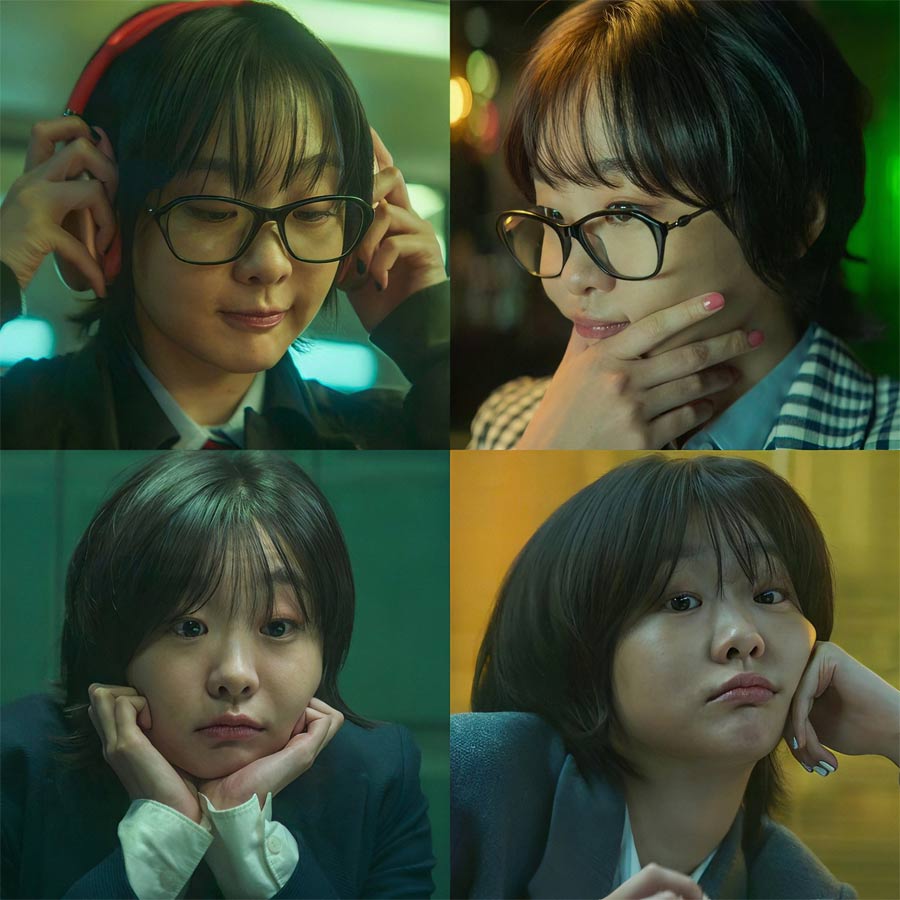
Nine Puzzles deftly turns the concept of a detective duo into something psychologically edgy. Jo I-na isn't just eccentric—she's dangerous. Not because she's armed, but because I-na is difficult to read. Kim Da-mi plays the character as a woman constantly caught between the brilliance of a genius and the vulnerability of a child. I-na does not solve these murders—she's drawn into them, step by step, with growing intimacy and alibis that are increasingly lacking. She's either a talented profiler, or she's hiding something monstrous. Maybe both.
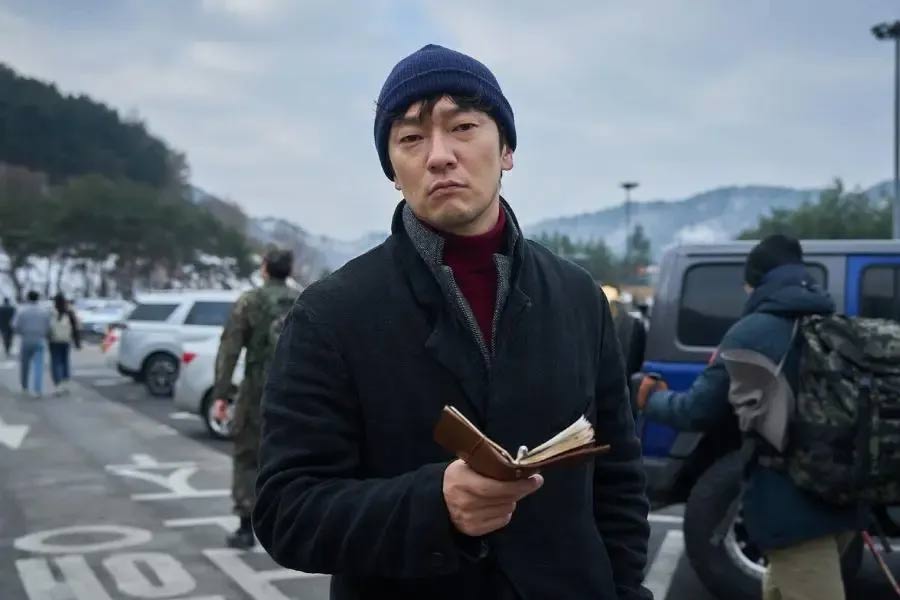
Son Suk-ku's Han-saem is not a clean-cut detective either. His obsession with the original case cost him everything: his rank, his reputation, his sleep. He still sees I-na through the eyes of a young cop who walked into a bloody living room and found a girl who didn't cry. His gaze is forensic but not impartial. Their shared past permeates every interaction, every hesitation. His colleagues distrust I-na. Some want her gone. But Han-saem keeps her close—to protect or to imprison.
And then there's the strange intimacy: I-na moves into his house uninvited, like a squatter with PTSD. In one scene, I-na tells her therapist that she hasn't slept in ten years—until now, under his roof. What could have been whimsical instead comes off as deeply sad. Two people bound by a death neither of them can bury.
The chemistry between these two is really good. They show a psychological instability that never goes away. Their connection is one of questions, not answers. And that is what makes them relatable.
Stylized Paranoia
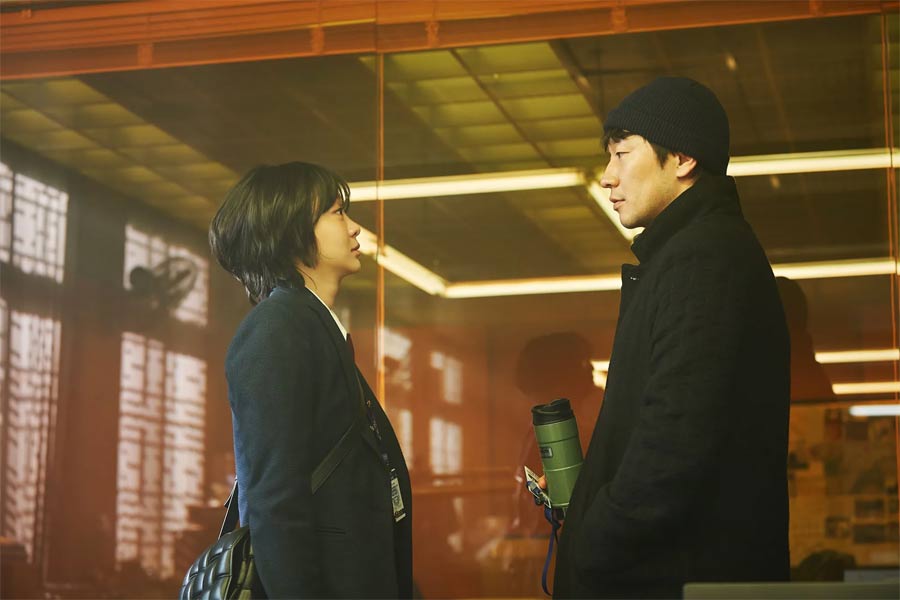
From the moment Nine Puzzles begins, it is clear that this is no ordinary crime thriller. Director Yoon Jong-bin has deliberately steered clear of gritty realism and plunged headlong into something much stranger—a world where trauma warps tones and colors, where every frame feels a few degrees off-center. The result? A visual language as terrifying as the crimes themselves.
The aesthetic is a little absurd, but never veers into mockery. Han-saem's signature beanie, I-na's oversized coat, the soft neon lighting of the interrogation room—all hint at a world that has stopped obeying logic. Even the corpses are stylized, framed like paintings in a madhouse gallery. But make no mistake: this artificiality never diminishes the emotional sharpness. In fact, it adds to it.
The camera movement is restrained, almost voyeuristic. The lens lingers a little too long, capturing the kind of micro-expressions that betray characters more than their words. The editing leans more toward slow burn than sudden jump scares. it is not so much about shocking you — it is about making you gasp in disbelief.
This review of Nine Puzzles would be remiss if it didn't praise the director's control of tone. The film straddles an odd line: dark yet quirky, surreal yet heartfelt. it is a noir, yes—but a noir dressed up in theatrical makeup, laughing at the darkness.
Psychological Fragments
For all its blood and murky suspects, Nine Puzzles is, at its heart, a study of fragmentation—of memory, of morality, of the self. Every character in the film is broken, not just by what they've seen, but by what they've chosen not to see. And nowhere is that more apparent than in Jo I-na's haunting confession: " I do not remember what happened ." it is a line that echoes throughout the story like a trapdoor that no one wants to open.
The film does not treat trauma as flavor—it treats it as foundation. I-na's inability to remember the truth about her uncle's death isn't a metaphor; it is a psychological prison. Her therapy sessions aren't moments of clarity but of erosion, as if each visit to her own mind threatens to tear it apart further. Meanwhile, Han-saem is slowly becoming the very thing he once tried to defeat: obsessive, paranoid, believing that justice and punishment are synonymous.
What makes the film so emotionally resonant is that guilt never lies with just one person. It spreads, passed from character to character, contaminating the entire group, even the audience. No one is completely innocent. Everyone is locked in a glass case.
The central mystery may be on the outside, but the real horror—the lingering horror—lies within. The puzzle isn't just the murders. it is who these people became because of them.
Story Structure, Pacing, and Effectiveness
If you go into Nine Puzzles expecting a clear process—solving a case episode by episode, building a linear timeline, revealing the killer at the end—you'll be sorely disappointed. The show plays a long game. it is structured more like a slow bleed than a sprint, dispersing information in fragments that often get confusing before they're finally made clear. It demands attention, trust, and a willingness to feel lost.
Nine Puzzles is 11 episodes long. The first six episodes allow viewers to immerse themselves in the show's distinctive rhythm: a blend of nonlinear storytelling, psychological twists, and character-driven subplots that often seem unrelated… until they are. Flashbacks appear without warning. Dreams bleed into reality. Doubts bounce from character to character like a live wire.
This isn't just a narrative choice—it is a thematic structure. It mimics the story's obsession with memory: fragmentary, unreliable, coherent only in retrospect. Even the pacing feels like emotional punch. One moment you're chasing a clue, the next you're sitting silently, watching a character collapse under the weight of a question they cannot answer.
it is worth pointing out that the storytelling isn't always kind, but it is always intentional. The show never loses focus on its central game—and by the end, every little detail has its place.
Final Answer: Where Does the Puzzle Piece Go?
Nine Puzzles isn't built like a crime drama. It leaves you unsettled in a way that procedural dramas rarely do, not because of the death count but because of the emotional toll. While you may not have solved every mystery by the time the credits roll, you'll understand exactly why it had to break the characters down that way.
Those expecting a pure, punchy thriller may find themselves at odds with Nine Puzzles' meditative pace. But for those willing to accept its ambiguity, Nine Puzzles offers something rare: a crime drama that is humane, flawed, and acutely aware of the wounds it digs into.
Nine Puzzles does not just ask "who did it?" — it asks "what did it do to them?" And the answer, both disturbing and beautiful, is what makes the series stand out in the growing canon of Korean horror films.
In a landscape rife with violence for violence's sake, Nine Puzzles chooses violence as metaphor, as memory, as mirror. It may not be easy to watch, but it is a film you will not forget.
FAQ
What is the main takeaway about Nine Puzzles: A Korean Thriller That Weaves Together Crime Psychology?
The key is to understand the core idea, compare the available options, and apply the practical guidance that matches your situation.
What should beginners know about Nine Puzzles: A Korean Thriller That Weaves Together Crime Psychology?
Start with the essential steps and terminology. Avoid changing advanced settings until you understand how they affect performance, privacy, cost, or compatibility.
How can I use this information in practice?
Follow the relevant section in order, test one change at a time, and confirm the result before moving to the next step or recommendation.
Related Articles
 Crime Scene Zero: Complete Guide5 minutes read
 How to Use Snapchat Memories9 minutes read
 Five Puzzles That Challenge Your Wits3 minutes read
 Korean Movies That Cause Fever Should Not Be Missed5 minutes read
 10 Logic Puzzles That Test Your Eyesight and Thinking3 minutes read
 7 Best Korean Dramas to Watch on Netflix7 minutes read
Reader Comments 0
Sign in with email or Google to join the discussion.