Table of Contents
Agent Hospital is a virtual research environment, not a physical hospital staffed by autonomous AI doctors. Developed by researchers associated with Tsinghua University, it simulates medical visits using large-language-model agents that play the roles of patients, nurses, and doctors.
The project is intended to study how medical agents can learn through simulated cases and how such systems might support research, training, or future clinical tools. Its benchmark results should not be interpreted as permission to use an AI chatbot for diagnosis or treatment.
How the virtual hospital works
In the simulation, patient agents present illnesses, nurse agents help manage the consultation process, and doctor agents gather information, recommend examinations, make a diagnosis, and propose treatment. The interactions generate experience that can be used to improve the doctor agents without manually labeling every simulated case.
The researchers reported that agents trained on tens of thousands of virtual patient encounters outperformed comparison methods on MedQA, a question-answering benchmark based on US medical licensing exam questions.
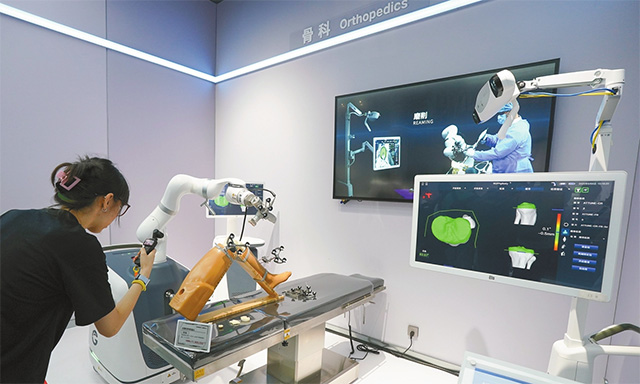
What the results do—and do not—show
Performance on MedQA shows that a model can answer a set of written medical questions under test conditions. It does not demonstrate safe performance with real patients, incomplete histories, physical examinations, uncertain symptoms, changing records, or emergencies.
Claims that the system achieved a single “diagnostic accuracy” percentage can be misleading unless they identify the exact task, dataset, scoring method, and model version. The original Agent Hospital research paper describes a simulated training framework and benchmark comparison; it does not establish that an autonomous AI hospital is ready for clinical deployment.
From a research prototype to healthcare use
The project later developed toward an online agent-based health system and collaborations with medical institutions. Even so, a public-facing digital service is different from an AI independently operating a hospital. Any real clinical deployment requires qualified medical oversight, testing with representative patient populations, privacy safeguards, security controls, regulatory review, and a clear process for handling errors.
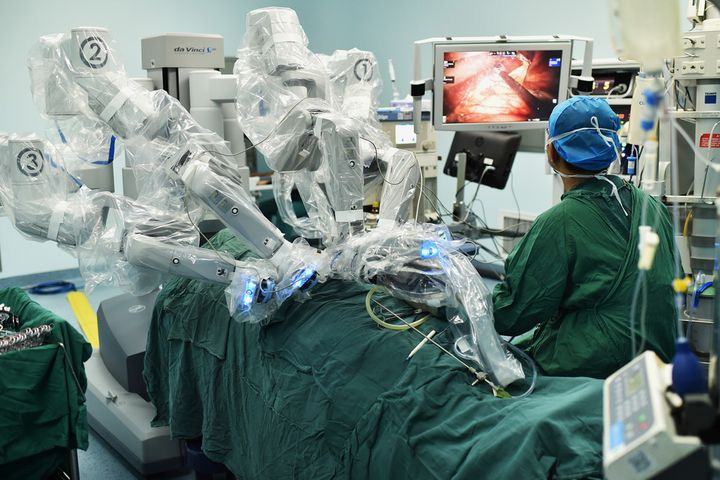
Potential research value
- Training at scale: Simulated patients can expose an agent to many controlled scenarios without risking patient safety.
- Workflow testing: Researchers can evaluate how information moves between patient, nurse, and doctor roles.
- Medical education: Carefully validated simulations may help trainees practice questioning and clinical reasoning.
- Decision support: Future tools could summarize records or surface possible considerations for a licensed clinician to review.
Important limitations and risks
- Hallucinations: A language model can produce plausible but incorrect medical statements.
- Benchmark mismatch: Exam questions are cleaner and more complete than real clinical encounters.
- Bias: Performance may vary across languages, regions, demographic groups, and conditions underrepresented in the data.
- Privacy: Real patient records require strict limits on collection, storage, access, and secondary use.
- Accountability: Hospitals need clear responsibility for decisions, monitoring, escalation, and harm.
What patients should know
Agent Hospital should be understood as an AI research project. It is not a substitute for a licensed healthcare professional, and no benchmark score can guarantee that its advice is correct for an individual. For symptoms, medication questions, or treatment decisions, consult an appropriate clinician; seek local emergency services for urgent or life-threatening concerns.
Related Articles
 Hospital Uses VR to Show How the Coronavirus Impacts the2 minutes read
 How to play Animal Hospital for beginners7 minutes read
 Wuhan Team: 3-10% of Covid-19 Patients After Discharge Were6 minutes read
 Animal Hospital Roblox Class Tier List (July 2026)9 minutes read
 Animal Hospital Roblox Emergency Guide: Every Event10 minutes read
 People with Malignant Tumors Often Have 6 Symptoms5 minutes read
Reader Comments 0
Sign in with email or Google to join the discussion.