Table of Contents
Garlic presses are really convenient but sometimes make many people hesitate to use them because they think they are difficult to clean.
Garlic presses Are really convenient but sometimes make many people hesitate to use them because they think they are difficult to clean. The truth is not entirely like that. You should avoid The following mistakes when pressing garlic and you will find this job much more enjoyable.
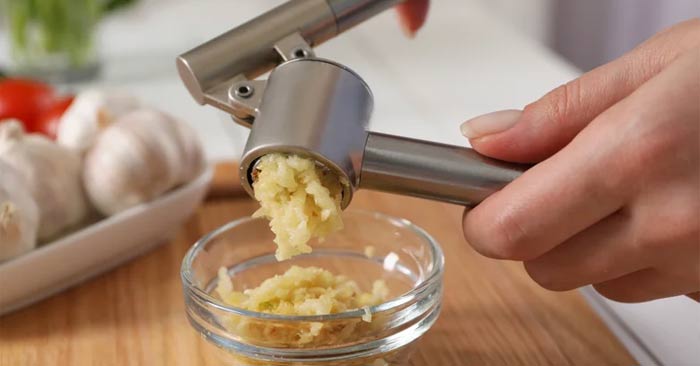
Using tools that do not match the recipe
This is important in cooking. Pressing garlic is not always the right thing to do. A garlic press saves time, but if used incorrectly, it can ruin your dish. Pressed garlic is more flavorful, releasing more juice and oil, which means it cooks and burns faster. In a stir-fry or quick stir-fry, garlic can go from golden to burnt and bitter in seconds. If your recipe calls for minced garlic in a hot pan, put down the garlic press. Use a knife instead.
Texture and flavor intensity are also important. Some dishes with few ingredients won't do well with pressed garlic. The same is true for light sauces—don't use pressed garlic to make them strong. For sauces that require a mild garlic flavor, minced garlic will work better than pressed garlic.
But when you want a strong, all-over garlic flavor, use a garlic press. It's great for salad dressings, mayonnaise, aioli, hummus, and pesto. Pressed garlic is also great for slow-cooking dishes. After a long simmer, you'll get a strong, yet mild, garlic flavor.
Squeezing too much garlic at once
Too much of anything is bad, and the same goes for a garlic press. You will have trouble squeezing as much garlic as possible into one press. Also, when pressing garlic, pay attention to the amount that is appropriate for the dish you are preparing.
Recipes often give specific instructions on how much garlic to use and how to prepare it. But if you want to adjust the flavor, go off the recipe, or even create your own, be careful. Pressed garlic has a very strong flavor, so you may need less than you think.
When you squeeze, crush, or chop garlic, you open up tons of tiny cell walls. This releases allicin, which is responsible for garlic's strong flavor and aroma. If you just chop garlic into large pieces, you only break a few of the cell walls—less allicin and a milder garlic flavor.
In practice, a whole, unbroken clove of garlic will have a mild garlic flavor. Sliced garlic will have a moderate garlic flavor. Minced garlic will have a strong flavor. And pressed garlic will have the strongest garlic flavor, more than a dozen whole, cooked cloves! So if you're using a garlic press, consider pressing a little more gently. Don't let the pressed garlic overpower the flavor of your dish.
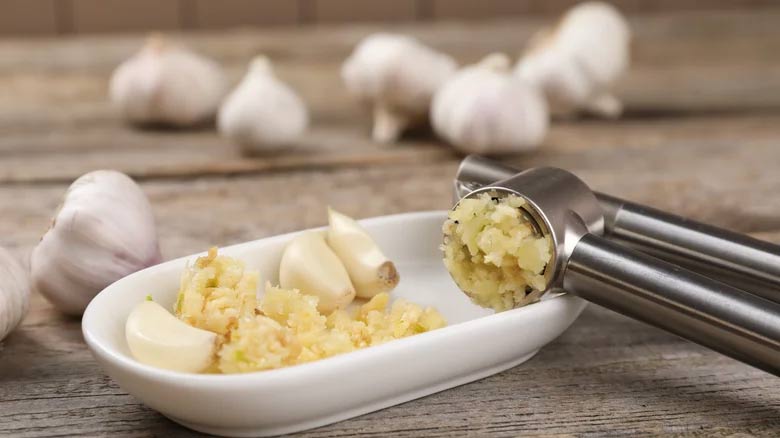
Know When and When Not to Peel Garlic
Even if your tool advertises that it can press unpeeled garlic, you should still do it yourself first. Sometimes pressing unpeeled garlic cloves can be a little more laborious. If you're handling many garlic or don't have the grip strength of a professional rock climber, peeling the skin can make the task much easier.
Even if you skip the peeling step, you should still remove the excess skin before pressing. This helps prevent clogging and ensures the full flavor of the garlic is retained.
Skip the olive oil or cooking spray.
There is a simple trick to making using a garlic press easier. It is called cooking oil. Before you add the garlic clove, spray the cavity of the garlic press with a little olive oil. If you don't have a spray bottle of olive oil, you can also dab a little olive oil onto the press with your finger. Avocado oil, canola oil, or another neutral oil with little or no flavor will also work.
Once you have a slippery surface, add the peeled or unpeeled garlic clove and press gently. Rest assured that the oil will not affect the flavor of the garlic. Just a little bit of oil will slide out, retaining its spicy flavor.
This little cooking oil trick really helps when it comes to cleaning. No more trying to dig out garlic residue from tiny holes. Just wash it off with warm soapy water.
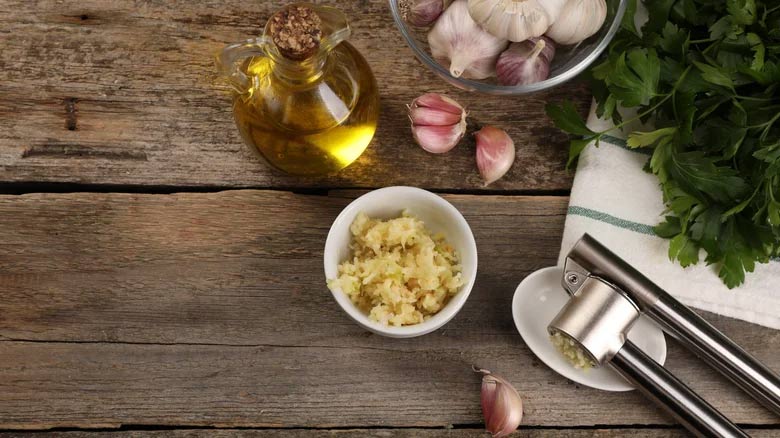
Missing the right moment
When it comes to garlic, timing is everything. Pressed garlic tends to get bitter if left too long. Once the tiny pieces of garlic are exposed to air, chemical reactions begin to occur quickly. So it's best to press your garlic as soon as you're ready to use it.
But that advice changes a bit when acid is involved. Acidic ingredients like lemon juice or vinegar can block allicin, the compound that gives garlic its distinctive flavor. Pressing garlic activates allicin, but acid blocks it. For example, in a vinaigrette recipe, let the pressed garlic sit out for a bit to air out before mixing it with the vinegar and other ingredients. Just a few seconds is enough to ensure the garlic flavor permeates the finished sauce.
FAQ
What should you know about mistakes to avoid when pressing garlic?
In practical terms, garlic presses are really convenient but sometimes make many people hesitate to use them because they think they are difficult to clean.
Why does mistakes to avoid when pressing garlic matter?
The article highlights that pressing garlic is not always the right thing to do.
What is the main takeaway?
The main takeaway is that also, when pressing garlic, pay attention to the amount that is appropriate for the dish you are preparing.
Related Articles
 Without Black Garlic, Eat 6 Grilled Garlic Cloves Every Day You4 minutes read
 Making Black Garlic Get Wet, the Best Way to Handle and Preserve9 minutes read
 If You Want to Make Black Garlic Successful, You Must Use 1 of 35 minutes read
 What Happens When You Eat Two Cloves of Raw Garlic Every Day?4 minutes read
 Big Mistakes to Avoid When Ordering Food: Complete Guide7 minutes read
 What Is the Effect of Honey Pickled Garlic? How to Soak Garlic8 minutes read
Reader Comments 0
Sign in with email or Google to join the discussion.