Table of Contents
Explore garlic extract mouthwash brings unexpected antiseptic effect.
Researchers at the University of Sharjah say garlic extract is nearly as effective as common antiseptics, including chlorhexidine. In a study published in the Journal of Herbal Medicine , the authors note that garlic mouthwash may be more irritating, but it lasts longer after use.
'Chlorhexidine is widely used and considered the gold standard, but it is associated with side effects and concerns about antimicrobial resistance,' the authors write. 'Garlic (Allium sativum), which is rich in natural antimicrobial properties, has emerged as a potential alternative.'
System overview according to PRISMA standard
This conclusion comes from a systematic review evaluating the efficacy of garlic extract compared with chlorhexidine in real-world clinical conditions, to determine the potential of herbal alternatives.
To ensure rigor, the research team followed the PRISMA 2020 guidelines – the standard used in systematic reviews and meta-analyses. They also applied the PICO model to frame the clinical question and assess the evidence.
'A total of 389 articles were retrieved from six electronic databases (as of January 2024), with an additional 13 articles obtained from manual searches. After deduplication and screening according to criteria, only five articles were included in the analysis,' the team said.
The studies included in the review included randomized controlled trials and clinical trials, with low to moderate levels of bias. Overall, the evidence suggests that mouthwashes containing higher concentrations of garlic are as effective at reducing bacteria as chlorhexidine.
'Efficacy varies with concentration and duration of use, which accounts for the variability between studies,' the review noted. 'Some studies have shown that chlorhexidine maintains salivary pH better, while at certain concentrations, garlic has superior efficacy. However, garlic mouthwashes may be more irritating.'
Although they also have side effects, they are considered milder than chemical compounds, usually a burning sensation or unpleasant odor – factors that may make users hesitate to replace chlorhexidine.
Nevertheless, the review also found that garlic extract had clinically significant antibacterial activity, 'with significant reductions in bacterial counts compared to baseline… suggesting the potential for garlic mouthwash to be used as an alternative to chlorhexidine in some settings.'
The research team emphasized the need for further clinical trials with larger sample sizes and longer follow-up periods to confirm efficacy and applicability.
Garlic – a widely researched natural antibacterial agent
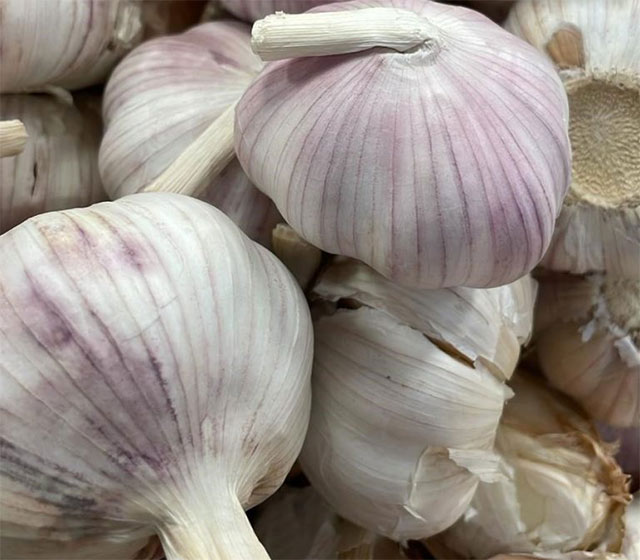
Garlic has long been recognized as one of the most potent antibacterial and antifungal plants. The active ingredient in garlic, allicin, is of particular interest due to its powerful ability to kill microorganisms.
Although it is a vegetable, garlic is commonly used as an herb and spice.
In 2024, the total global garlic consumption will reach about 30 million tons , of which China accounts for nearly 80% of the output. The garlic extract market this year is also valued at more than 15 billion USD .
Garlic extract is used in many health care products and is widely available over the counter. In contrast, synthetic agents such as chlorhexidine usually require a prescription from a dentist or doctor.
'Antibacterial mouthwashes are important aids in oral care, fighting diseases caused by bacteria, fungi or viruses that attack the teeth and gums,' the study said. 'They are used to treat gingivitis, tooth decay, periodontal disease, bad breath… and can be available as OTC or prescription products.'
The review also cites numerous studies demonstrating the antimicrobial activity of garlic against a wide range of bacteria, fungi, and viruses. Garlic has also been studied in the treatment of denture mucositis, root canal disinfection, and as an endodontic medication.
However, most previous studies have been in vitro , with varying methodologies and a lack of clinical standardization—leaving a large gap in the evidence for real-world applications. More research is needed to confirm garlic's role as an evidence-based alternative.
Final Thoughts
Understanding garlic extract mouthwash brings unexpected antiseptic effect makes it easier to evaluate the information and apply the most relevant recommendations. Focus on the key points above and verify details that may change over time.
FAQ
What is garlic extract mouthwash brings unexpected antiseptic effect?
Explore garlic extract mouthwash brings unexpected antiseptic effect.
What key points does this article cover?
The article focuses on System overview according to PRISMA standard, Garlic – a widely researched natural antibacterial agent, with practical explanations and examples.
How can you use this information in practice?
Use the explanations to compare options, verify important details, and make a more informed decision. Apply the recommendations that best match your goals and situation.
Related Articles
 What Effect Does Black Garlic Eat? How to Eat Black Garlic to Be7 minutes read
 What Is the Effect of Honey Pickled Garlic? How to Soak Garlic8 minutes read
 If You Want to Make Black Garlic Successful, You Must Use 1 of 35 minutes read
 What Is Chlorhexidine?3 minutes read
 Without Black Garlic, Eat 6 Grilled Garlic Cloves Every Day You4 minutes read
 Making Black Garlic Get Wet, the Best Way to Handle and Preserve9 minutes read
Reader Comments 0
Sign in with email or Google to join the discussion.