Table of Contents
The International Grave Digging Championship brings together professional cemetery workers to see who can dig and fill a grave the fastest while maintaining a neat and tidy appearance.
Hungary hosts a sporting event that few countries would consider hosting: The International Grave Diggers Championship . The eighth edition, set for September 6, 2025, pits professional cemetery workers against each other to see who can dig and fill a grave the fastest while remaining neat and tidy.
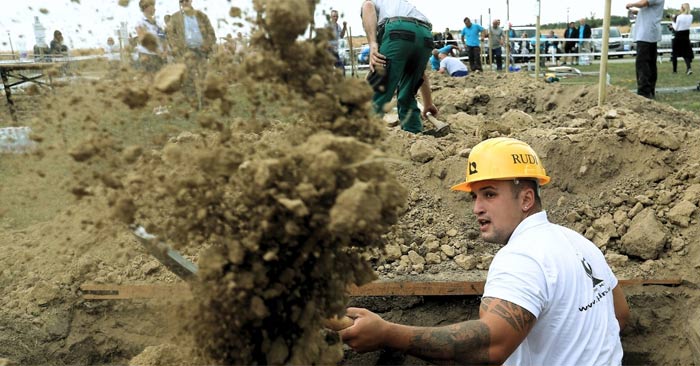
How does the international grave digger championship work?
Each team of two was tasked with a task: dig a grave two meters (about 6.5 feet) long, 80 centimeters (about 2.6 feet) wide, and 1.6 meters (just over 5 feet) deep, then fill it with about 2.5 tons of soil. Judges scored the work on speed, accuracy, and presentation on a 10-point scale. Of course, finishing quickly, which is a high score, meant clean edges and a neat burial mound.
The 8th International Grave Diggers Championship Was won by László Kiss and Róbert Nagy from Hungary, who defended their title with a time of 1 hour 33 minutes and 20 seconds. In a statement reported by Oddity Central, the organizers said the pair attributed their victory to the habits they developed during their workday rather than any special training. The Russian team from the Novosibirsk Crematorium finished last, blaming the hot weather for their last place finish.
First held in 2016, the International Grave Diggers Championship was only interrupted by the pandemic. The Hungarian Cemetery Operators and Maintenance Association created the tournament not for show, but to celebrate a profession that is often overlooked. Grave digging requires strength, precision, and mental toughness, but the people who do it often receive little recognition. The Grave Diggers Championship aims to change that, perhaps even convince the younger generation not to be afraid of the profession.
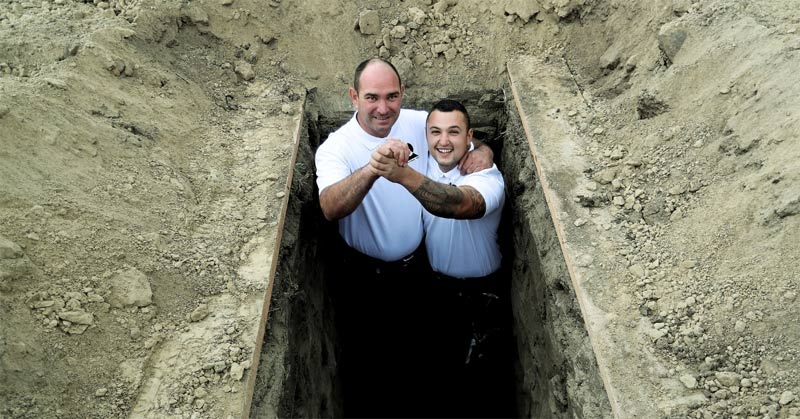
The competition takes grave digging out of the gates and allows people to see it firsthand. Spectators watch as contestants create straight walls in the ground, expertly tilling the soil and creating uniform mounds like any other landscape job. The competition reimagines everyday grave digging as a task that requires technique and precision. In addition, the practitioner needs not only strength, but also dexterity.
Beyond the spectacle, the event is a reminder that the most basic of tasks in caring for the dead – digging graves – still relies on humans. The championship does not demean or make fun of the work. Instead, it recognizes the workers who do the work, giving them a platform to showcase their efforts, even to be celebrated.
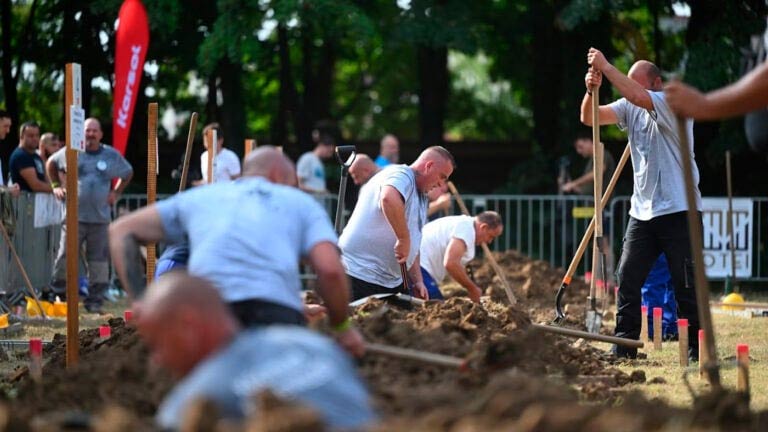
The event concluded with medals and trophies, symbols that meant more than the objects themselves, as they recognized skill and perseverance in a profession most people never even thought of.
FAQ
What should you know about international grave diggers championship?
In practical terms, the International Grave Digging Championship brings together professional cemetery workers to see who can dig and fill a grave the fastest while maintaining a neat and tidy appearance.
Why does international grave diggers championship matter?
The article highlights that the 8th International Grave Diggers Championship was won by László Kiss and Róbert Nagy from Hungary, who defended their title with a time of 1 hour 33 minutes and 20 seconds.
What is the main takeaway?
The main takeaway is that first held in 2016, the International Grave Diggers Championship was only interrupted by the pandemic.
Related Articles
 Things to Keep in Mind When Going to Graves7 minutes read
 How to Look up Information of Martyrs, Find Grave Martyrs Online7 minutes read
 Beat the 7-year-old World Champion, the 16-year-old Boy Won the Classic Tetris World Championship3 minutes read
 Have You Tried Audition Dancing with Facedance Challenge?7 minutes read
 The U23 Asian Qualifying Matches in Vietnam Will Broadcast with 4K Super Definition Technology4 minutes read
 Point Nemo, the Most Isolated Place on the Planet, the Burial2 minutes read
Reader Comments 0
Sign in with email or Google to join the discussion.