Table of Contents
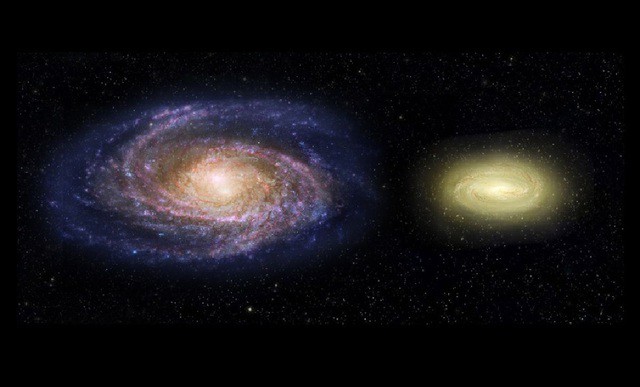
Astronomers using Canada's CHIME radio telescope detected 22 bursts from a repeating source named FRB 20240209A. They traced it to the outskirts of an old elliptical galaxy with little current star formation. The location is unusual because some proposed origins for these bursts involve rapidly evolving massive stars.
How the researchers found the source
A fast radio burst is a short pulse of radio waves, typically lasting milliseconds. This source emitted multiple detectable bursts, giving astronomers more opportunities to improve its position. In the localization study, the team identified a position far from the center of the associated galaxy.
Why an old galaxy changes the picture
One possible source of fast radio bursts is a magnetar, a neutron star with an exceptionally strong magnetic field. Some magnetars form when massive stars collapse. A galaxy forming few new stars, especially far beyond its center, gives researchers reason to explore other ways to make a compact source. One possibility discussed in the Northwestern University research summary is an origin in an old star cluster. The observations do not yet identify the object that produced the bursts.
Follow TipsMake’s science coverage for more reports on how astronomers identify unusual objects from indirect measurements.
Related Articles
 Mysterious cosmic signals of aliens challenge the scientific world
 Aliens never answer us
 Software Review - Stellar Repair for MS SQL
 'Ghost' radio station continuously transmits mysterious cryptography for 40 years without stopping
 'Wow!' - Has the mysterious cosmic signal of 'alien' been decoded?
 4 best radio apps for iPhone
Reader Comments 0
Sign in with email or Google to join the discussion.