Table of Contents
Explore giant 115-million-year-old ancient shark discovered in australia.
Rare vertebrae found in rock layers that once lay at the bottom of the ancient Tethys Ocean suggest that this primitive lamniform predator once shared its environment with giant marine reptiles during the dinosaur era.
The earliest origins of modern shark species
Sharks are familiar predators in the ocean, with an evolutionary history spanning over 400 million years. However, the ancestors of modern shark groups only truly emerged during the dinosaur era, with the oldest fossils dating back approximately 135 million years.
These earliest lamniforms were quite small, only about 1 meter in length. Over millions of years of evolution, they developed into giant species like the 'Megalodon' – which could be over 17 meters long – and the great white shark of today, an apex predator that can reach about 6 meters in length.
Shark skeletons are made of cartilage rather than bone, making it difficult for most of their bodies to fossilize. Therefore, their fossil record consists primarily of teeth – which are constantly replaced during hunting and often accumulate under ancient seabed sediments.
These teeth are often found in the same geological layers as the bones and teeth of fish, as well as giant marine reptiles that once dominated the prehistoric oceans.
Fossil hotspots in the ancient Tethys Ocean
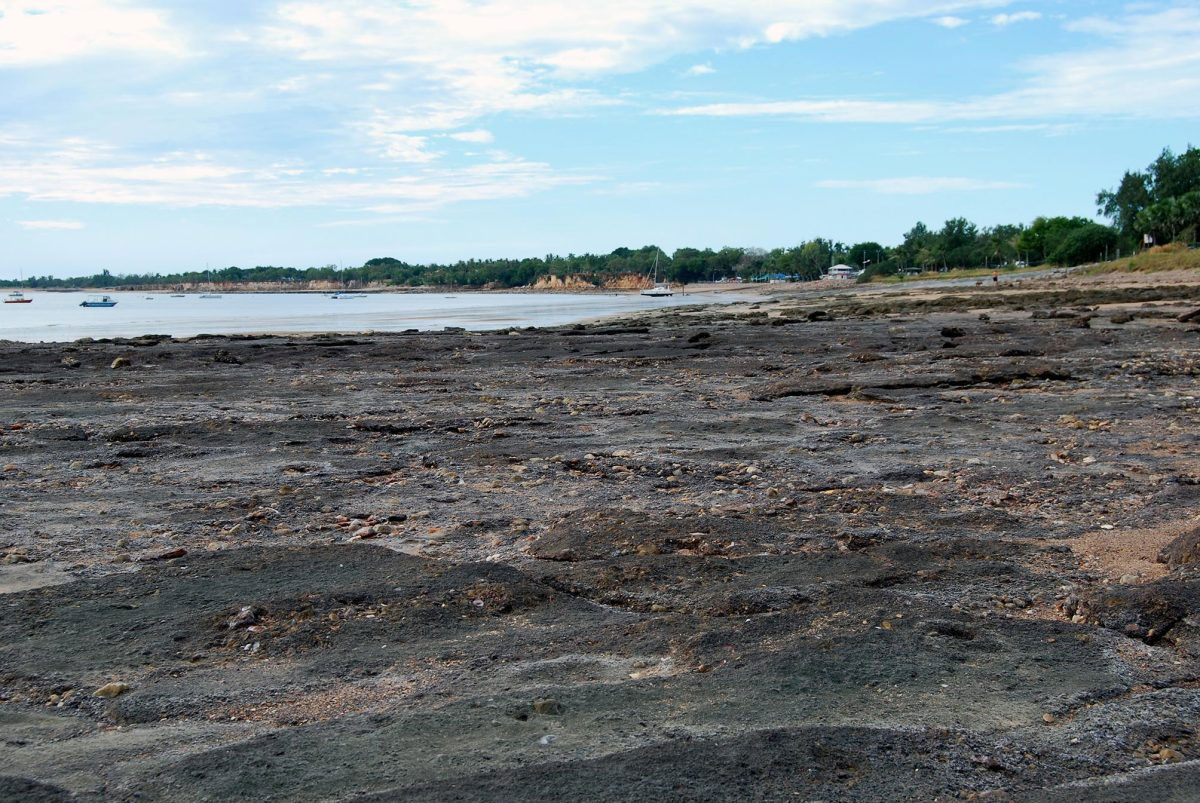
The rocky coastal area near Darwin in Northern Australia was once the mudflats of the Tethys Ocean – a vast sea stretching from the continent of Gondwana (modern-day Australia) to the Laurasia archipelago (modern-day Europe).
Numerous fossils of ancient marine life have been found here, including plesiosaurs (ancient marine reptiles with long necks often associated with the 'Loch Ness Monster'), ichthyosaurs (fish-bodied marine reptiles), and large bony fish. Among them, some particularly large vertebrae are noteworthy because they suggest the existence of a previously unknown species of lamniform shark.
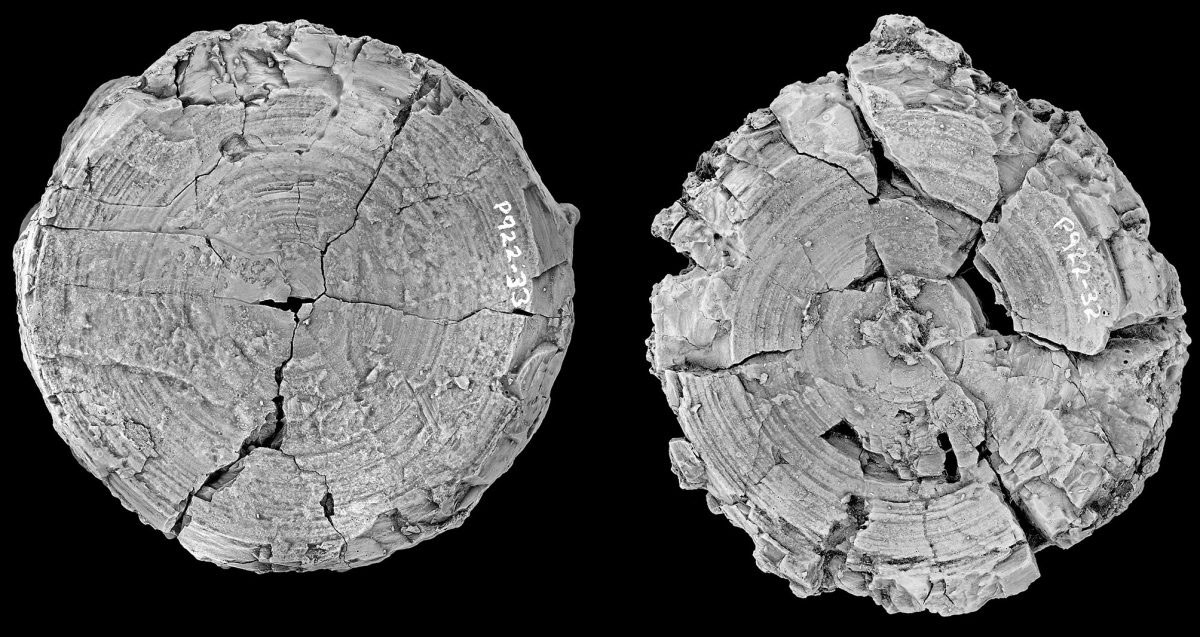
The research team obtained five partially mineralized vertebrae – a factor that helped them survive over time. Their shape is quite similar to the vertebrae of modern great white sharks. However, while the vertebrae of an adult great white shark are about 8 cm wide, the specimens in Darwin are more than 12 cm wide.
The identifying characteristics suggest they belong to the cardabiodontid group – a group of large predatory sharks that lived approximately 100 million years ago. Remarkably, the shark specimen found in Darwin is about 15 million years older than previously recorded cardabiodontid fossils, yet it had already reached the enormous body size characteristic of the group.
Reconstructing the size of early super-predators
To estimate the size of this early modern shark species, an international team of scientists collaborated on a detailed analysis. The team included paleontologists and CT scanners from the United States, Sweden, and Australia, along with fish researchers from South Africa and the United States.
The research results have been published in the journal Communications Biology, part of the Nature series. Fossil shark specimens from the dinosaur era are also on display at the Swedish Museum of Natural History.
Final Thoughts
Understanding giant 115-million-year-old ancient shark discovered in australia makes it easier to evaluate the information and apply the most relevant recommendations. Focus on the key points above and verify details that may change over time.
FAQ
What is giant 115-million-year-old ancient shark discovered in australia?
Explore giant 115-million-year-old ancient shark discovered in australia.
What key points does this article cover?
The article focuses on The earliest origins of modern shark species, Fossil hotspots in the ancient Tethys Ocean, Reconstructing the size of early super-predators, with practical explanations and examples.
How can you use this information in practice?
Use the explanations to compare options, verify important details, and make a more informed decision. Apply the recommendations that best match your goals and situation.
Related Articles
 Lost Ancient Shark Teeth Found in Australia3 minutes read
 The Mystery of the 290-million-year-old Giants Challenges2 minutes read
 Horror with 100% Real Photos of Horror Shows That Nature in Australia Is3 minutes read
 Found Strange Ancient Parrot Fossils 18 Million Years Old3 minutes read
 Discovered a New Species of Shark with Human-Like Teeth2 minutes read
 A New Breed of Turkey Dinosaurs Found in Australia3 minutes read
Reader Comments 0
Sign in with email or Google to join the discussion.