Table of Contents
Explore can spatial geometry replace the higgs field, including the key concepts, practical examples, important considerations, and useful guidance.
This research suggests that the fundamental behaviors of nature arise directly from the structure of spacetime, making geometry the common source of all physical interactions.
Hidden dimensions and 7-dimensional geometric structures
In a paper published in the journal Nuclear Physics B , physicist Richard Pincak and his colleagues examined whether properties of matter and force could emerge from the geometry of hidden dimensions—dimensions outside of ordinary three-dimensional space.
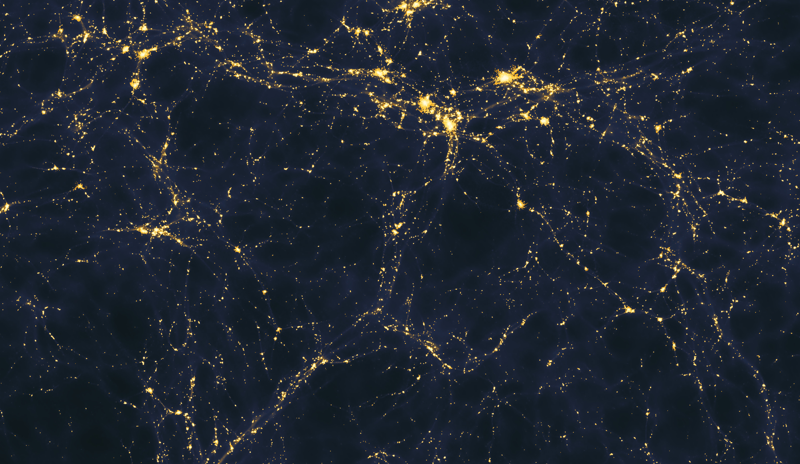
The research team proposes that the universe comprises additional dimensions that cannot be directly observed. These dimensions can be compressed and folded into complex seven-dimensional shapes called manifolds . Previously, these geometric structures were often considered fixed. However, this new research explores what happens when these shapes evolve over time through a mathematical process called Ricci flow , which gradually alters their intrinsic geometry.
Geometric torsion and structural stability
"Similar to organic systems such as the helical structure of DNA or the reversibility of amino acids, these multidimensional structures may possess torsion —a form of intrinsic coiling," Pincak explains. This torsion creates an inherent rotational movement within the geometric structure itself.

When researchers simulated how these twisted shapes changed over time, they discovered that the geometry could spontaneously stabilize into stable states called solitons . These solitons provide a purely geometric explanation for complex physical phenomena, such as spontaneous symmetry breaking .
Rethinking the origin of mass
In the Standard Model of particle physics, mass is generated through interaction with the Higgs field —which gives weight to particles like W and Z bosons. However, this new theory proposes another possibility: Instead of relying on a separate field, mass could be the result of twisting within the multidimensional geometry itself.
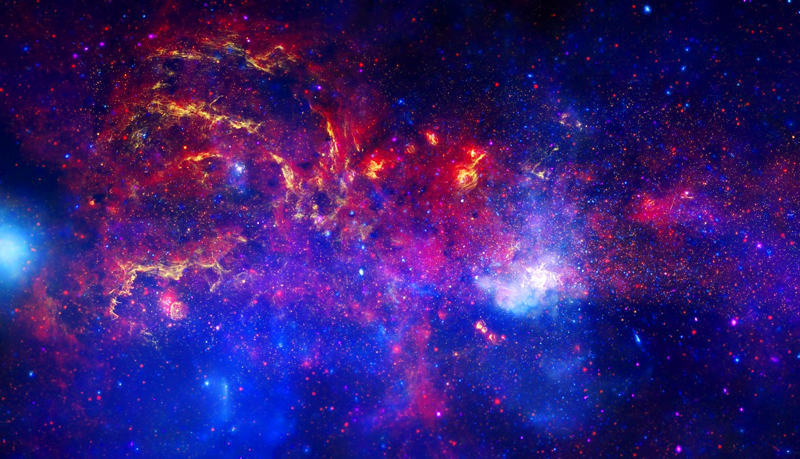
"In our model," Pincak says, "matter arises from the drag of the geometry itself, not from an external field." From this perspective, mass reflects how spacetime reacts to its own internal structure, rather than being influenced by an additional physical component.
The expansion of the universe and the new fundamental particle "Torstone"
The researchers also linked geometric twist to the curvature of spacetime on a large scale. This connection could help explain the positive cosmological constant , which relates to the accelerated expansion of the universe.

Besides the cosmological implications, the research team also speculates about the existence of a previously unknown fundamental particle associated with torsion, which they call the "Torstone" particle. If this particle does exist, it could be detected in future particle physics experiments.
Expanding Einstein's Mechanical Concepts
The greater ambition of this work is to push Albert Einstein's vision further. If gravity arises from geometry, do all other fundamental forces share a common origin?
As Pincak concluded: "Nature often favors simple solutions. Perhaps the mass of the W and Z bosons doesn't come from the famous Higgs field, but directly from the geometry of seven-dimensional space."
Final Thoughts
Understanding can spatial geometry replace the higgs field makes it easier to evaluate the information and apply the most relevant recommendations. Focus on the key points above and verify details that may change over time.
FAQ
What is can spatial geometry replace the higgs field?
Explore can spatial geometry replace the higgs field, including the key concepts, practical examples, important considerations, and useful guidance.
What key points does this article cover?
The article focuses on Hidden dimensions and 7-dimensional geometric structures, Geometric torsion and structural stability, Rethinking the origin of mass, with practical explanations and examples.
How can you use this information in practice?
Use the explanations to compare options, verify important details, and make a more informed decision. Apply the recommendations that best match your goals and situation.
Related Articles
 Guide to Drawing Spatial Geometry Using Google AI Studio4 minutes read
 Download Geometry Dash for All Platforms6 minutes read
 How to Set up Spatial Sound with Dolby Atmos on Windows 103 minutes read
 Why Do Many People Think Spatial Audio Is Completely Meaningless?5 minutes read
 How to Enable Spatial Sound in Windows 115 minutes read
 Spatial Audio: Complete Guide and Key Details7 minutes read
Reader Comments 0
Sign in with email or Google to join the discussion.