Table of Contents
Explore disposable face masks help prevent the spread of disease.
The complex pandemic situation has made face masks mandatory in public places. Many people are accustomed to using disposable medical masks due to their convenience and effective droplet-blocking ability. However, few seem to consider the terrible harm these masks can cause to the natural environment if not collected and disposed of properly.
Currently, hundreds of millions of people use face masks daily, but there isn't much information available on how to safely dispose of or recycle them. And as countries begin to ease social distancing restrictions, an estimated billions of disposable masks are consumed globally each month. Even a small fraction of this being carelessly discarded could lead to catastrophic environmental consequences.
Dangerous to humans and animals
First and foremost, discarded face masks, left without any proper processing, pose a significant risk of spreading the virus to the community. We know that under certain conditions, the SARS-CoV-2 virus can survive on the surface of face masks for up to 7 consecutive days.
Not only humans and animals, but plants are also affected by this toxic waste. Disposable face masks can also be classified as non-biodegradable plastic waste, causing environmental pollution and disrupting ecosystems. Some animals cannot distinguish between plastic objects and their prey, and then choke on or swallow pieces of masks, leading to a slow and painful death.
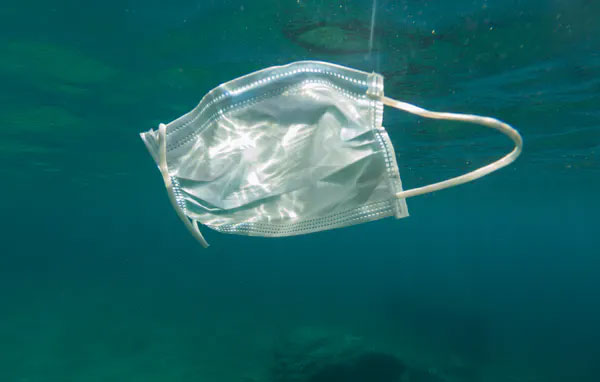
Plastic waste generally breaks down into smaller pieces over time, and the longer it remains in the environment, the more it decomposes. First, plastic breaks down into microplastics and eventually into even smaller nanoplastics. These tiny plastic particles and fibers are often long-lasting polymers that can accumulate in the food chain for decades. Even a small face mask can generate millions of microplastic particles, each capable of carrying chemicals and bacteria up the food chain and even into the bodies of humans and animals.
Remedial measures
Face masks will undoubtedly remain essential for everyone during this time, but instead of using disposable masks, we can consider switching to antibacterial fabric masks that can be washed and reused multiple times. At the same time, we should limit the use of masks with plastic filters.

However, the most important issue is not which type of mask to use, but how you should sort and dispose of them after use:
- Prioritize using reusable face masks that do not have disposable filters. Wash them thoroughly after each use.
- Try to carry a spare mask so that if something goes wrong with the one you're wearing, you don't have to buy disposable masks.
- If you must use a disposable mask, wrap it carefully after use, take it home, and dispose of it in a designated recycling bin. If that's not possible, place it in a suitable public trash can. Absolutely do not throw it directly into the environment.
- Do not dispose of disposable face masks in the recycling area. They can get caught in specialized recycling equipment and pose a potential biohazard to waste disposal workers.
Protecting one's own health and that of the community is the right thing to do, but protecting the natural environment for future generations is also a shared responsibility of every citizen on the planet.
- How to wear a face mask without fogging up your glasses.
Final Thoughts
Understanding disposable face masks help prevent the spread of disease, but they can cause long-term environmental disaster makes it easier to evaluate the information and apply the most relevant recommendations. Focus on the key points above and verify details that may change over time.
FAQ
What is disposable face masks help prevent the spread of disease, but they can cause long-term environmental disaster?
Explore disposable face masks help prevent the spread of disease.
What key points does this article cover?
The article focuses on Dangerous to humans and animals, Remedial measures, with practical explanations and examples.
How can you use this information in practice?
Use the explanations to compare options, verify important details, and make a more informed decision. Apply the recommendations that best match your goals and situation.
Related Articles
 Photo: All Types of Anti-virus Masks: Complete Guide2 minutes read
 Jack Ma Returned Russia with 1 Million Masks and 200,0004 minutes read
 Can Homemade Face Masks Prevent the Coronavirus? Everything18 minutes read
 Homemade Face Masks: Why They May Not Protect You from12 minutes read
 Can Medical Gloves and Disposable Gloves Really Prevent5 minutes read
 What Is Hemorrhoids? Is Hemorrhoids Contagious, Is It Dangerous?6 minutes read
Reader Comments 0
Sign in with email or Google to join the discussion.