Table of Contents
Explore first successful simulation of 50 qubit quantum computer.
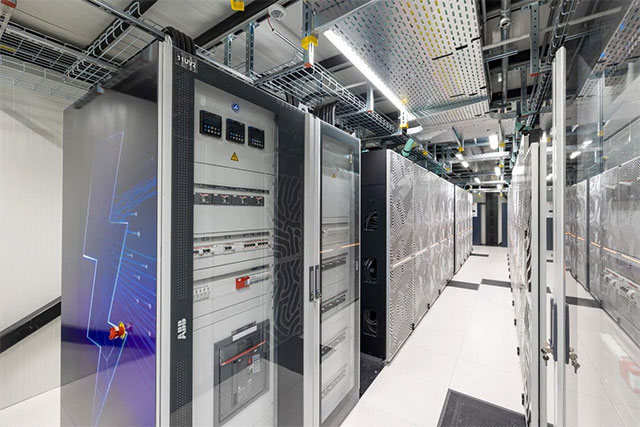
A research team from the Jülich Supercomputing Center, in collaboration with NVIDIA experts, has successfully recreated for the first time a 50-qubit universal quantum computer on the JUPITER system — Europe's first exascale supercomputer, which has been operational since September at Forschungszentrum Jülich.
Previously, the 48 qubit record was set by Jülich in 2019 on Japan's K supercomputer. The new achievement affirms the superior power of JUPITER, while opening a powerful experimental platform to verify and develop future quantum algorithms.
Quantum computer simulations play a big role in the development of quantum technology. They help scientists verify experimental results and test new algorithms when real-world quantum hardware is not yet advanced enough to run those problems. Typical examples include VQE (Variational Quantum Eigensolver) used for molecular and material analysis, or QAOA (Quantum Approximate Optimization Algorithm) used in logistics optimization, finance, and AI.
Challenges beyond the limits of traditional supercomputers
Recreating a quantum computer on a classical system is a Herculean task. Each additional qubit increases the number of quantum states that need to be described exponentially. At 50 qubits, the system requires about 2 petabytes of memory —that's two million gigabytes.
' Only the world's largest supercomputers can achieve this level, ' said Professor Kristel Michielsen, Director of the Jülich Supercomputing Center. ' This shows the increasingly close connection between HPC (high-performance computing) and quantum research. '
Each quantum operation, such as manipulating a logic gate, affects more than 2 quadrillion complex number values. These values must be precisely synchronized across thousands of computing nodes to accurately reproduce the behavior of a real quantum processor.
Breakthrough thanks to new generation memory technology
The record was achieved thanks to the tightly coupled CPU–GPU architecture in JUPITER's NVIDIA GH200 Superchip processors. This design allows data exceeding GPU capacity to be temporarily transferred to CPU memory without significantly reducing performance.
To take advantage of this hybrid memory system, the NVIDIA Application Lab and Jülich teams have upgraded the JUQCS simulation software. The new version — JUQCS-50 — is capable of performing quantum operations efficiently even if some of the data must be stored on the CPU.
They also added byte-code compression that reduces memory requirements by more than eight times, along with dynamic algorithms that continuously optimize data exchange between more than 16,000 GH200 Superchips.
' With JUQCS-50, we can simulate universal quantum computers with high precision and solve questions that no real quantum system has yet tackled, ' said Professor Hans De Raedt, lead author of the study (now in preprint form).
Towards open quantum infrastructure for the research community
JUQCS-50 will be made available to research institutes and businesses through JUNIQ — Jülich's integrated quantum computing infrastructure. The tool will serve as both a research platform and a performance testbed for future supercomputers.
The project was developed within the framework of the JUPITER Research and Early Access Program (JUREAP). ' The early collaboration between Jülich and NVIDIA experts during the construction phase of JUPITER allowed for hardware-software co-design from the beginning, an important step in fully exploiting the power of this exascale system, ' said Dr. Andreas Herten, project member.
Final Thoughts
Understanding first successful simulation of 50 qubit quantum computer, setting a new world record makes it easier to evaluate the information and apply the most relevant recommendations. Focus on the key points above and verify details that may change over time.
FAQ
What is first successful simulation of 50 qubit quantum computer, setting a new world record?
Explore first successful simulation of 50 qubit quantum computer.
What key points does this article cover?
The article focuses on Challenges beyond the limits of traditional supercomputers, Breakthrough thanks to new generation memory technology, Towards open quantum infrastructure for the research community, with practical explanations and examples.
How can you use this information in practice?
Use the explanations to compare options, verify important details, and make a more informed decision. Apply the recommendations that best match your goals and situation.
Related Articles
 Google Announced the Most Powerful 72-qubit Bristlecone Quantum Chip at the Moment4 minutes read
 Google Achieves New Achievements in Quantum Computing with the5 minutes read
 Google's Quantum Supercomputer Can Solve the 'Impossible'3 minutes read
 Hacker: Complete Guide: Another Major Cryptocurrency Trading Platform4 minutes read
 What Is Quantum Computing and How Did People Develop This Technology?10 minutes read
 China Makes Breakthrough in Simulating Quantum Chemistry on Supercomputer6 minutes read
Reader Comments 0
Sign in with email or Google to join the discussion.