Table of Contents
The evolution of animals to adapt to the world has created a revolution in human technology. Here are the most prominent examples.
The evolution of animals to adapt to the world has created a revolution in human technology. Here are the most prominent examples.
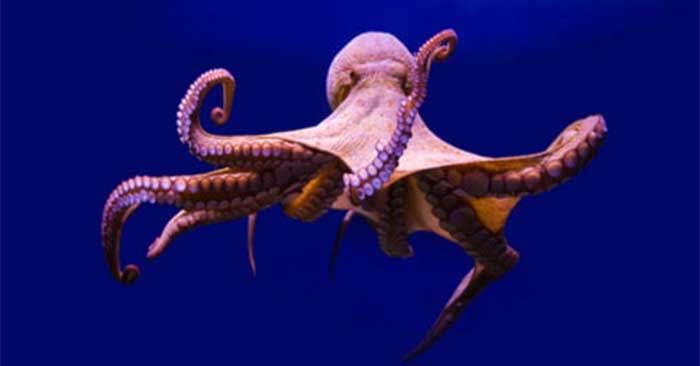
For thousands of years, humans have looked to the natural world not only for survival or beauty, but also for profound inspiration. The creative solutions that evolution has produced in the animal kingdom, honed over millions of years, often far surpass our own early engineering efforts. This approach, known as biomimicry, involves drawing design ideas and processes from nature to solve complex human problems. From the graceful swoop of a bird to the sophisticated handshake of a tiny lizard, animals continue to provide blueprints for revolutionary technologies that are transforming medicine, energy, robotics, and even space exploration.
A bird's beak transforms a train
When Japan's high-speed Shinkansen bullet trains, the 500 series in particular, first debuted, they faced a significant engineering challenge. As the train emerged from a tunnel at high speed, it created a huge wave of air pressure, creating a loud sonic boom – a noise that was both annoying and unsettling to nearby residents. Engineers were tasked with eliminating this phenomenon without compromising speed or efficiency.
Chief engineer Eiji Nakatsu, an avid birdwatcher, found inspiration in kingfishers. He observed how the birds could plunge from air into water—a medium much denser than air—with virtually no splash. The secret was the bird's long, slender beak, perfectly designed to cut through different densities with minimal disturbance. By redesigning the bow to mimic a kingfisher's beak, engineers significantly reduced the noise when exiting the tunnel. Reports noted that the tweaked bow also improved performance and allowed for higher operating speeds while still meeting strict environmental noise standards—a neat example of natural navigation.
Lizard Feet and the Future of Grip
Geckos have the uncanny ability to cling to almost any surface—vertical glass, smooth leaves, even ceilings—that has fascinated scientists for decades. This feat is achieved not through suction or sticky secretions, but through a complex system of microscopic structures on their feet. Each toe is covered with millions of hair-like hairs called setae, which then branch into hundreds of even tinier spatulas. These microscopic structures interact with surfaces at the molecular level, creating weak electrical attractions called van der Waals forces. The sheer number of these forces on a gecko's feet creates enough combined strength to support its entire body weight. Crucially, geckos can easily separate these forces by changing the angle of their feet, allowing them to move quickly.
Scientists have successfully replicated this 'dry adhesion' principle, creating an experimental 'gecko tape' that can withstand significant weight without leaving a residue. Applications under development range from climbing robots that inspect difficult structures to medical devices that require temporary, secure, residue-free attachments.
Shark Skin: Nature's Antibacterial Shield
Sharks, despite their fearsome reputation, possess a remarkable feature that helps them stay clean in the nutrient-rich waters of the ocean: their skin.
Rather than being smooth, shark skin is covered with millions of tiny, tooth-like, V-shaped scales called dermal denticles. These denticles create an extremely rough surface, making it difficult for bacteria, algae, and other microorganisms to attach and form biofilms, a process known as biofouling. The unique texture of these denticles disrupts the thin layer of water that bacteria need to cling to. Without a secure grip, the organisms are vulnerable to being swept away by the current. This natural defense mechanism helps sharks avoid the drag-causing buildup that often harms other marine animals and boats.
Engineers have developed a patterned surface called Sharklet that mimics the microscopic structure of shark skin. Instead of killing bacteria, it reduces colonization by preventing adhesion. Many hospitals are using Sharklet-patterned surfaces on mousepads, doorknobs, and instruments to help limit bacterial growth—a passive, chemical-free antibacterial solution.
Whale fins have regenerated wind energy
Despite their massive size, humpback whales are incredibly agile swimmers, capable of sharp turns and powerful lunges to catch prey. For years, scientists have puzzled over how their giant fins enable such maneuverability. The answer lies in a series of prominent bumps, called tubercles, located along the leading edge of the fin. These seemingly counterintuitive bumps, rather than creating drag, actually increase hydrodynamic efficiency. They channel water over the fin in a way that slows stalling (loss of lift), increasing lift and reducing drag. This allows whales to maintain control even at steep angles of attack, which would normally cause a smooth fin to stall. Engineers have applied this 'tubercle effect' to wind turbine blades. By incorporating similar bumps along the leading edge, they designed turbines that could generate more power, especially at lower wind speeds. They could operate more quietly while also reducing stress on the structure.
Termite towers beat the heat
Termite mounds, especially those found in the arid savannas of Africa, are true architectural wonders. Although outside temperatures can fluctuate wildly, sometimes exceeding 100°F (38°C), the internal temperature of these mounds remains remarkably stable, creating the perfect environment for termites and their fungus gardens.
These structures control their climate through a network of tunnels, vents, and chimneys that facilitate passive ventilation. Hot, stagnant air rises through central chimneys, while cooler, fresher air is drawn in through tunnels near the base of the tower, cooled by the surrounding soil. This constant flow of air acts like a natural air conditioning system without the need for external energy. Architects have studied these termite mounds to design energy-efficient buildings. The Eastgate Center in Harare, Zimbabwe, is a prime example, using a termite-inspired passive cooling system. Its vent system draws in cool air at night and pushes hot air out during the day, reducing reliance on mechanical air conditioning and cutting energy use.
FAQ
What should you know about animal adaptations are revolutionizing human technology?
In practical terms, the evolution of animals to adapt to the world has created a revolution in human technology. Here are the most prominent examples.
Why does animal adaptations are revolutionizing human technology matter?
The article highlights that the creative solutions that evolution has produced in the animal kingdom, honed over millions of years, often far surpass our own early engineering efforts.
What is the main takeaway?
The main takeaway is that this approach, known as biomimicry, involves drawing design ideas and processes from nature to solve complex human problems.
Related Articles
 4D Animal Photo Collection for Animal 4D +4 minutes read
 The Best Animal Riddles20 minutes read
 Apple Was Honored for Stopping the Use of Animal Skin on Its Products Explained4 minutes read
 Download App Animal 4D + for Free - Create Animal Animal 4D9 minutes read
 How to play Animal Hospital for beginners7 minutes read
 The Most Cute, Funny and Funny Animal Wallpapers3 minutes read
Reader Comments 0
Sign in with email or Google to join the discussion.