Table of Contents
ChatGPT can help you rehearse conversations, create practice sentences, and work through grammar questions. The most useful prompts specify your language, level, goal, and the kind of feedback you want. Treat its explanations as a study aid and check unfamiliar usage with a reliable dictionary, course, or teacher.
Replace the bracketed details below before sending a prompt. If a language has regional differences, specify the variety you are learning. Start with one exercise and answer it yourself before asking for a solution.
1. Learn phrases for a specific situation
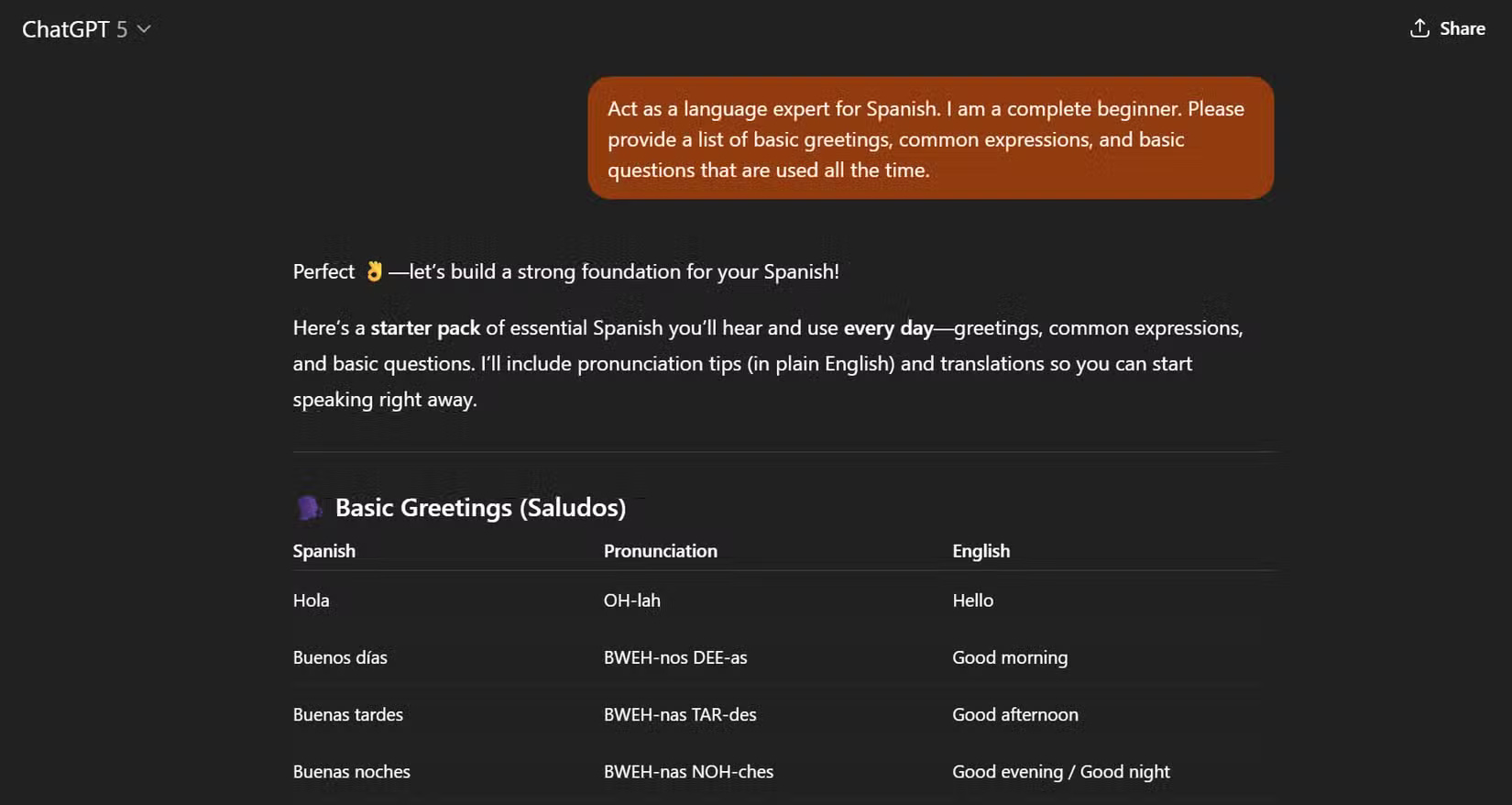
A small set of phrases for an upcoming activity is easier to practice than an unrestricted list of greetings.
I am a beginner learning [language and region]. Teach me eight phrases for [ordering lunch / checking into a hotel / greeting colleagues]. Include the meaning in English, whether each phrase is formal or informal, and a short exchange. Then ask me to choose the right phrase for three situations.
2. Build a manageable vocabulary list
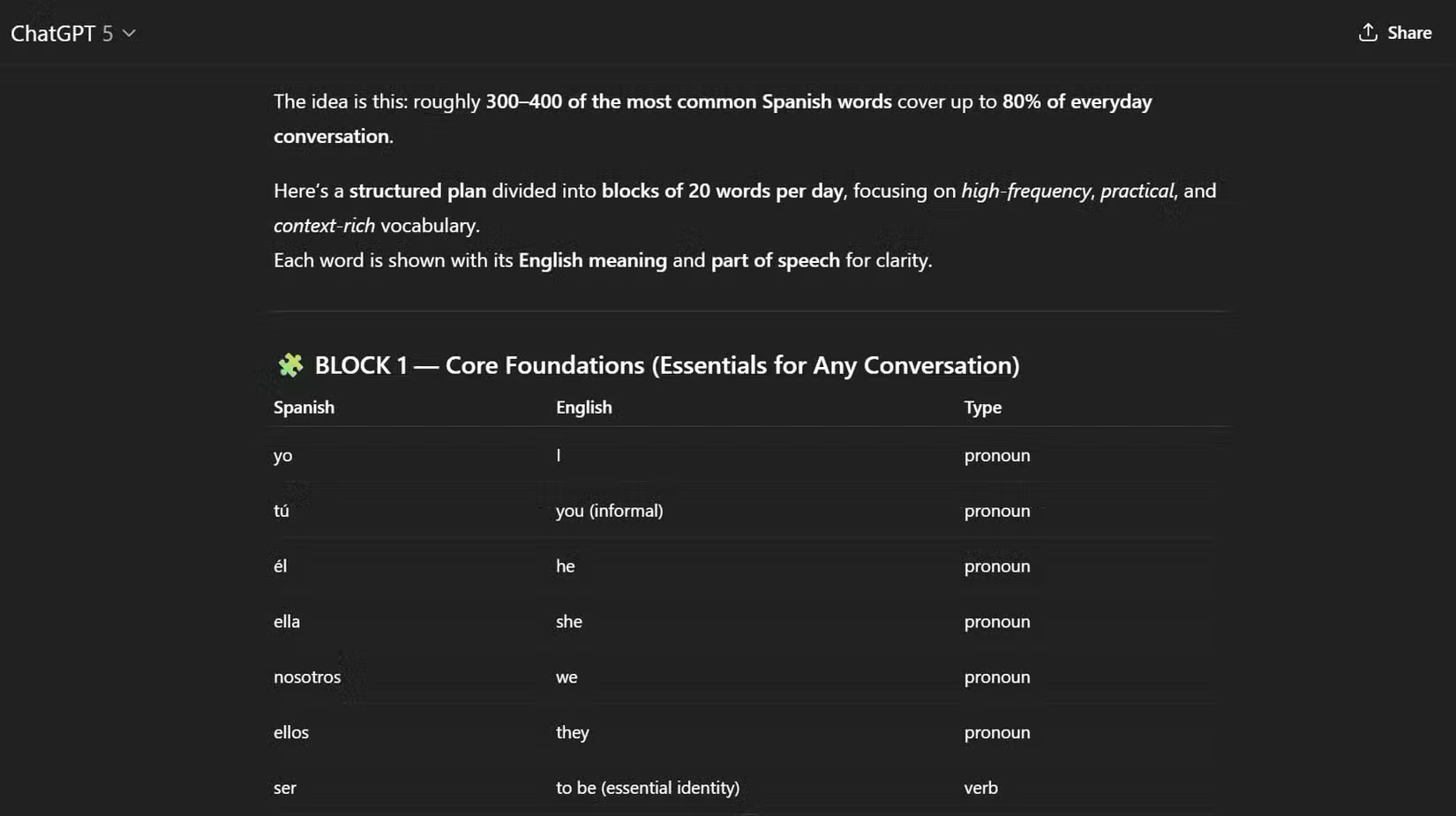
Choose words connected to your daily life. Avoid treating the “20% of words gives 80% of results” claim as a measured rule for language learning.
I am learning [language] at [level]. Give me ten useful words about [topic]. Include articles or grammatical gender where relevant, a short example, and the English meaning. Do not claim a precise frequency ranking without a source. Quiz me on five words after I study the list.
3. Understand words in context
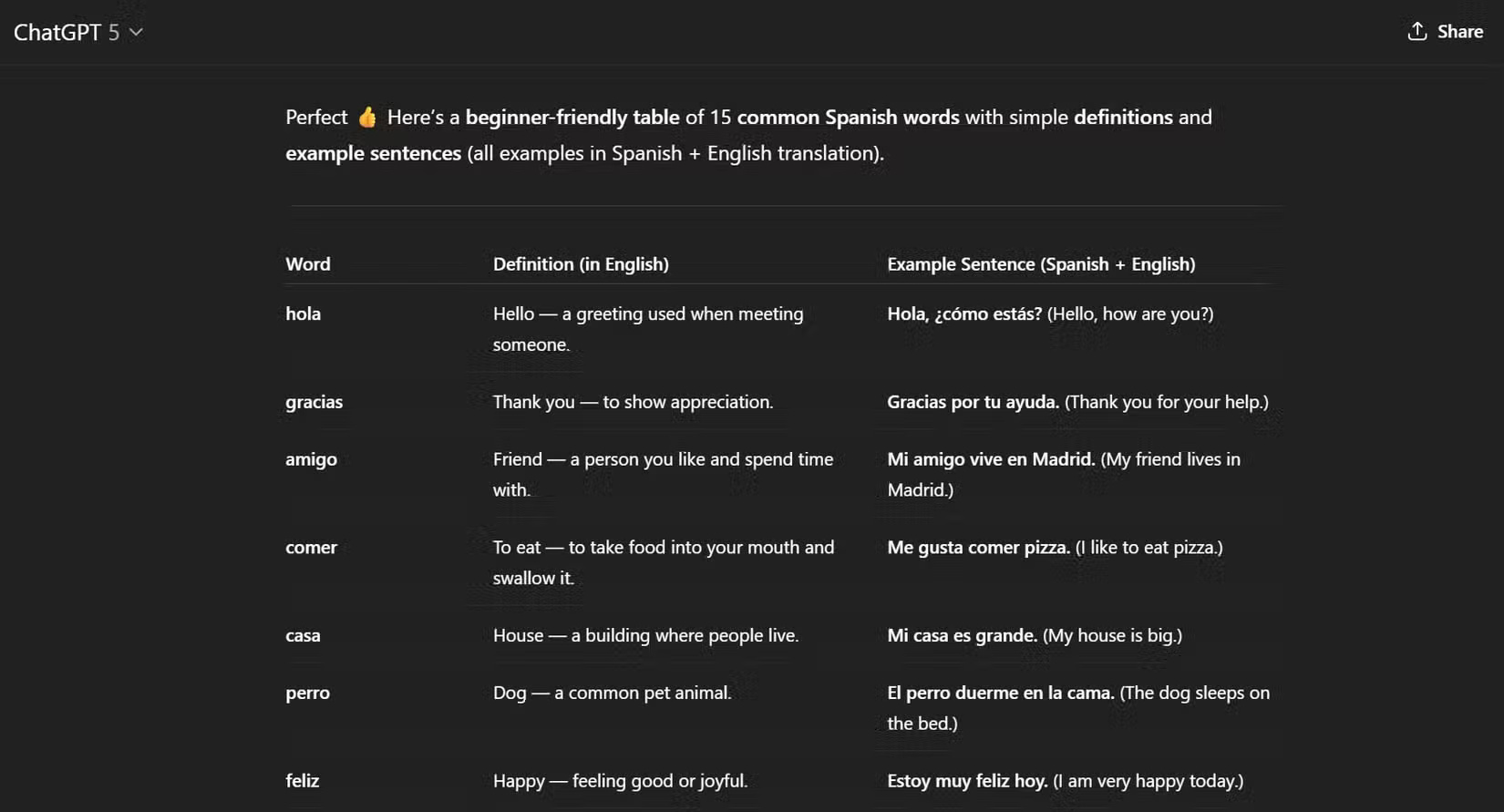
Ask for examples that distinguish meaning, register, and typical use rather than only a one-word translation.
Explain these [language] words at [level]: [words]. Use a table with the word, a simple definition, and a natural example. Explain any important difference between the literal meaning and everyday usage. Then give me three sentences with blanks to complete.
4. Work through one grammar point
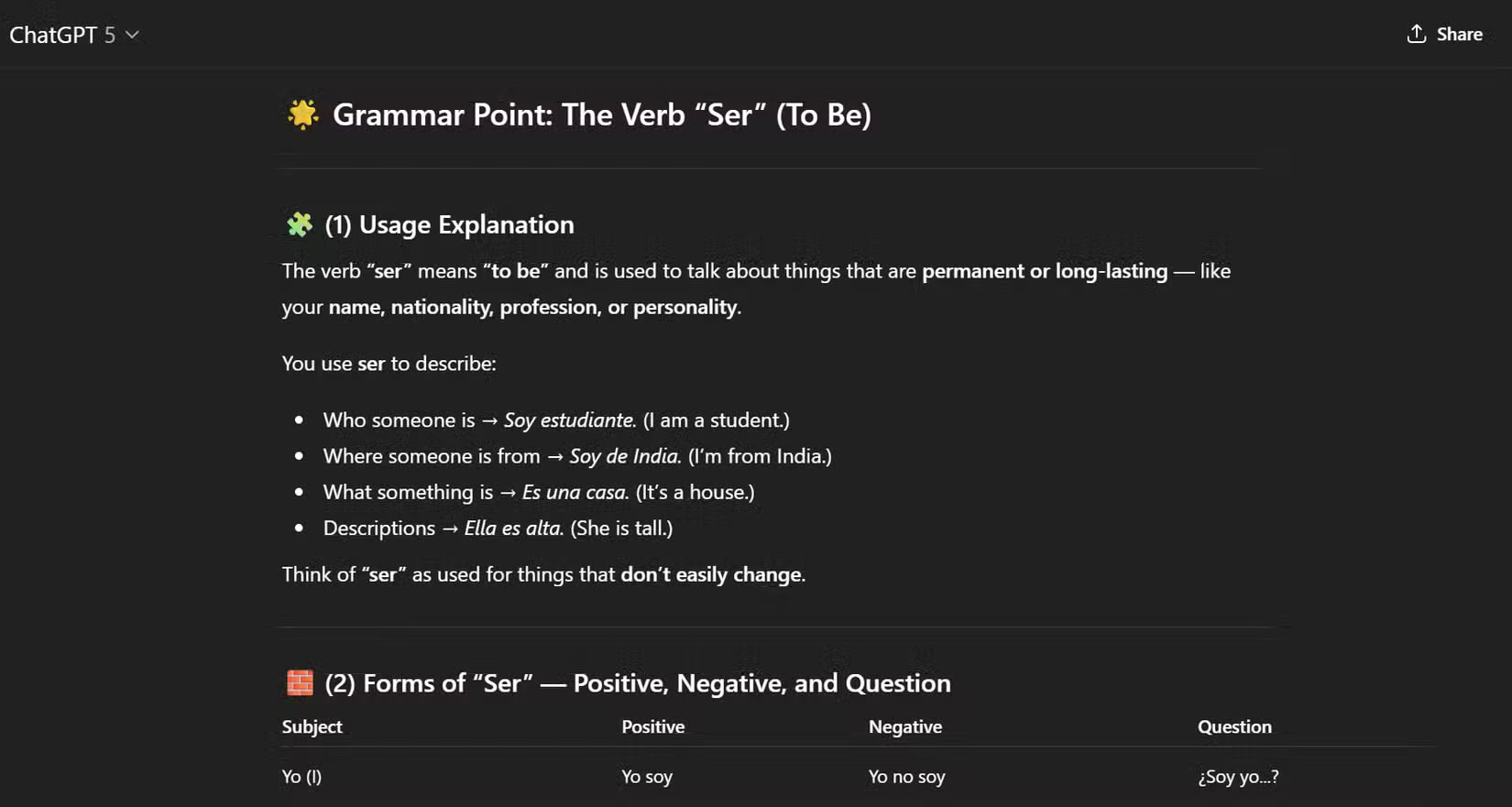
Keep the question narrow. Not every grammar topic fits an affirmative/negative/question table, so request forms only where appropriate.
Explain [grammar point] in [language] for a [level] learner. Give the main rule, two examples, and one common mistake. Mention important exceptions without overwhelming me. Give me one practice question at a time and wait for my answer.
5. Compare confusing words
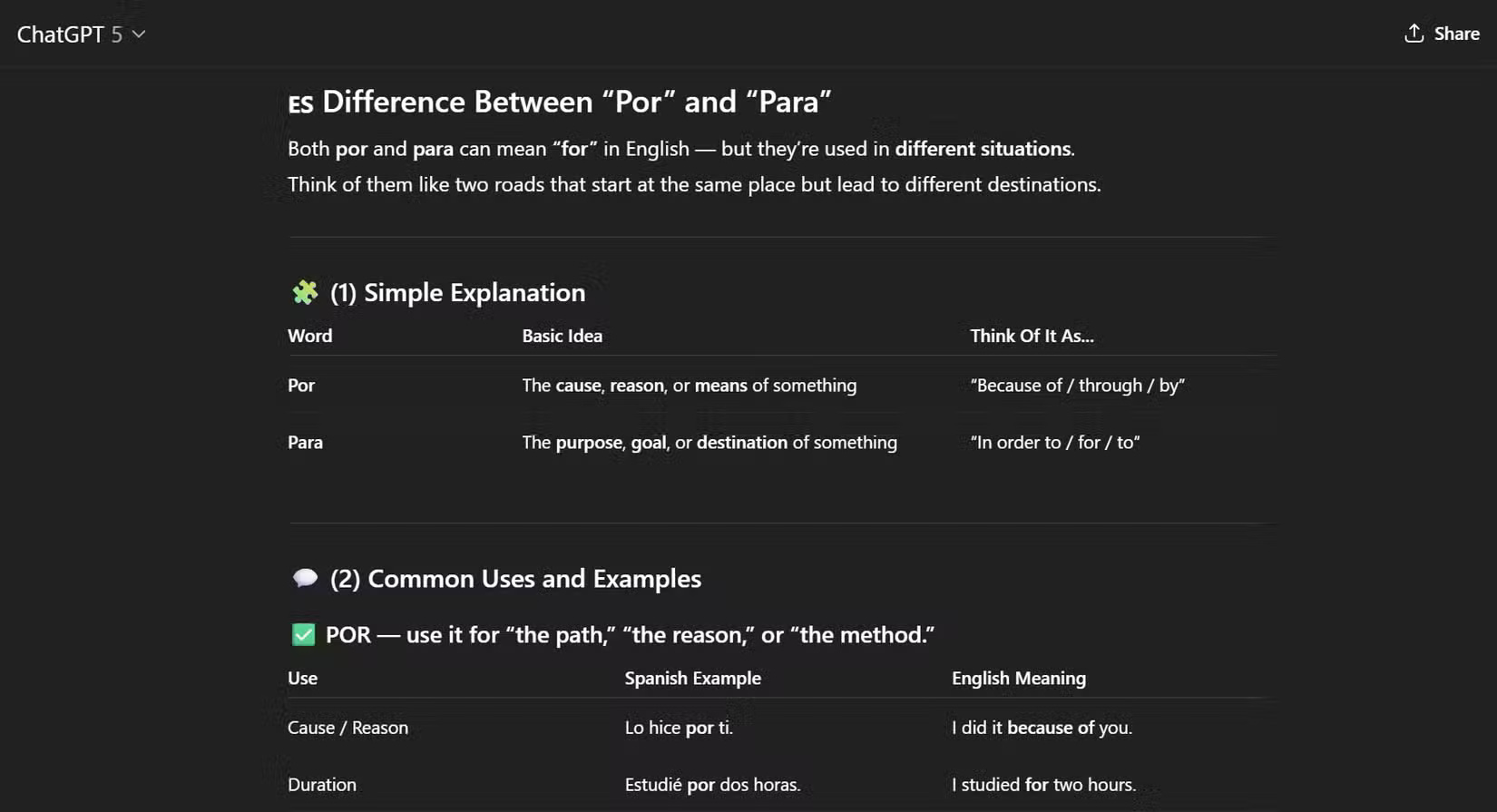
Near-synonyms can differ in grammar as well as meaning. Ask for contrasting examples and a decision you can practice.
What is the difference between [word 1] and [word 2] in [language and region]? Explain the grammatical pattern and typical context for each. Give three paired examples, then test me with a sentence where I must choose one. Explain why the other choice is unsuitable, if it is.
6. Use a tutor-style exercise
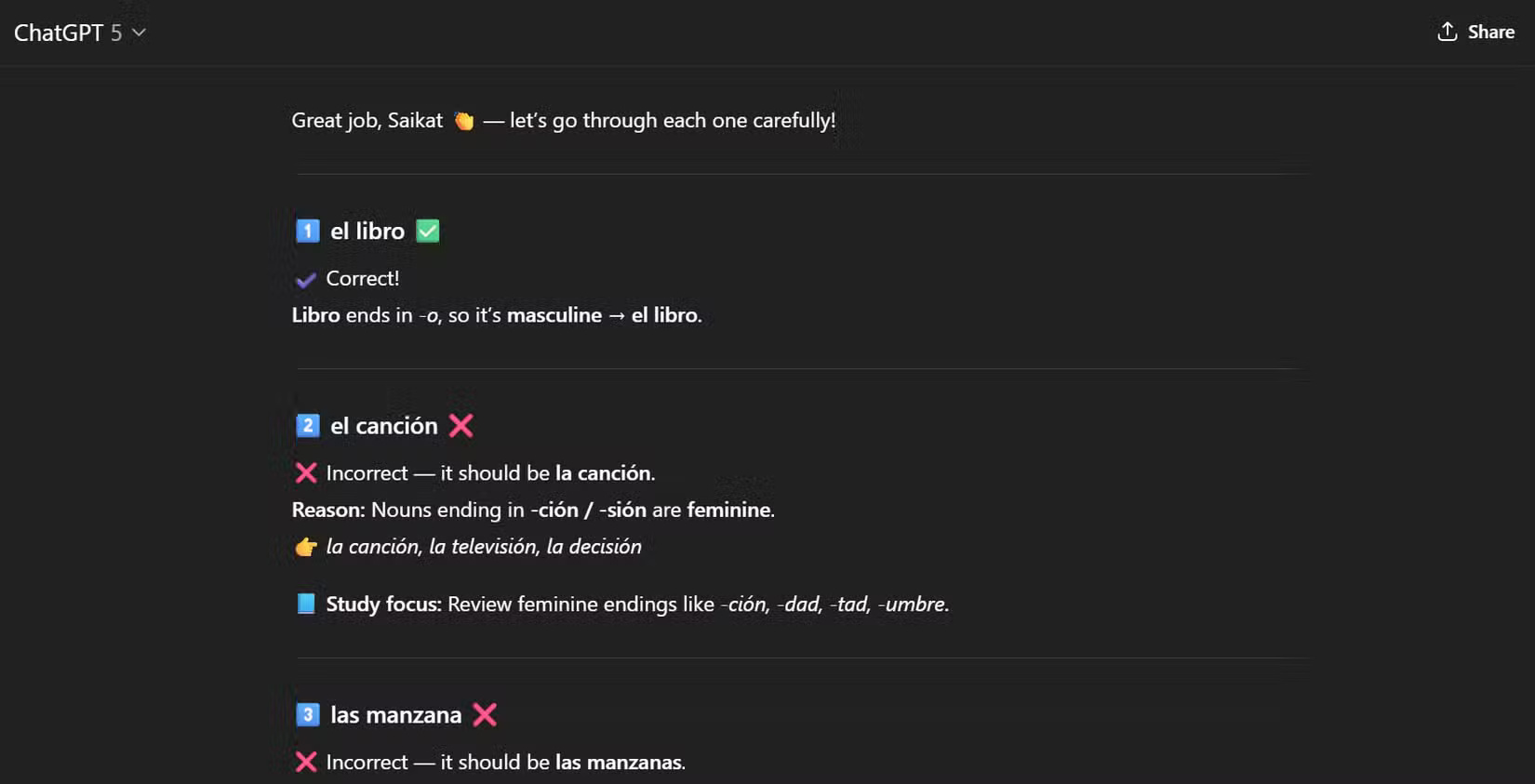
You can request guided practice in an ordinary chat. To use the separate Study feature, select it from ChatGPT's tools or suggestions; typing a tutor prompt alone does not enable the mode. See OpenAI's Study mode instructions for the current interface.
Help me practice [topic] in [language] at [level]. First ask what I already understand. Explain one point, ask one question, and wait. If I struggle, give a hint before the answer. At the end, identify two points I should review.
7. Get focused sentence corrections
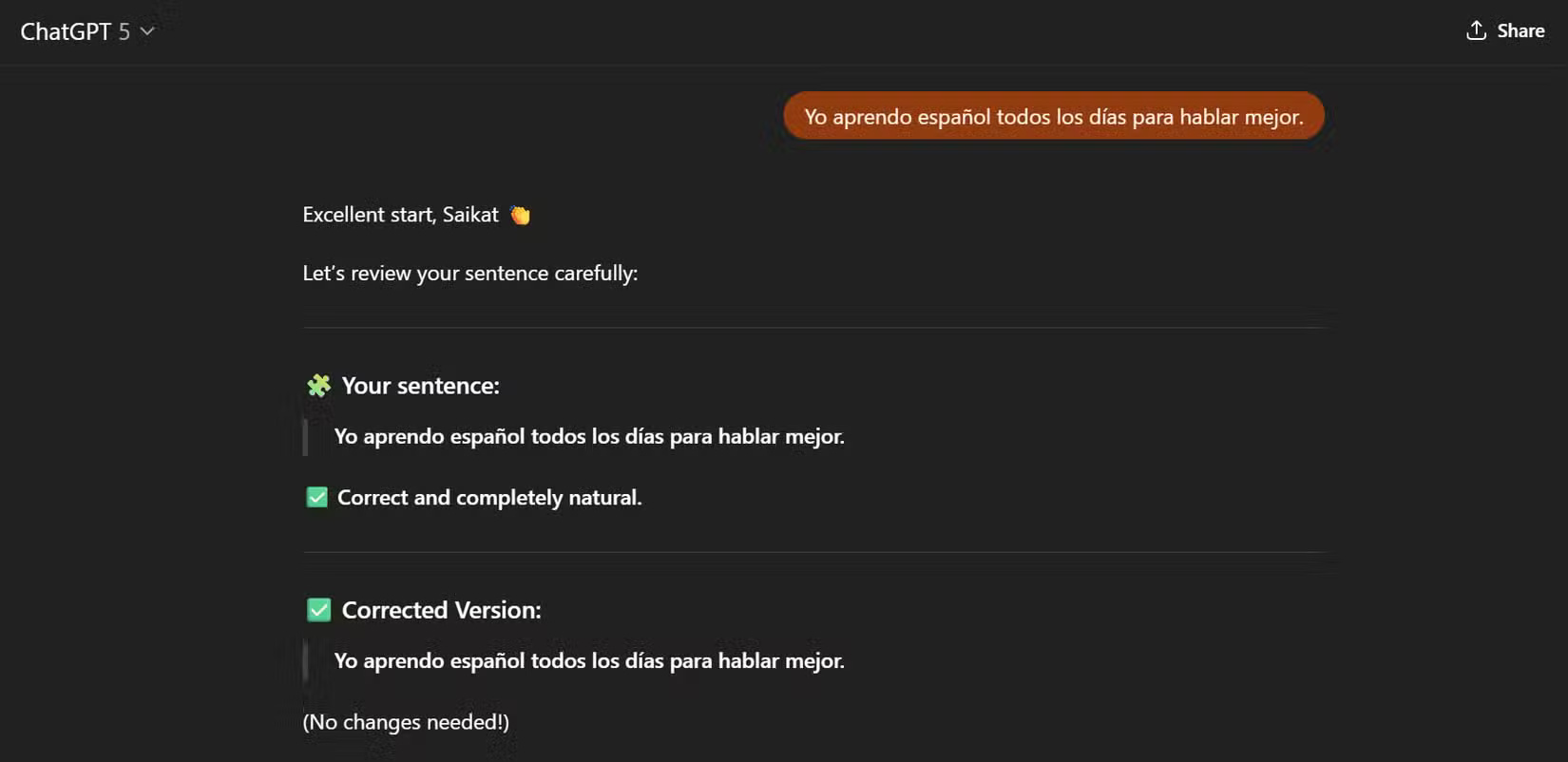
Distinguish actual errors from optional stylistic changes. This helps you understand which parts of your sentence already work.
Check this sentence in [language]: [sentence]. Separate grammatical errors from optional improvements. Show a corrected version that keeps my intended meaning, explain each necessary change in English, and ask me to write a similar sentence.
8. Rehearse an everyday interaction
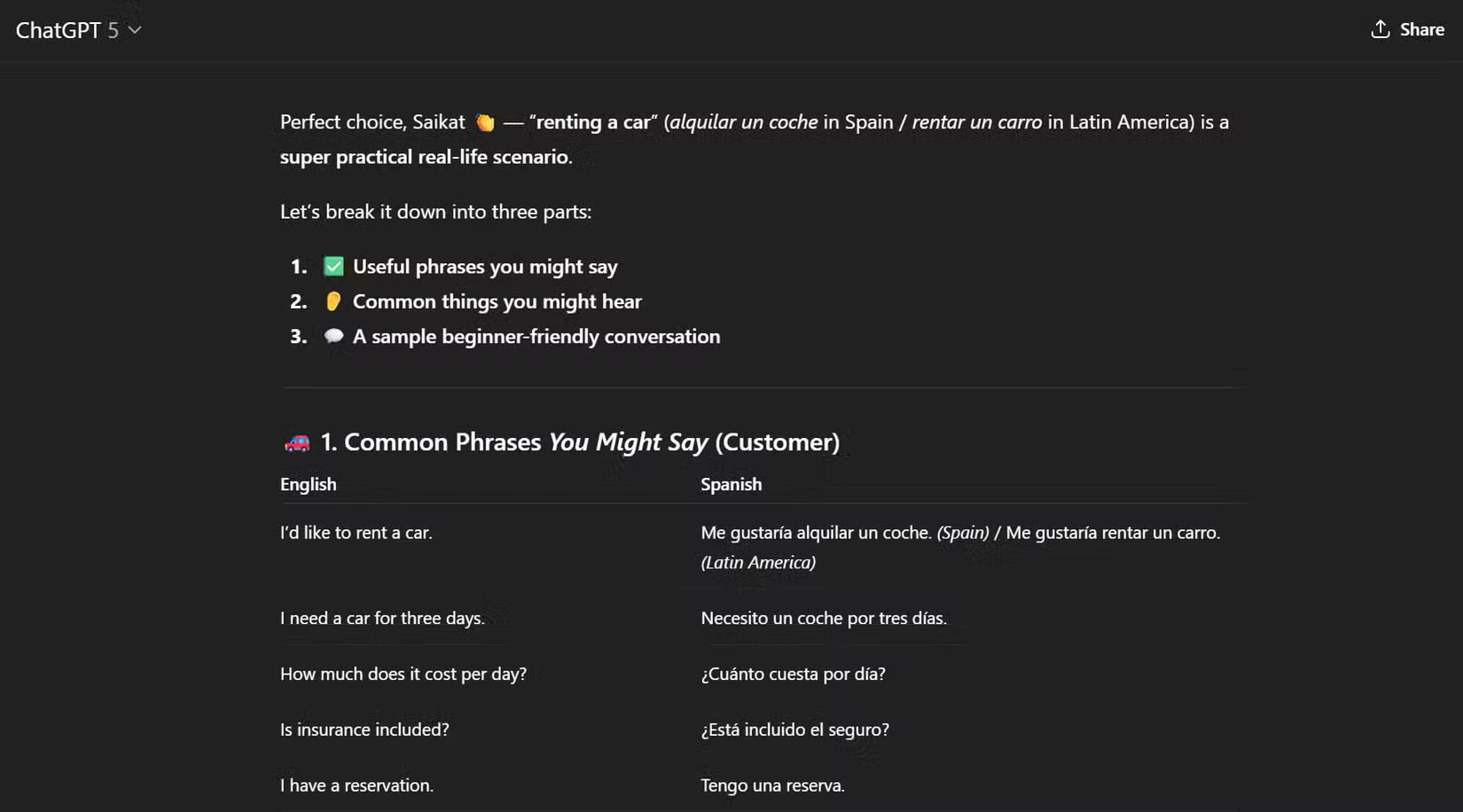
A role-play should leave you room to respond. Reading both sides of a finished dialogue provides less active practice.
Role-play [situation] in [language] at [level]. You are [role], and I am [role]. Ask one short question at a time and wait for me. If I ask for help, provide a hint. After five exchanges, explain three useful corrections in English.
9. Hold a conversation without constant interruption
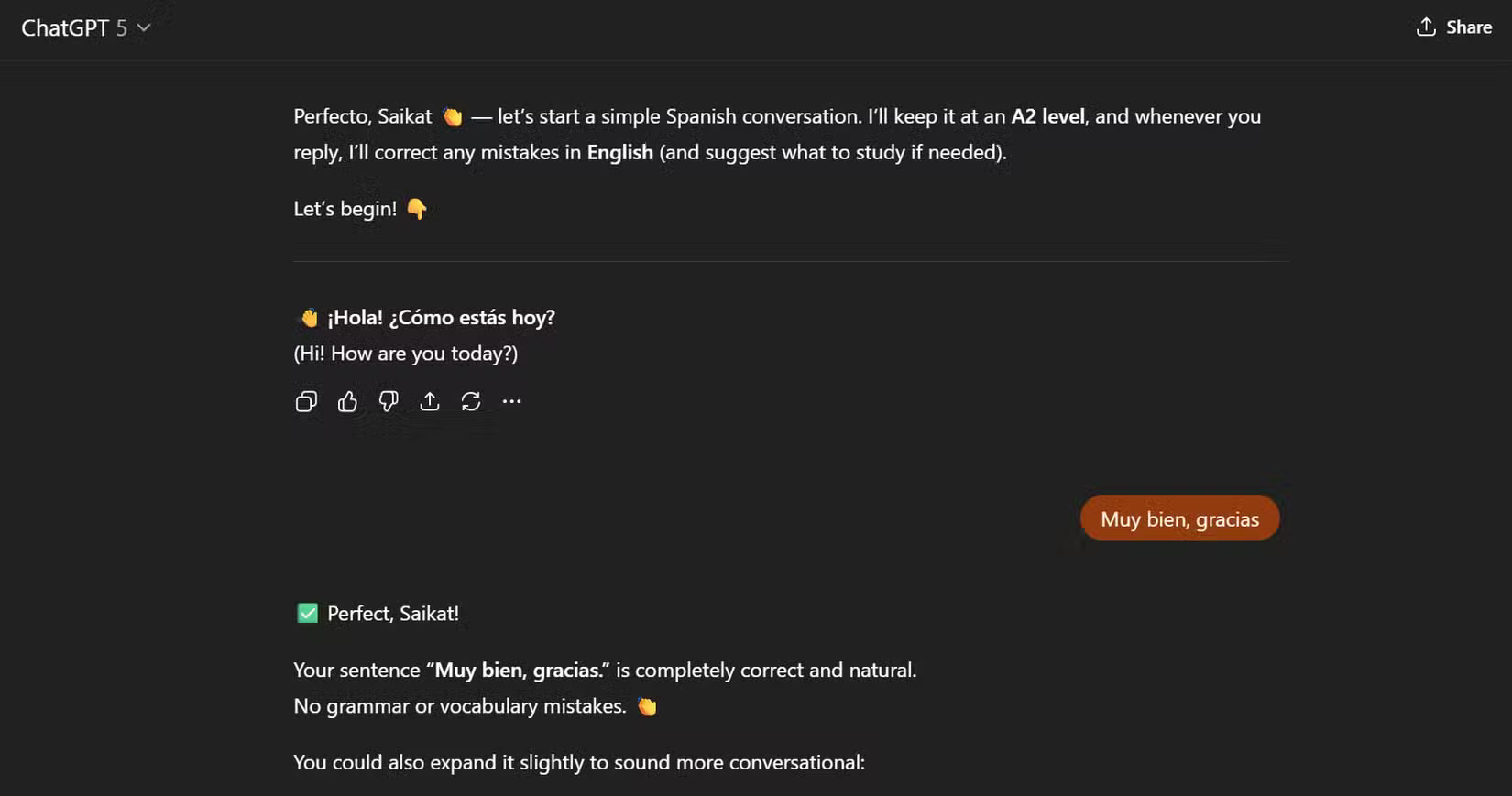
Choose whether you want correction after every turn or at the end. Voice, where available, can add speaking practice, but speech recognition may mishear you.
Chat with me in [language and region] about [topic] at [level]. Keep replies short and ask one follow-up question. Let the conversation continue for six turns, then summarize recurring mistakes in English. If a sentence is unclear, ask what I meant before correcting it.
10. Create a reading exercise
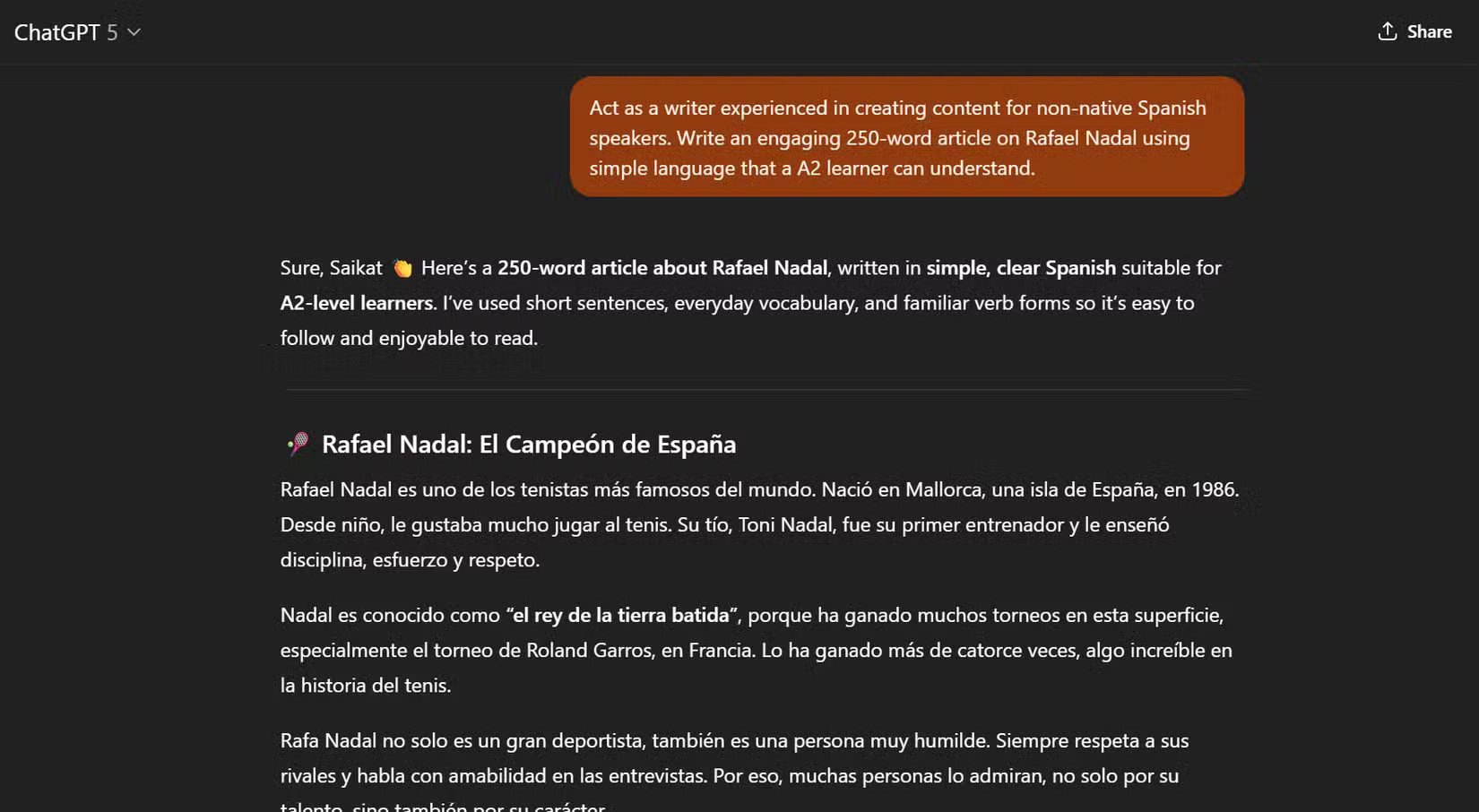
Use generated passages for practice, not as an unchecked source of factual information.
Write a fictional [150-word] story in [language] for a [level] learner about [topic]. Use mostly familiar vocabulary and introduce five useful words. Add three comprehension questions, but keep the answers hidden until I respond. Explain expressions I ask about.
Save the corrections you understand and revisit them in a later exercise. If an explanation seems inconsistent, use TipsMake's guide to verifying AI claims. Understanding how language models generate answers also helps you judge their feedback without assuming every fluent correction is right.






Reader Comments 0
Sign in with email or Google to join the discussion.