Table of Contents
Explore the 13-year-old boy knows 5 programming languages, including the key concepts, practical examples, important considerations, and useful guidance.
Despite being only 13 years old, Naik already knows five programming languages: C, C++, Java, JavaScript, and Solidity – a programming language commonly used to write smart contracts on Ethereum. Naik started learning programming at the age of 8 in IT summer camps.
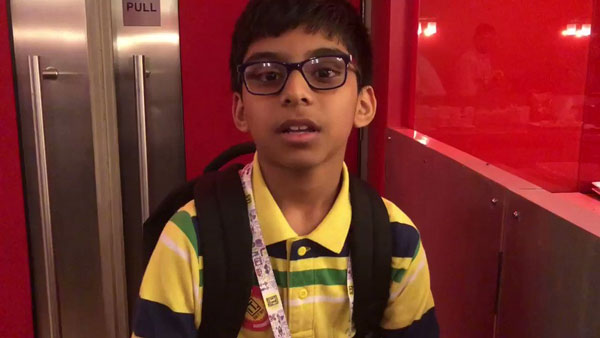
Due to the impact of the COVID-19 pandemic, Naik had to stay home with his parents and younger brother. Naik received support from his father, Siddhivinayak, who has a bachelor's degree in Computer Science but is currently serving as an officer. This allowed Gajesh the time to develop PolyGaj, a DeFi (decentralized finance) protocol built on the Polygon blockchain.
So, what does a 13-year-old boy know about the 'DeFi protocol'? DeFi is a general term for software that manages crypto assets on your behalf. Instead of choosing a bank or asset manager, you entrust your assets to a DeFi protocol. When you transfer those funds into smart contracts—lines of code that determine how your asset funds are used for investment.
PolyGaj is a central hub for these investment mechanisms and will help investors generate profits. The assets under management by PolyGaj were approximately $1 million, and this figure increased to $7 million at the end of last month, after billionaire Mark Cuban invested in PolyGaj.
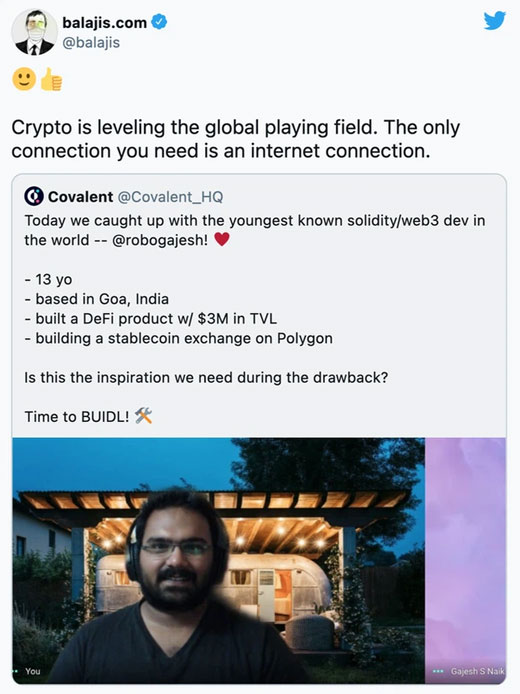
How could a 13-year-old boy single-handedly create the foundational commands for a multi-million dollar ecosystem?
Arjun Kalsy, Vice President of Growth at the cryptocurrency company Polygon, attributes his success to creativity rather than being a natural programmer. Essentially, PolyGaj is a clone of Goose Finance, a DeFi project built on the Binance Smart Chain, with some minor tweaks. The algorithms behind PolyGaj come from a smart contract called 'MasterChef,' the foundation of the SushiSwap protocol.
Kalsy argues that programmers can be divided into two main types. One type is those interested in algorithms and data structures. The other type is Gajesh, who is better at implementation and business. When Gajesh sees a promising project, he can imitate it and design something similar. This is why Naik Gajesh succeeded without a high-level education.
However, not everyone supports Gajesh. Chris Blec, a DeFi research expert, argues that Gajesh is still too young to understand the potential risks in DeFi.
In a phone interview, Gajesh stated that he will continue developing PolyGaj in the future, whenever possible. Responding to the question of whether some people are skeptical about letting someone so young manage such a large sum of money, Gajesh replied, "Age is just a number."
Final Thoughts
Understanding the 13-year-old boy knows 5 programming languages makes it easier to evaluate the information and apply the most relevant recommendations. Focus on the key points above and verify details that may change over time.
FAQ
What is the 13-year-old boy knows 5 programming languages?
Explore the 13-year-old boy knows 5 programming languages, including the key concepts, practical examples, important considerations, and useful guidance.
What key points does this article cover?
The article explains the core concept, important considerations, and practical details readers should understand.
How can you use this information in practice?
Use the explanations to compare options, verify important details, and make a more informed decision. Apply the recommendations that best match your goals and situation.
Related Articles
 Top 5 Languages for Blockchain Programming7 minutes read
 The World's 5 Most Annoying 'Programming Languages'11 minutes read
 Write Happy New Year in 10 Different Programming Languages4 minutes read
 Top 5 Best Programming Languages for Kids Today6 minutes read
 Top 8 Cryptocurrency Exchanges with the Lowest Transaction Fees6 minutes read
 TRANSACTION in SQL9 minutes read
Reader Comments 0
Sign in with email or Google to join the discussion.