Table of Contents
Discover why is cachyos the best choice for gaming on Linux and explore the main causes, risks, practical effects, and recommended actions.
People have spent time exploring all the most popular options, such as SteamOS, Bazzite, and CachyOS. But ultimately, CachyOS stands out the most, and it delivers the best overall gaming experience on Linux to date.
CachyOS delivers a true SteamOS experience on a different distribution
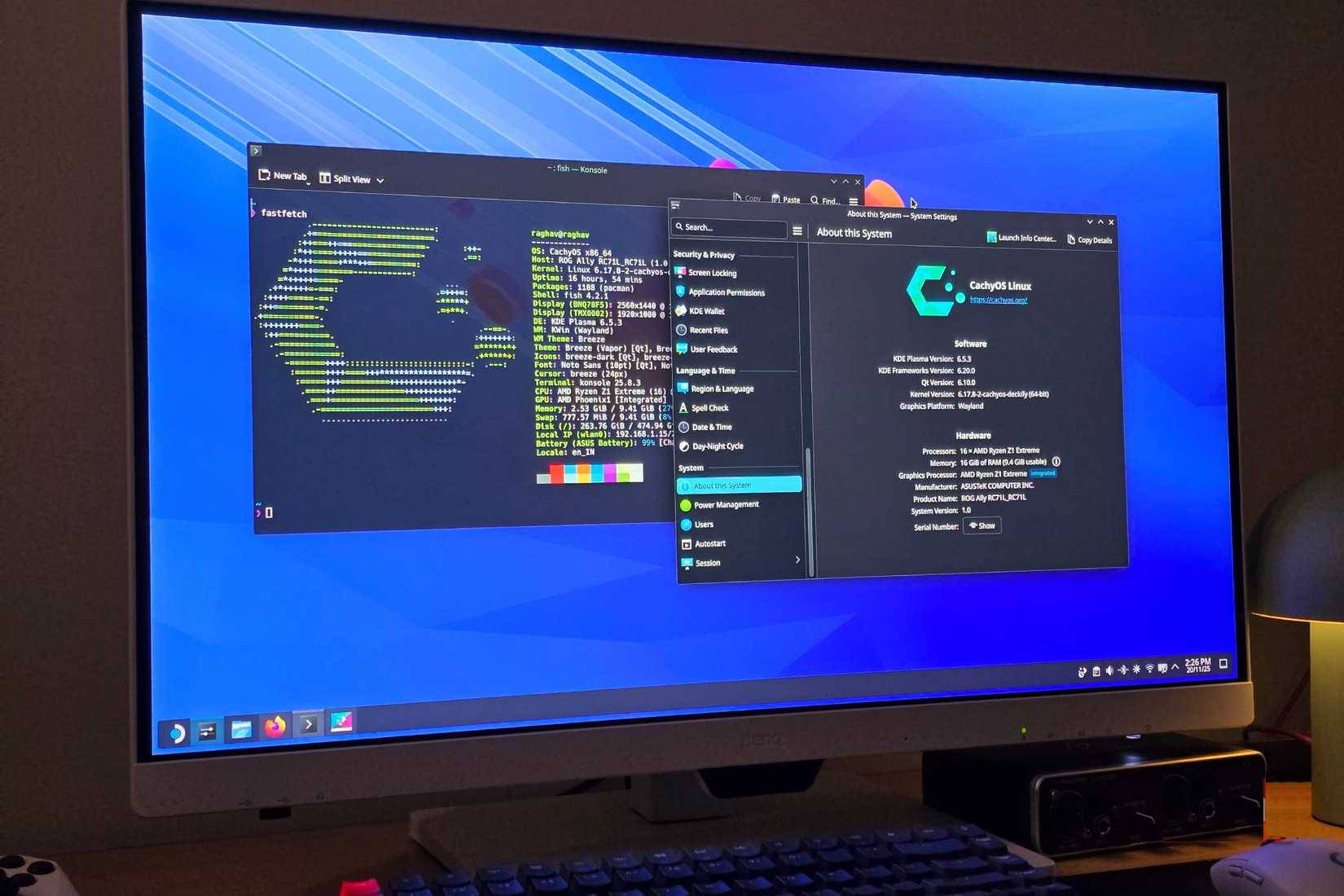
Many users of the ASUS ROG Ally use it as their primary gaming device. And clearly, the conventional desktop layout doesn't make much sense on a handheld device. Even when connected to a monitor, they almost never use a keyboard and mouse. They only use the controller, so having a console-like user interface is a top priority.
Like Bazzite, CachyOS also comes with a SteamOS interface for handheld builds, so it perfectly meets that requirement.
And if you've ever used Steam Deck or any SteamOS system before, you know it's far superior to trying to use Windows with a controller. Even the new Xbox controller interface is only mediocre.
Initially, people loved Bazzite because it was one of the first distributions to come with the SteamOS compiler, but its performance was somewhat inferior to other distributions, and even Windows. That's why many people started looking for other options from the beginning. And as mentioned before, having the SteamOS window manager pre-installed was a top priority, so CachyOS is now on par with Bazzite.
CachyOS has the best gaming performance ever seen on Linux
Every frame counts when you're aiming for 45 FPS
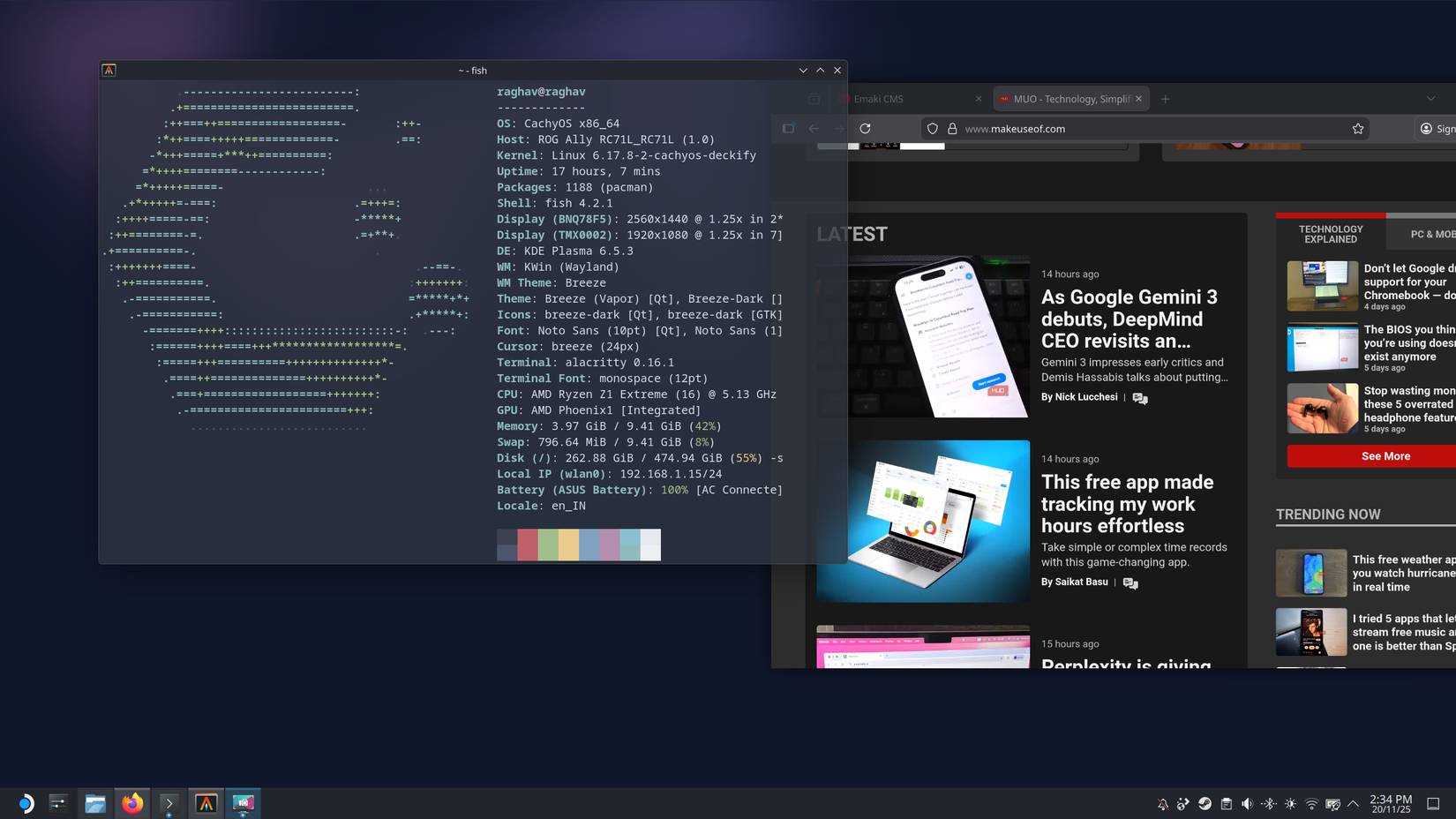
The biggest reason people abandon Bazzite is its performance. They start with stock SteamOS, and when they switch to Bazzite, they consistently experience lower frame rates. The difference isn't huge, but on a handheld device, every frame counts. People often aim for 30 or 45 FPS in demanding games, and even a small drop in that range is visually noticeable.
Part of the reason might be that Bazzite is based on Fedora, which is a bit heavier than Arch-based distributions. Don't get me wrong, many people still love Fedora, and have even replaced Ubuntu with it on their laptops, but for a portable device, performance is everything.
However, the bigger difference comes from the CachyOS development team, not Bazzite's fault. CachyOS incorporates a kernel specifically tuned to your CPU architecture. Along with some scheduler tweaks, even the software packages are compiled and optimized for your hardware, rather than a "one size fits all" setup.
The author of this article personally tested the data on the most popular "gaming" Linux distributions, along with Windows 11.
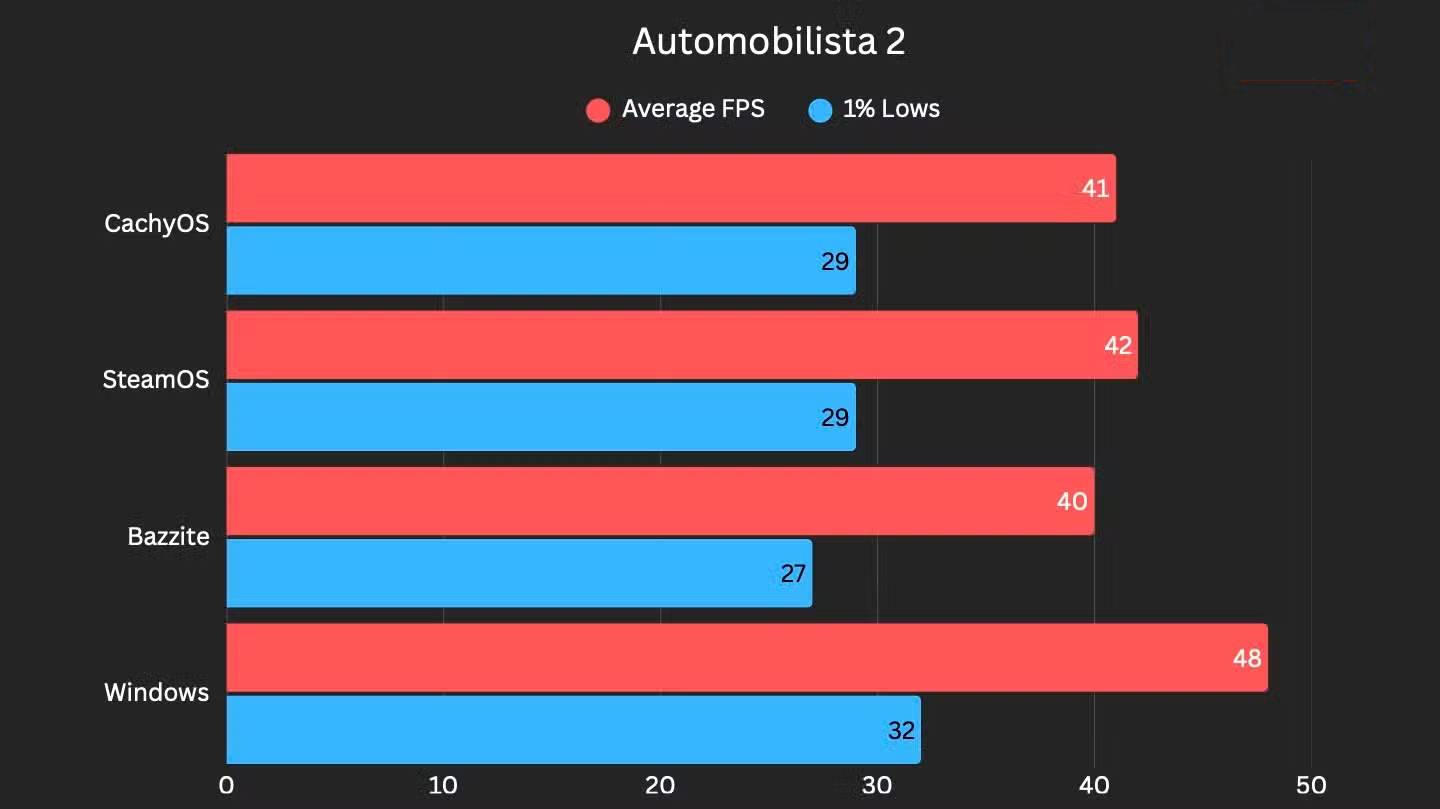
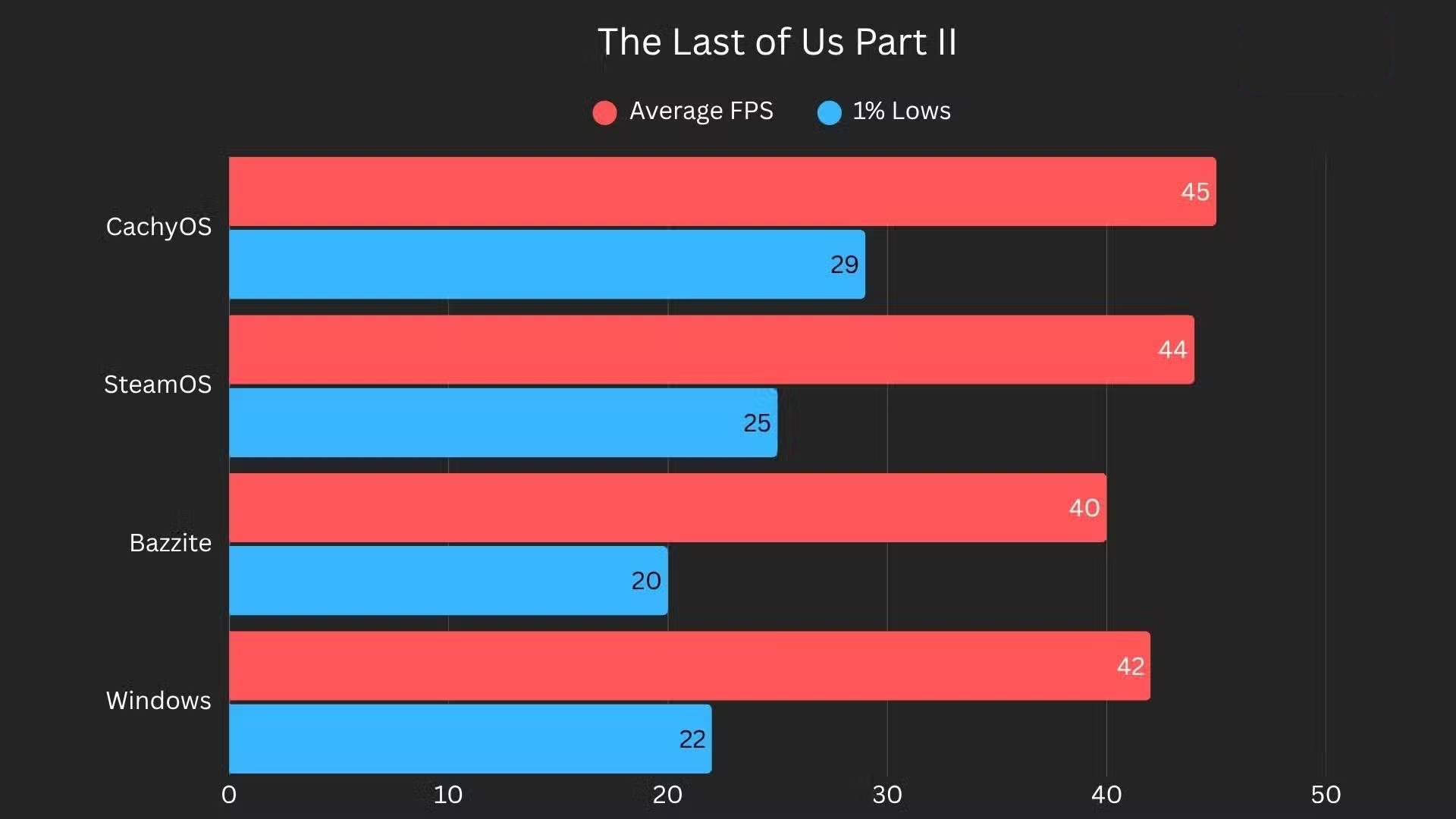
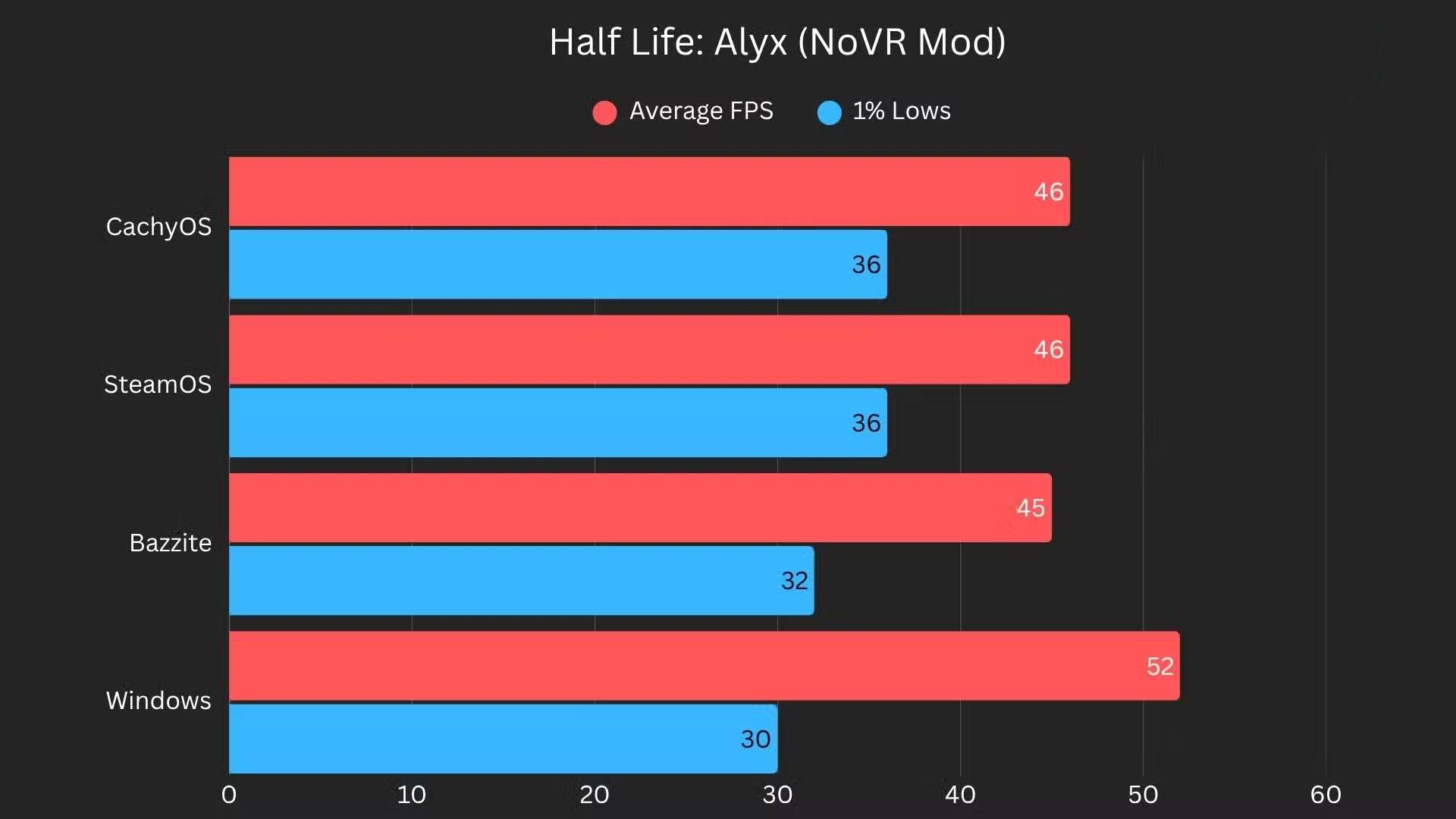
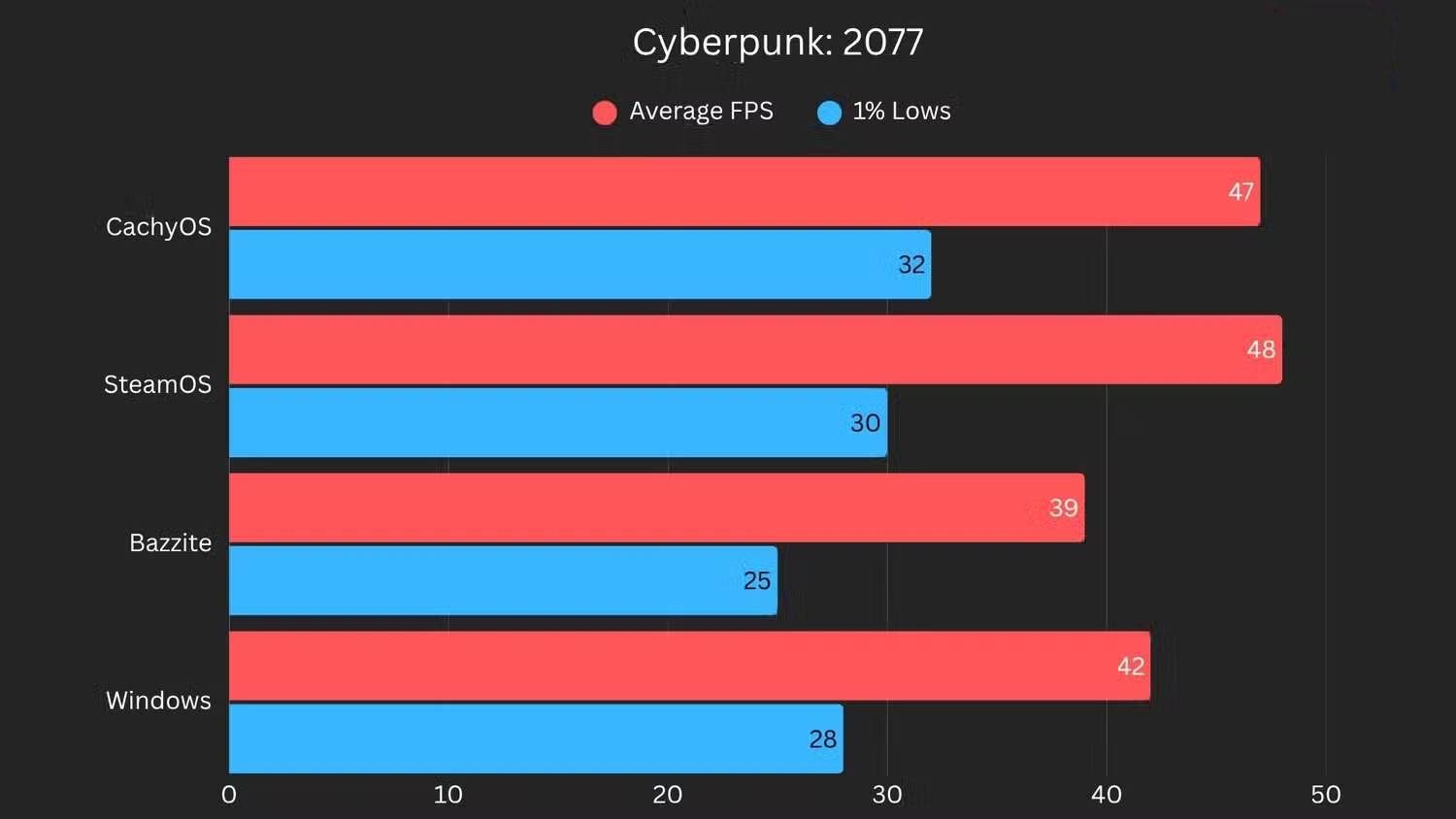
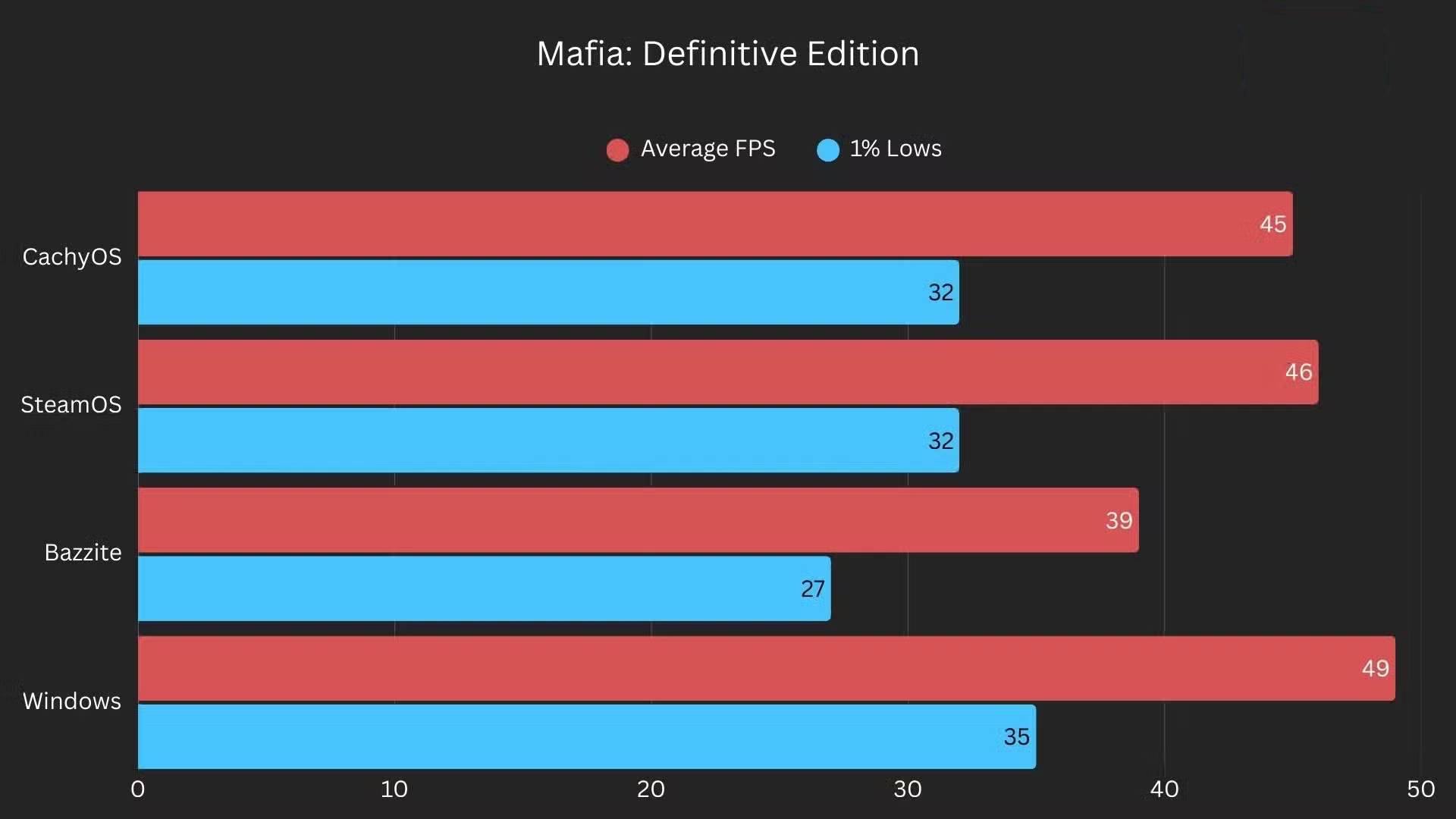
In some games, the difference is so small that many people don't even notice. But in others, the dropout is quite significant. It's impossible to pinpoint a clear pattern explaining why some titles perform significantly worse, but make sure everything is running at the same TDP and using the same graphics settings.
You could certainly tweak Bazzite enough to achieve similar performance, but honestly, would you really want to spend time tweaking and troubleshooting a desktop PC, even if you're familiar with Linux, when another distribution already provides that performance from the start?
CachyOS and the original SteamOS deliver the best gaming performance we've ever seen on Linux. They're essentially neck and neck. But because SteamOS has more limited hardware support, CachyOS ultimately has a slight edge.
Sometimes, people don't want an immutable operating system
you can break things!
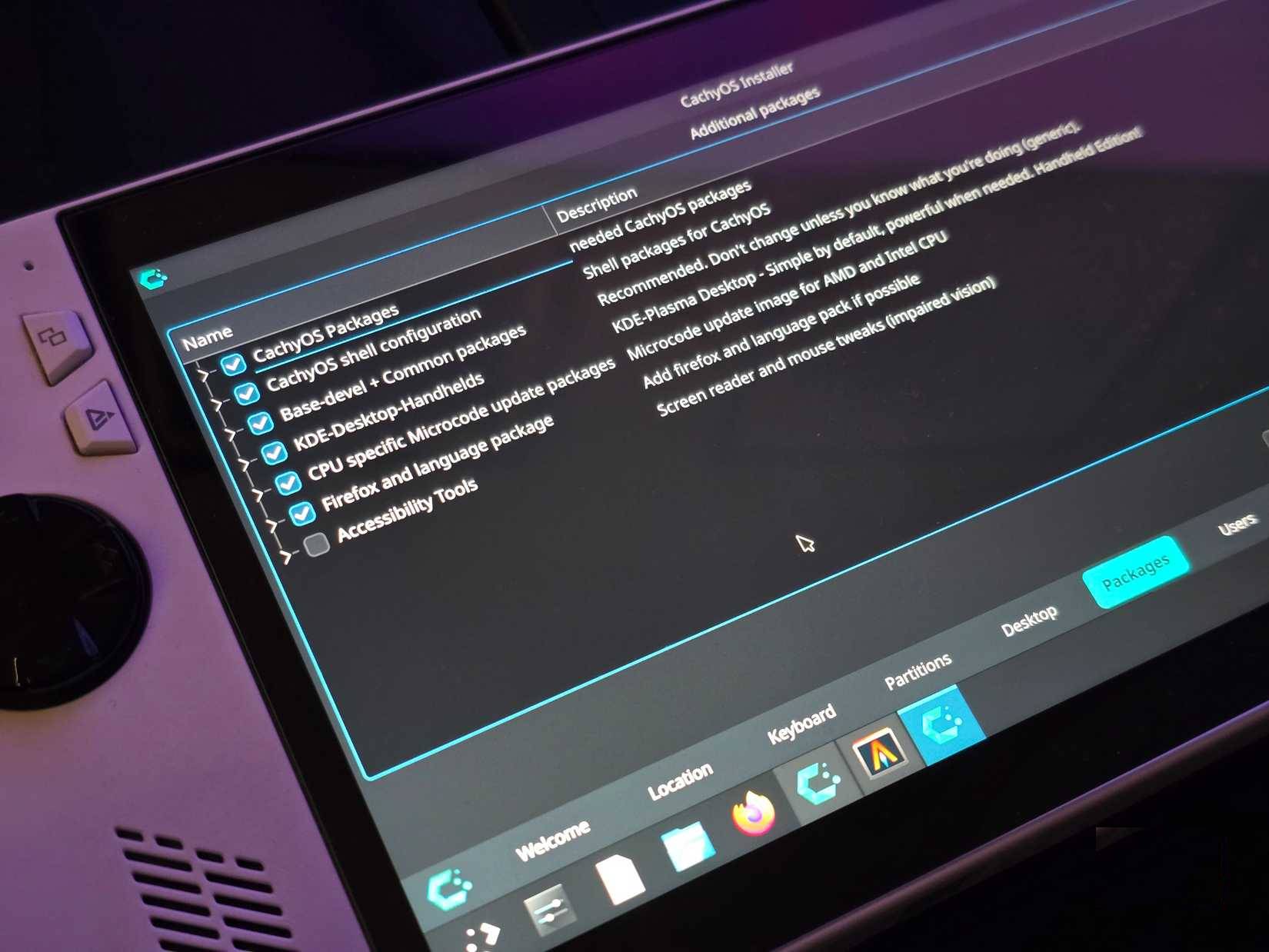
Bazzite and SteamOS are immutable distributions. Simply put, immutable systems lock down the operating system's core so you can't directly modify system files. This is great for stability, but it's definitely limiting if you want to customize everything.
There's a very clear line between these things. Many people use Fedora Silverblue on their regular computers because they want the solid stability that immutable distributions provide. But ROG Ally is the complete opposite. Many people also use it as a tinkering tool, and don't care about potentially damaging the operating system while experimenting.
You'll quickly run into trouble, especially when trying to fine-tune Bazzite's performance as mentioned above.
In fact, this might sound a bit controversial, but perhaps immutability isn't really suitable for desktops or handheld gaming devices. 99% of the time, you're in the SteamOS window manager, launching Steam and playing games. You're not doing much else on a dedicated game distribution, so there's not much that really needs to be protected.
For many people, it ultimately comes down to whether you play games and work on the same machine. If you fall into that category, frankly, ditch CachyOS for Bazzite or SteamOS. In that case, choose immutability over constant customization, as stability is more important than the freedom of customization.
But if you have a dedicated gaming device and want to get the most out of every frame, or just want to do whatever you want without restrictions, then CachyOS is a better option.
Final Thoughts
Understanding why is cachyos the best choice for gaming on linux makes it easier to evaluate the information and apply the most relevant recommendations. Focus on the key points above and verify details that may change over time.
FAQ
What is why is cachyos the best choice for gaming on linux?
Discover why is cachyos the best choice for gaming on Linux and explore the main causes, risks, practical effects, and recommended actions.
What key points does this article cover?
The article focuses on CachyOS delivers a true SteamOS experience on a different distribution, CachyOS has the best gaming performance ever seen on Linux, Every frame counts when you're aiming for 45 FPS, with practical explanations and examples.
How can you use this information in practice?
Use the explanations to compare options, verify important details, and make a more informed decision. Apply the recommendations that best match your goals and situation.
Related Articles
 Learn About Cachyos: A Lightweight Linux Distribution Suitable for Gaming And8 minutes read
 Tips for Playing Games on a Linux Desktop6 minutes read
 6 Best Linux Distros for Gaming8 minutes read
 4 Linux Distributions You Can Trust to Install on Your Primary Computer7 minutes read
 Linux Is Actually a Better Operating System for Gaming6 minutes read
 How to Improve Gaming Performance on Linux9 minutes read
Reader Comments 0
Sign in with email or Google to join the discussion.