Table of Contents
Learn what happened to a kansas family who lived with 2,055 brown recluse spiders means.
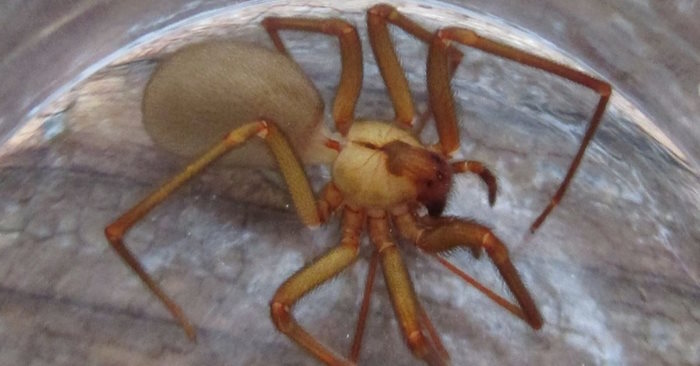
Spiders have a bit of a bad reputation among humans because they are a group of animals that are very good at keeping pests away. However, while most species are harmless, there are some venomous species that you probably don't want in your home.
" The brown recluse is a nocturnal predatory spider. The female spider hides and ambushes her prey. The hideout consists of a woven silk mat in a hidden location such as a wall cavity or behind a picture frame ," the Illinois Department of Public Health explains about the spider.
Once inside the house, it is quite difficult to get rid of them, as they spend most of their time hiding inside furniture and other small spaces in the house.
" They are very long-lived, able to survive for months without eating, and female spiders only need to mate once in their lifetime to reproduce. So it only takes one mated female spider to start an infestation. Once established, they are very difficult to control. "
This truth is illustrated by the case of a family living in a 19th-century home in Kansas. The family, including a 13-year-old and an 8-year-old, moved into the new home after the previous owners left in 1996. For five and a half years, they regularly saw spiders moving around the house, but it wasn't until the summer of 2001 that the family finally realized that the spiders they were seeing were the brown recluse spider Loxosceles reclusa.
Specimens collected by one of the study's authors were confirmed to be this species, before the team attempted to capture all the spiders in the house, with two people making nightly collections from mid-June to mid-September 2001. While they attempted to collect the spiders without killing them, some were forcibly destroyed to prevent escape. However, all the spiders killed were recorded, and many of the specimens remained intact.
2,055 brown recluse spiders were collected or destroyed over the 6 months, 842 from sticky traps and 1,213 from manual sampling. Of the 1,179 manually collected brown recluse spiders classified by size, 323 were large (27.4%), 255 were medium (21.6%), and 601 were small (51.0%).
At the end of the breeding season, the team noticed that they caught fewer large spiders.
" The Kansas home collected a surprising number of brown recluse spiders in just six months. The decline in large and medium-sized spiders from the beginning to the end of the season was probably the result of natural population growth throughout the season and the removal of larger, easier-to-detect and capture specimens ," the team explained. "Brown recluse spiders can live for several years, so the latter reason may be more important in explaining the corresponding decline in large and medium-sized spiders."
The researchers explain that the spiders are believed to be capable of delivering venom, with a body length of around 5 mm, which is similar to the size of the 'average' spiders found in the house. It is estimated that there are around 488 spiders capable of delivering venom in this ' heavily infested house '.
While living in a spider-infested house is probably not a good idea, as the spiders are venomous, the people living in that house were completely unharmed.
" Although a conservative estimate of 400 brown recluse spiders are capable of transmitting venom in a single Kansas home (about 20% of all spiders captured), there have been no cases of occupants being poisoned by venom. "
The team cites a similar survey in Chile, which found hundreds of spiders in an infested house, again without any bites on the residents. This, the team says, could indicate that doctors – especially in areas without many spiders – are misdiagnosing skin lesions as spider bites.
' Given the number of non-venomous brown recluse spiders found in homes in this study, to accurately diagnose a bite in a brown recluse-free area, areas without brown recluse spiders would need to contain hundreds to thousands of spiders. In contrast, in areas without brown recluse spiders, there are often no known populations of brown recluse spiders and the number of verified sightings is low,' they write in conclusion, adding that recent research has shown that medical professionals misdiagnose lesions as spider bites.
" In areas where brown recluse spiders are not common, additional evidence of spider involvement (e.g., identification of a Loxosceles spider at a specific envenomation site) is required before determining that a wound was caused by a brown recluse spider. "
Aside from being misdiagnosed, which tarnishes the poor brown recluse's image, the spider's bite isn't all that serious.
' When bitten, the bites are rarely as serious as they are described ,' explains the Illinois Department of Public Health. ' Some bites only cause localized redness and swelling. Severe necrosis may occur in less than 10 percent of cases and is likely due to bacterial infection of the wound rather than a reaction to the spider's venom. '
Lessons from the house where brown spiders choose to reside
A cluttered room creates more hiding places and more insects to prey on, allowing spider populations to grow quietly. Basic steps, such as reducing piles of cardboard, using sticky traps along baseboards, and sealing cracks, can reduce spider populations over time.
Most of us will never live in a home infested with these venomous recluse spiders, and most will never see them. If you live within range and find one, take it seriously, wear gloves in the storage area, and avoid skin contact with the spider.
The name 'recluse' is quite accurate. These spiders hide, moving around at night and saving their venom for small prey, not humans.
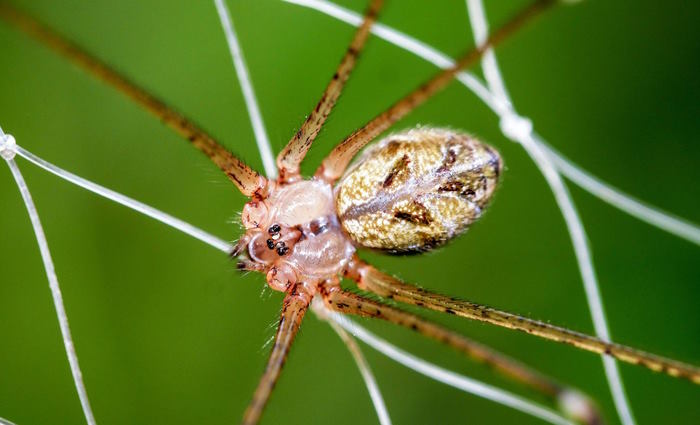
The Kansas case is not a call to be careless. It asks us to weigh our risks against what the data shows, respect spiders without exaggerating their threat, and seek to identify when claims don't match where spiders actually live.
Final Thoughts
Understanding what happened to a kansas family who lived with 2,055 brown recluse spiders in their home for five years makes it easier to evaluate the information and apply the most relevant recommendations. Focus on the key points above and verify details that may change over time.
FAQ
What is what happened to a kansas family who lived with 2,055 brown recluse spiders in their home for five years?
Learn what happened to a kansas family who lived with 2,055 brown recluse spiders means.
What key points does this article cover?
The article focuses on Lessons from the house where brown spiders choose to reside, with practical explanations and examples.
How can you use this information in practice?
Use the explanations to compare options, verify important details, and make a more informed decision. Apply the recommendations that best match your goals and situation.
Related Articles
 Don't Kill Spiders but Thank You for Appearing in Your Home3 minutes read
 Dyeing Brown Hair: The Most Beautiful Brown West Color 20203 minutes read
 The Study Found 18 New Pelicans Species: Spiders3 minutes read
 The Beautiful Smoky Brown Color 20203 minutes read
 Dye Hair: The Coolest Browns in 20203 minutes read
 Seven New Species of Spiders Were Discovered, Named After Harry4 minutes read
Reader Comments 0
Sign in with email or Google to join the discussion.