Table of Contents
Explore vitamin c acts as a 'shield' protecting the lungs from common damage caused.

New research has found that this common antioxidant can significantly reduce lung inflammation and cell damage caused by daily exposure to low levels of PM2.5 fine particulate matter.
Scientists from the University of Technology Sydney (UTS) and the Woolcock Institute of Medical Research have discovered the effects of vitamin C on pneumonia and mitochondrial damage caused by PM2.5, a common type of fine particulate air pollution in urban environments. PM2.5 in outdoor air mainly comes from the burning of natural gas, petroleum, and diesel fuel, as well as wood. Forest fires and dust storms can also cause spikes in pollution – two events often associated with respiratory problems.
Exposure to PM2.5 contributes to a range of health problems including asthma, chronic obstructive pulmonary disease (COPD), pulmonary fibrosis, and even lung cancer. And protection from these fine particles is difficult, as they are part of the air we breathe.
Scientists used a two-pronged approach in their research, testing the antioxidant properties of vitamin C on mice and in cell cultures. The results showed that it can reduce the negative health effects of low-level PM2.5 exposure.
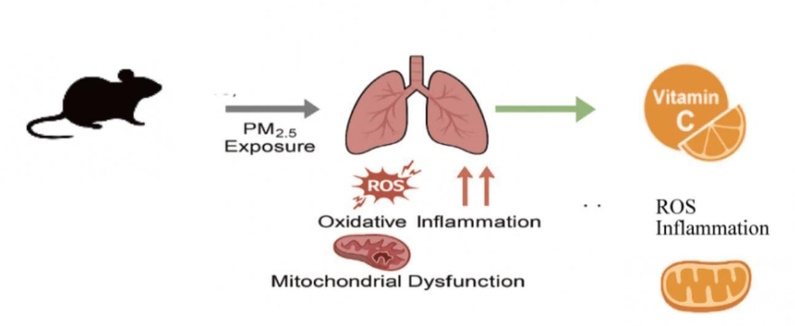
Research findings on the impact of vitamin C on health in the context of air pollution
First, scientists have demonstrated that even at low concentrations, PM2.5 causes an increase in inflammatory cells, raising the levels of cytokines such as IL-1β, TNF-α, and IL-17, and increasing oxidative stress. In mice, mitochondria – the cellular structures most sensitive to pollution-induced damage – swell, fragment, and become overactive in generating reactive oxygen radicals. Human lung cells exhibit similar behavior, with reduced viability, higher oxidative stress, and activation of inflammatory pathways associated with chronic respiratory disease.
But in both mice and human cells, vitamin C mitigated almost all effects – inflammatory markers decreased, antioxidant enzymes like SOD2 and GPX4 were restored, and mitochondrial structure and function were protected. Interestingly, this supplement stabilized mitochondria, preventing the chain of oxidative damage caused by PM2.5.
' For the first time, we offer hope for a low-cost preventative treatment for a global problem affecting hundreds of millions of people ,' said Brian Oliver, professor at the School of Life Sciences at the University of Technology Sydney (UTS). ' We now know that there is no safe level of air pollution, as it causes lung inflammation and leads to a host of respiratory illnesses and chronic diseases, especially in the case of bushfires. '
The dosage used in mice corresponds to approximately 1 gram, or 1,000 mg/day in humans, which is higher than the recommended daily intake of about 75 mg/day for women and 90 mg/day for men. However, the safe threshold is considered to be 2,000 mg/day, and many supplements come in 500 mg and 1,000 mg forms. Even so, there is no shortage of foods that provide quality vitamin C and other nutrients.
However, researchers warn against increasing vitamin C dosage without first consulting a healthcare professional. While overdosing is rare, taking too much can cause unpleasant gastrointestinal side effects, and those with certain medical conditions may face more serious risks.
' This study suggests that taking the highest dose of vitamin C within the recommended limits may be helpful, but you need to talk to your doctor to ensure you're taking the right supplement at the right dosage and not accidentally overdosing on other ingredients found in over-the-counter supplements .'
Although the results are promising, they are only preliminary, and more research – including clinical trials on humans – is needed to confirm their effectiveness and safety.
The research was published in the journal Environment International.
Final Thoughts
Understanding vitamin c acts as a 'shield' protecting the lungs from common damage caused by air pollution makes it easier to evaluate the information and apply the most relevant recommendations. Focus on the key points above and verify details that may change over time.
FAQ
What is vitamin c acts as a 'shield' protecting the lungs from common damage caused by air pollution?
Explore vitamin c acts as a 'shield' protecting the lungs from common damage caused.
What key points does this article cover?
The article focuses on Research findings on the impact of vitamin C on health in the context of air pollution, with practical explanations and examples.
How can you use this information in practice?
Use the explanations to compare options, verify important details, and make a more informed decision. Apply the recommendations that best match your goals and situation.
Related Articles
 Shocking Discovery: Air Pollution Increases the Risk of Dementia5 minutes read
 Review Hotspot Shield: the Fastest VPN Available with Proprietary8 minutes read
 Hotspot Shield - Free VPN Software: What to Know18 minutes read
 Download Hotspot Shield 10.9.49 minutes read
 Signs of Lack of Vitamin B12 Should Be Checked Immediately6 minutes read
 Unusual Story: Air Pollution Can Adversely Affect Your Kidneys3 minutes read
Reader Comments 0
Sign in with email or Google to join the discussion.