Table of Contents
Scientists have discovered the oldest known pachycephalosaur fossil, 108 million years old, almost intact in the Gobi Desert.
In the Gobi Desert (Mongolia), researchers have unearthed a nearly complete pachycephalosaur fossil that lived about 108 million years ago.
Nicknamed 'treasure', the individual is a juvenile dinosaur and the oldest of the group ever found, adding 15 million years to the pachycephalosaur fossil record.
Discovered in the Gobi Desert
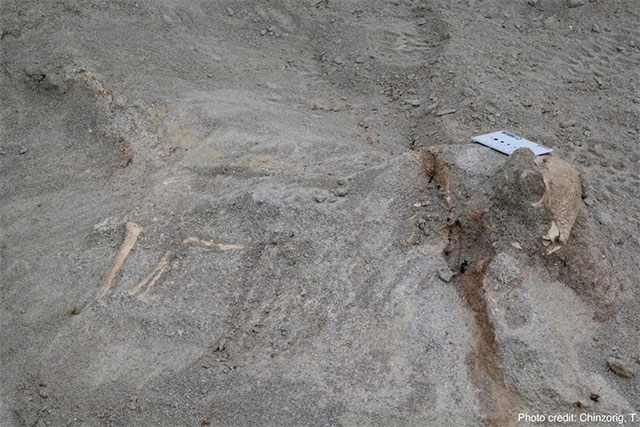
The fossil was found in the Khuren Dukh area of the Eastern Gobi Basin, excavated by Tsogtbaatar Chinzorig of the Mongolian Academy of Sciences, who is also the lead author of the work published in the journal Nature And is currently a research assistant at North Carolina State University (USA).
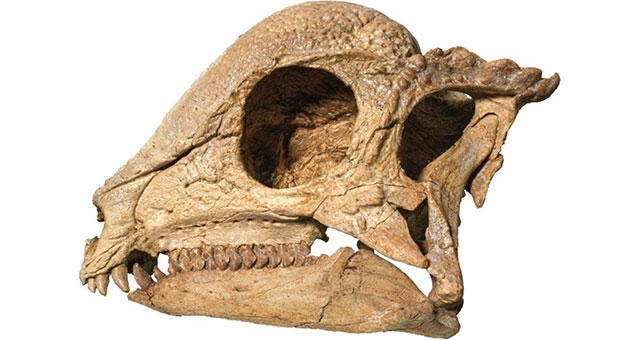
The specimen not only marks a new species, but is also the oldest and most complete pachycephalosaur skeleton ever discovered, scientists say.
'Pachycephalosaurs are iconic dinosaurs that are incredibly rare and mysterious,' said study co-author Dr Lindsay Zanno.
The new species was named Zavacephale rinpoche. Among them:
- 'zava' in Tibetan means 'root, origin'.
- 'cephal' comes from Latin, meaning 'head'.
- 'Rinpoche' in Tibetan means 'treasure', emphasizing the preciousness of the glittering domed skull found protruding from the cliff.
This dinosaur lived during the Early Cretaceous period, and was about 1 meter long, while adult individuals of the group could reach up to 4.3 meters long, more than 2 meters tall and weigh 360 – 410 kg.
Revealing the mystery of the development of the dome skull
Remarkably, although it was only a juvenile, Z. rinpoche already possessed a complete domed skull, but lacked the elaborate decorations commonly found in later pachycephalosaurs.
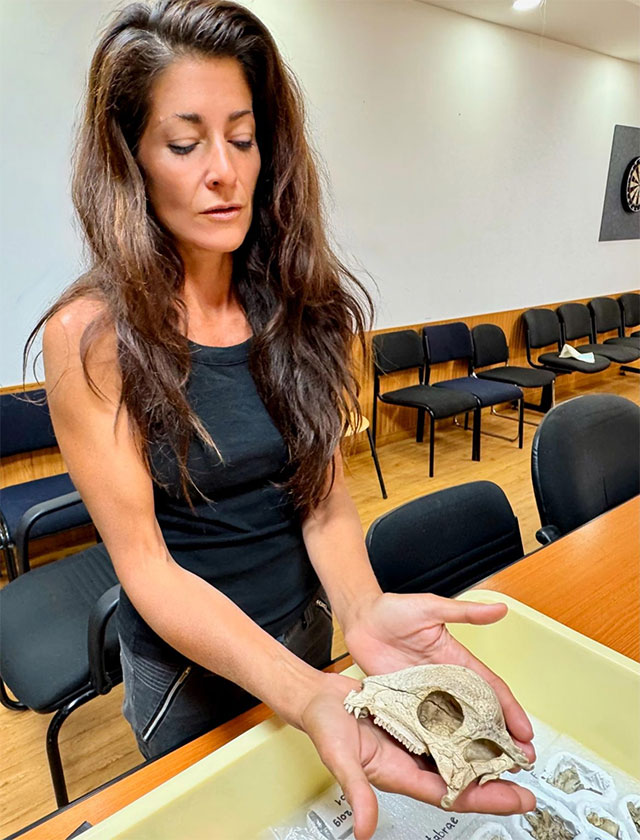
According to Chinzorig, this is important evidence to help scientists understand the process of skull development - an issue that has been controversial due to the lack of ancient specimens and the state of fossil fragmentation.
Zanno added: ' Z. rinpoche is a great find, because it has both limbs and an intact skull, allowing us for the first time to correlate developmental stages with the formation of the cranial vault. '
Analysis of the leg bones suggests that the individual was still a juvenile dinosaur when it died.
Pachycephalosaurs are known for their thick, domed skulls, which are often depicted headbutting each other in dueling. However, experts believe they used this primarily to compete for mates or assert social status, rather than fend off predators.
Rare discovery
Not only does this specimen push the pachycephalosaur back by at least 15 million years, but its exceptional level of preservation reveals many previously unknown details, such as what its hands looked like, its use of gastroliths to grind up food, and its characteristic ribbed tail structure that aided locomotion.
Rinpoche changes the way we understand the biology, movements, and anatomy of this mysterious dinosaur.
FAQ
What should you know about traces of the oldest dome-headed dinosaur species discovered?
In practical terms, scientists have discovered the oldest known pachycephalosaur fossil, 108 million years old, almost intact in the Gobi Desert.
Why does traces of the oldest dome-headed dinosaur species discovered matter?
The article highlights that discovered in the Gobi Desert The fossil was found in the Khuren Dukh area of the Eastern Gobi Basin, excavated by Tsogtbaatar Chinzorig of the Mongolian Academy of Sciences, who is also the lead author of the work.
What is the main takeaway?
The main takeaway is that the specimen not only marks a new species, but is also the oldest and most complete pachycephalosaur skeleton ever discovered, scientists say.
Related Articles
 200 Million Year Old Dinosaur Footprints Are Found in Africa3 minutes read
 Suddenly Discovered a Completely New Species in the Dung7 minutes read
 The Oldest Orchid Fossil Dated 45-55 Million Years Old Was Discovered4 minutes read
 Going to Herd Cow, Accidentally Discovered Fossil 'Monster'4 minutes read
 The Ancient Demon Toad with 2,200 Newton Biting Force, Kills3 minutes read
 The 110 Million-year-old Dinosaur Fossil Intact as Alive4 minutes read
Reader Comments 0
Sign in with email or Google to join the discussion.