Table of Contents
The simplest way to preserve health in PUBG Mobile is to reduce exposure: land with a plan, rotate before the safe zone forces you into open ground, move between hard cover, and avoid fights that offer no positional benefit. Damage is sometimes unavoidable, but taking it in a controlled position is far safer than being caught while sprinting, looting, or healing.
Choose a landing area you can manage
Busy landing zones offer concentrated loot and immediate fights. They are useful for combat practice, but they also create a high chance of being eliminated before the squad has weapons, armor, and information.

For a lower-risk start, land at a smaller compound near—not directly inside—a popular location. Watch nearby parachutes, secure one dependable weapon, and decide whether to approach or rotate away. A remote edge landing is not automatically safe if it leaves the team without a vehicle or a route to the first circle.
Rotate before the blue zone becomes the main threat
The blue zone becomes more damaging as the match progresses. Open the map early, note the next circle and timer, and leave enough time for terrain, enemy contact, and a vehicle change.

Use healing only when necessary; do not plan to remain outside the zone because an old guide quotes a particular damage rate. Zone timing and mode rules can change. Early rotation also supports the safer ranked habits in the PUBG Mobile ranking guide.
Move through connected cover
Plan a route from one rock, wall, ridge, tree, or building to the next. Short covered movements make it harder for a distant player to track you and give you a place to heal or return fire.
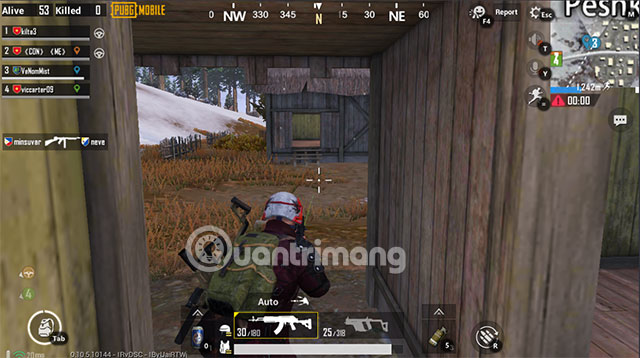
Window vaults and alternate doors can avoid an exposed street, but check the landing side before committing. If a building is surrounded, remaining still is rarely a complete plan; mark enemy positions, use utility, and coordinate an exit before grenades arrive.
Do not chase every late-game fight
Gunfire gives information, but approaching it without a positional advantage may place you between two teams. In late circles, first secure cover inside or near the safe area. Engage when the target blocks the route, threatens the squad, or can be attacked without exposing your team to another angle.
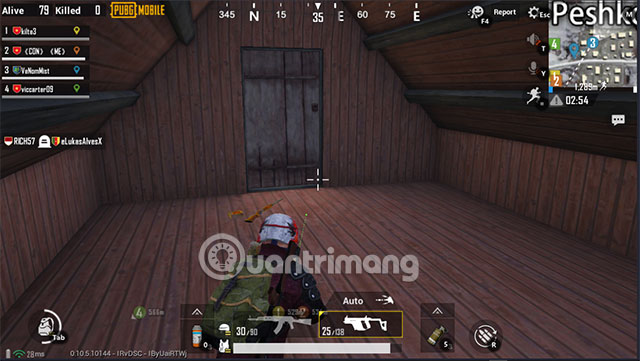
If shots hit your vehicle, do not stop in the open and search for the shooter. Continue to hard cover, exit on the protected side, heal if needed, and then decide whether to return fire.
Stay close enough to support teammates
Squad members should be separated enough that one grenade cannot hit everyone, but close enough to trade shots or complete a revive. Share healing, ammunition, and smoke before a rotation.

Use map markers for enemies and destinations. A teammate who moves alone without communicating cannot cover the squad and may be knocked beyond reach.
Use vehicles for exposed rotations
A vehicle is often the safest way to cross a large open area, but its sound reveals the approach. Check fuel and tires, avoid predictable straight lines through a compound, and park behind hard cover rather than beside a window or doorway.
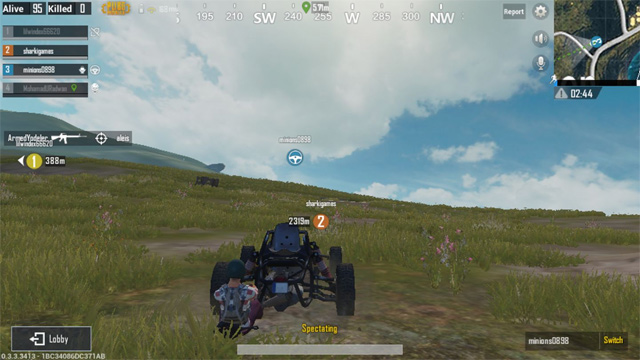
A stopped vehicle is not dependable cover because it can be damaged or destroyed. Learn the strengths and limitations of different options in the PUBG Mobile vehicle guide.
Use a suppressor for discretion, not invisibility
A suppressor reduces the report and muzzle flash of a compatible weapon, making the exact firing position harder to identify at some distances. It does not make a shot silent, remove minimap indicators in every circumstance, or prevent nearby teams from recognizing the direction.
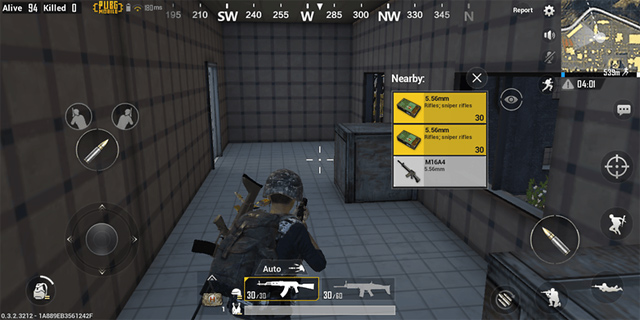
Fire from cover, limit unnecessary shots, and move after an engagement. The PUBG Mobile attachment guide explains when a suppressor competes with other muzzle devices.
When fired upon, break line of sight
Do not continue in a perfectly straight line once you know the attack direction. Change pace and direction while moving toward the nearest hard cover, but avoid constant jumping: it reduces control and can make the landing animation predictable.
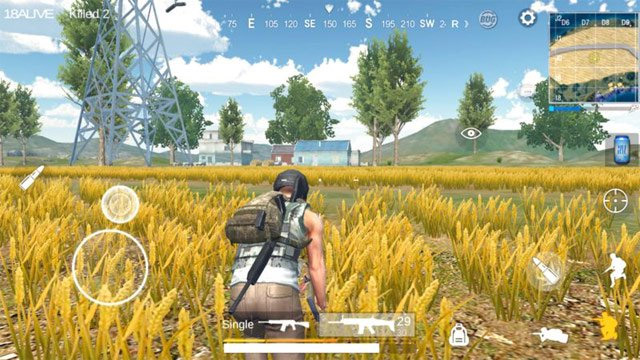
- Use the damage indicator and sound to estimate the attack angle.
- Mark the direction for teammates.
- Move to hard cover rather than stopping behind a small bush.
- Heal only when the shooter no longer has line of sight.
- Reposition before peeking instead of repeating the same angle.
More detail on identifying attack directions is available in the enemy-spotting guide.
Carry smoke for revives and crossings
Smoke grenades create temporary visual cover for an exposed revive, loot crate, or movement across open ground. Place smoke between the threat and the route, and consider using more than one grenade to build a continuous screen.

Smoke also attracts attention and does not block bullets or grenades. Change direction inside the cloud, avoid standing in its center, and expect opponents to pre-aim common exit points.
Protect health before the next fight
- Replace damaged armor and helmets when a safe opportunity appears.
- Keep the weapon loaded before healing or reviving.
- Use boosts when the expected fight and supply level justify them.
- Do not overfill the bag with ammunition at the expense of healing and smoke.
- Heal behind hard cover with a teammate watching the approach.
The backpack management guide helps balance ammunition, recovery items, and throwables. Reducing damage is ultimately a positioning skill: make every move with the next cover, zone timer, and likely enemy angle in mind.
Related Articles
 Tips for Using Healing in PUBG5 minutes read
 Tips for Quick Rankings in PUBG Mobile9 minutes read
 Standard Tips in PUBG Mobile8 minutes read
 Comparison Between PUBG Mobile VNG and PUBG Mobile International6 minutes read
 PUBG Mobile: Weapons That Are Easy to Win the TOP 1 of the Game9 minutes read
 PUBG Mobile: Attack Tips Without Fear of Being Detected7 minutes read
Reader Comments 0
Sign in with email or Google to join the discussion.