Table of Contents
In PUBG Mobile, enemies often use the same kinds of cover: elevated platforms, roofs, windows, parked vehicles, trees, and rocks. Knowing those patterns helps, but the goal is not to stare at one suspected position. Scan likely cover in a consistent order while keeping your own character protected.
Before crossing open ground, stop behind hard cover, listen for footsteps or gunfire, and check the nearest threat positions first. Move the camera while your body remains concealed whenever the perspective and game mode allow it.
1. Watchtowers and raised platforms
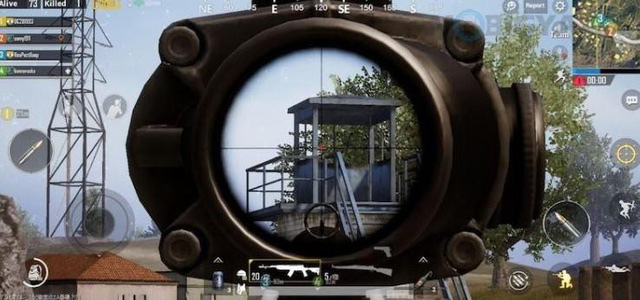
A watchtower gives its occupant a wide view, so check the top platform, ladder, and area beneath it before approaching. Look for movement against the sky and for a weapon or helmet protruding over the edge.
Do not stand still in the open while aiming upward. Use a tree, wall, or terrain fold to break the tower’s line of sight. If you must move closer, change direction and speed rather than following a straight path.
2. Roof edges and upper ledges
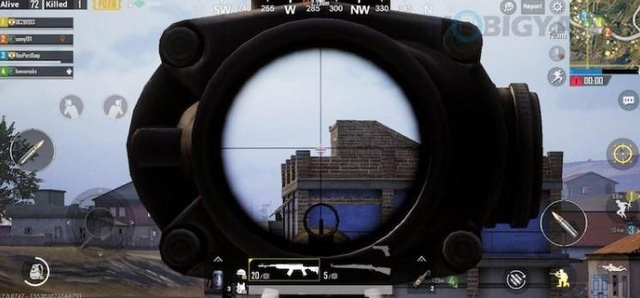
Players on roofs commonly hold the edge facing a road, doorway, or nearby compound. Scan corners and ridgelines first, because a silhouette is easier to notice where the roof meets the sky.
A rooftop player may retreat from one edge and reappear on another. After seeing movement, do not keep your crosshair fixed on the last position. Check the stairs, balcony, opposite edge, and any route that allows the player to descend.
3. Windows, doors, and room corners
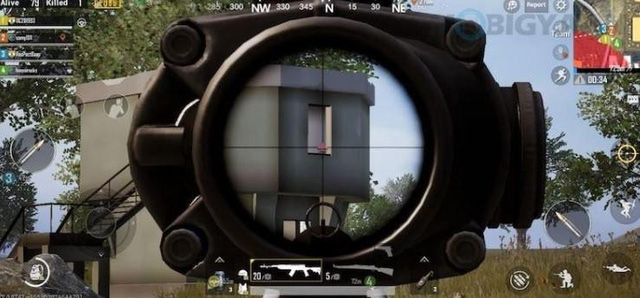
A dark window can hide a stationary player even when no full character model is visible. Check each opening from the side instead of walking directly toward it. A small change in viewing angle often reveals movement that was hidden behind the frame.
- Pre-aim at head or upper-body height before exposing yourself.
- Check one opening at a time so the crosshair does not drift between several threats.
- Do not treat an open door or broken window as proof that someone is still inside; it is only a clue.
- After clearing the visible windows, consider the blind corners immediately inside the entrance.
4. Parked and abandoned vehicles
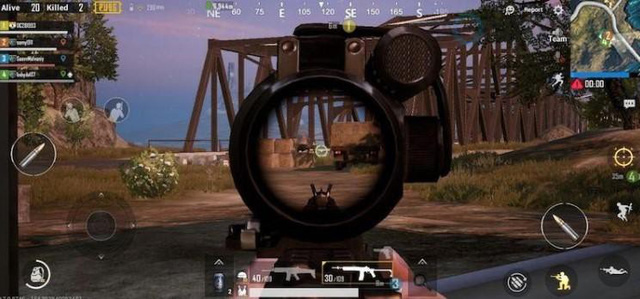
Vehicles attract attention because they provide transport and temporary cover. Look behind the wheels, at the far side of the body, and around nearby walls before running to a parked car. A player may wait for someone to approach the driver’s door.
Remember that a heavily damaged vehicle can explode. If an opponent is using one as cover, shooting the vehicle may create pressure, but it can also reveal your position and consume ammunition. If you use a car for cover yourself, keep another piece of hard cover within reach.
5. Trees, rocks, and terrain folds
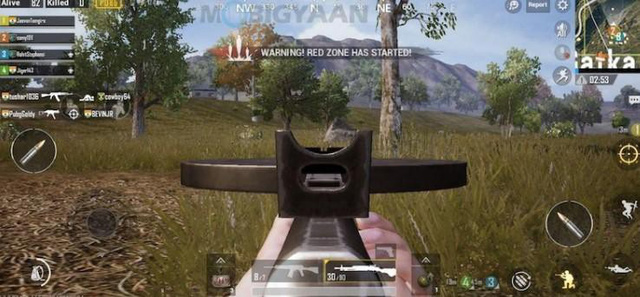
In open terrain, check the side of a tree or rock that faces the safe zone, nearby gunfire, or the most likely approach. Players usually choose the side that protects them from the direction they consider most dangerous.
Scan the base of each object as well as its edges. Grass and uneven ground can conceal a prone player, particularly when viewed from a low angle. From higher terrain, look for changes in shape, color, or movement that do not match the ground.
Use sound and context, not only vision
Footsteps, reload sounds, vehicle engines, and suppressed shots can narrow the search area. Headphones make direction easier to judge, but sound indicators are not exact coordinates. Compare what you hear with doors, stairs, windows, and cover that an opponent could realistically reach.
The shrinking play zone also predicts movement. Near the edge, watch routes leading into safety. Inside a compound, check the buildings that control those routes rather than scanning every distant object with equal attention.
A safe scanning routine
- Move to hard cover and stop unnecessary sprinting.
- Check the closest angle that could expose you immediately.
- Scan high positions, then windows and ground-level cover.
- Listen before crossing to the next piece of cover.
- Move only after choosing the next safe position.
- Repeat the scan from the new angle.
This routine reduces tunnel vision. Spotting one opponent does not mean the area is clear; pause after a knock or elimination and check for teammates watching the same position.
Avoid giving away your own position
The same locations are common hiding spots for you. Do not remain framed in a window, exposed on a roofline, or pressed against the predictable side of a tree. After firing, change height or position when possible so the enemy cannot pre-aim at the place where you last appeared.
For more practical strategy, see TipsMake’s guides to surviving longer in PUBG Mobile, choosing reliable PUBG Mobile weapons, and matching attachments to each gun.
Related Articles
 How to Monitor Remote Enemies on PUBG Mobile5 minutes read
 PUBG Mobile: the Most Popular Locations Vikendi8 minutes read
 Loot Locations in PUBG Mobile6 minutes read
 9 Locations Appear Helicopters in Firepower Mode Pubg Mobile5 minutes read
 How to Find Teammates in Squad PUBG Mobile5 minutes read
 Comparison Between PUBG Mobile VNG and PUBG Mobile International6 minutes read
Reader Comments 0
Sign in with email or Google to join the discussion.