Table of Contents
The moai of Rapa Nui, also called Easter Island, may have been moved upright by teams pulling ropes to rock them from side to side. Experiments show that this controlled “walking” motion can work with a large replica. The strongest argument comes from combining that demonstration with the shapes of unfinished road statues and evidence along ancient transport routes.
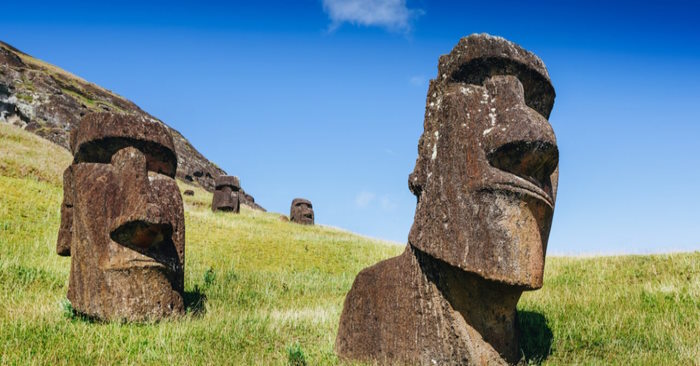
What does it mean for a stone statue to “walk”?
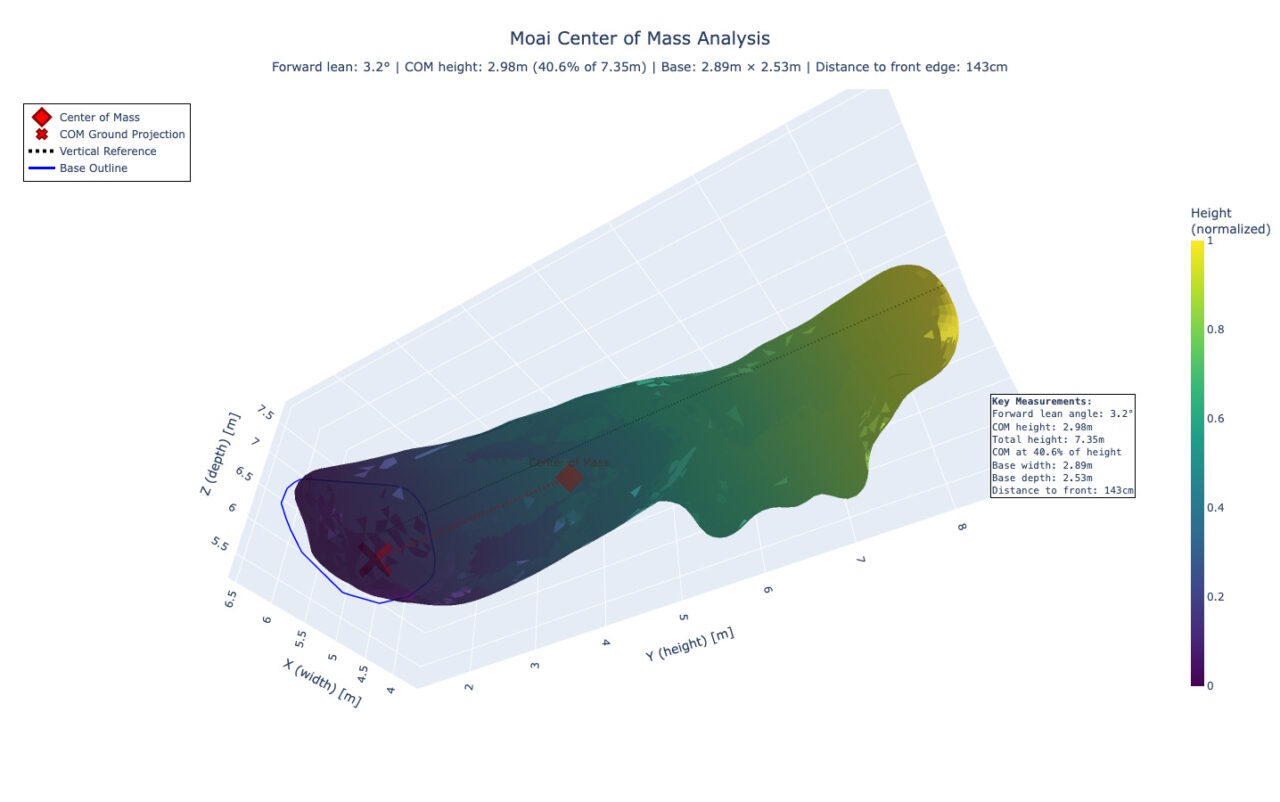
The statue does not lift its feet or move on its own. Alternating rope pulls make it pivot over opposite edges of its base, advancing in a zigzag. Other rope tension helps control the movement and prevent a fall. Its shape matters: a broad base provides support, while a forward lean helps turn rocking into forward progress.
This offers a possible way to move a carved statue from the Rano Raraku quarry toward a ceremonial platform without laying it flat on a sled or rollers. A successful method depends on the statue’s proportions, coordinated pulls and a suitable route.
What the experiment demonstrated
Archaeologists Carl Lipo and Terry Hunt examined the transport question using measurements, three-dimensional models and field trials. Their 2025 study and supporting data report an analysis of 962 moai, with particular attention to 62 statues along roads. That is more specific than saying every statue was recreated as a detailed 3D model.
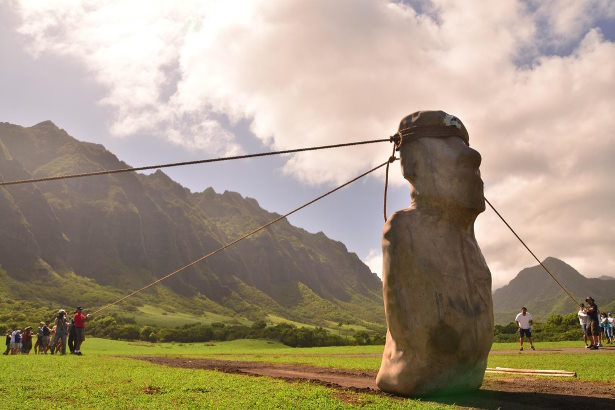
A team of 18 people moved a 4.35-metric-ton replica 100 metres in 40 minutes. The replica used proportions associated with road moai, including a wide, D-shaped base and a forward lean. This established that upright transport is physically possible under the tested conditions.
Why the roads and statue shapes matter
An experiment alone cannot identify an ancient technique. The researchers also compared its results with archaeological evidence: the forms of statues left along roads, their breakage patterns and the characteristics of the routes.
The studied roads, about 4.5 metres wide and concave across their width, are consistent with space for rope teams and controlled upright movement. Statues found damaged or abandoned along these routes may record failed transport attempts. These observations make the hypothesis more persuasive than a demonstration using an arbitrary stone shape.
Does this settle the mystery?
The authors argue that the combined evidence strongly supports walking transport. The experiment does not directly show how every moai was moved, however, or reproduce every ancient slope, surface and working condition. Researchers still have to test proposed techniques against the actual archaeological record.
The method also fits Rapa Nui oral traditions describing statues that walked. Those traditions provide important cultural context, while the physical evidence tests how such movement could have happened. The explanation centres on the skill and coordination of Rapa Nui builders.
For related archaeological puzzles, see TipsMake’s overview of ancient monuments, including the moai, and its introduction to undeciphered scripts such as Rongorongo.
Related Articles
 Explore the giant stone statue of the year 100 - 1800 on Easter Island
 All the Easter Eggs revealed in the GTA VI trailer
 11 mysterious ancient buildings in the world that challenge the scientific world
 TOP most interesting easter egg mysteries in Minecraft
 Mysterious valley of 1000 saints in Brittany
 What does Easter Egg mean? How they are understood in the game
Reader Comments 0
Sign in with email or Google to join the discussion.