Table of Contents
Penn State scientists have built the first silicon-free computer, powered by a 2D material just one atom thick.
Is the Silicon Era Coming to an End? Scientists Unveil the World's First 2D Computer
Researchers at Penn State University (USA) have just announced a historic breakthrough: the first computer that does not use silicon, but is made entirely from 2D materials as thin as an atom. This success can open a new future for the electronics industry - where computing devices are ultra-compact, energy-efficient and more powerful than ever.
From Silicon to 2D Materials: A Turning Point in Semiconductor Technology
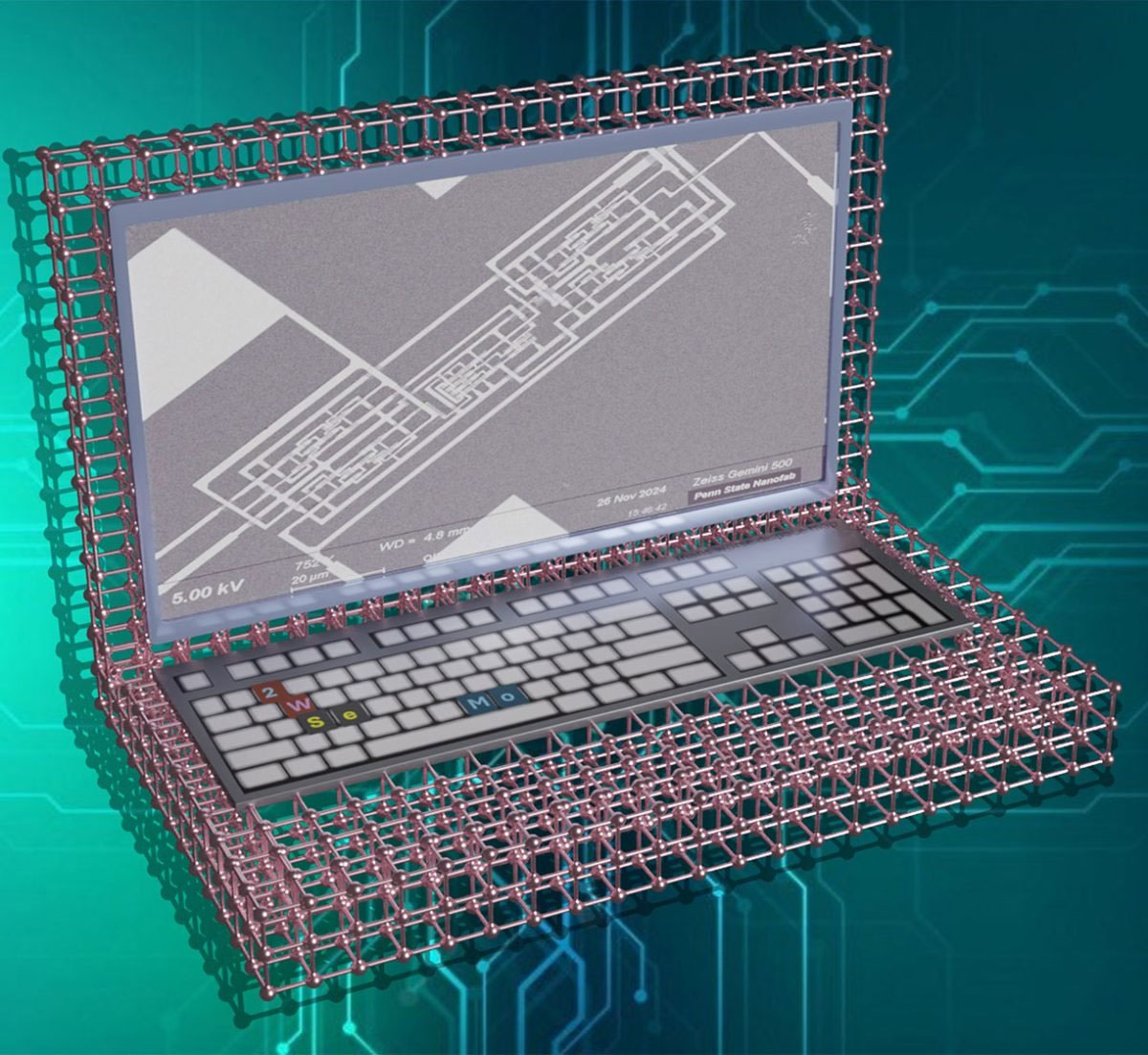
For decades, silicon has been the foundation of every chip, from phones to computers to electric cars. But that monopoly may soon be shaken. A team led by professor Saptarshi Das has successfully built a computer that works without silicon, using two 2D materials that are just one atom thick but still maintain superior electronic properties.
This 2D computer can perform basic calculations – an important milestone that shows that 2D materials can completely replace silicon in the future. The research results have been published in the prestigious journal Nature.
CMOS technology without silicon
The highlight of the research is the creation of CMOS (Complementary Metal-Oxide Semiconductor) circuits – the core technology of most modern electronic devices – without the need for silicon.
Instead of silicon, the team used two different 2D materials:
- Molybdenum disulfide (MoS₂) for n-type transistors
- Tungsten diselenide (WSe₂) for p-type transistors
These two types of transistors work together to control current efficiently, helping to maintain high performance while consuming low power – a major challenge as silicon technology reaches its miniaturization limits.
How to make a '2D computer'
The team used the MOCVD (Metal-Organic Chemical Vapor Deposition) process – a thin-film technique that involves evaporating and depositing chemicals onto a substrate – to grow large-scale layers of MoS₂ and WSe₂, and then fabricated more than 1,000 transistors each.
After refining the process and adjusting the threshold voltage for both n-type and p-type transistors, they successfully assembled a complete CMOS circuit.
According to Subir Ghosh, a PhD student and lead author of the paper:
Our 2D CMOS computers operate at low voltage, consume very little power, and can perform simple logic operations at frequencies up to 25 kHz.
Although this frequency is still low compared to today's silicon chips, it is the first fully operational 2D computer, marking a major leap forward in the application of atomic materials to electronics.
Professor Das said that the road ahead is still long, but the pace of development of 2D materials is much faster than that of silicon.
Silicon technology has been researched for nearly 80 years, while 2D material research only started around 2010. However, this achievement is a quantum leap – laying the foundation for a new generation of computers.
FAQ
What should you know about the world's first 2D computer was born?
In practical terms, penn State scientists have built the first silicon-free computer, powered by a 2D material just one atom thick.
Why does the world's first 2D computer was born matter?
The article highlights that from Silicon to 2D Materials: A Turning Point in Semiconductor Technology For decades, silicon has been the foundation of every chip, from phones to computers to electric cars.
What is the main takeaway?
The main takeaway is that although this frequency is still low compared to today's silicon chips, it is the first fully operational 2D computer, marking a major leap forward in the application of atomic materials to electronics.
Related Articles
 What Is Silicon Valley? Explained2 minutes read
 The Computer Keeps Turning on and Off Without the Screen on, What Should I Do8 minutes read
 Ordinary Things in Silicon Valley but Strange to the Rest of the5 minutes read
 Anime World Simulator: Full Latest Giftcode and How to Redeem Code11 minutes read
 6 'Most Powerful' Women in Silicon Valley13 minutes read
 How to Create Open-Ended Questions for a Paragraph on Twitter3 minutes read
Reader Comments 0
Sign in with email or Google to join the discussion.