Table of Contents
Standing exercises can help train the trunk, hips, and legs without requiring a floor workout. The five movements below offer ways to practice strength and coordination after 45. They are not a proven shortcut to losing belly fat, and there is no basis here for claiming they burn it faster than running.
Before you begin
Use a clear, nonslip space and keep a sturdy support nearby if needed. Begin without weights, move within a comfortable range, and learn the motion before adding resistance. Start with a short set of controlled repetitions rather than forcing the original workout's high repetition targets.
Stop a movement if it causes pain, dizziness, or loss of balance. If you have an injury or a condition affecting movement, ask a qualified clinician or exercise professional how to adapt the routine.
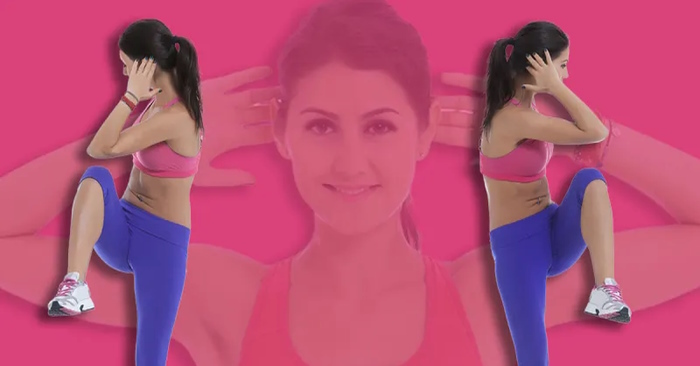
1. Standing knee-to-elbow movement
This movement combines a knee lift with a small turn of the upper body.
- Stand with feet about hip- to shoulder-width apart. Rest your hands lightly near your head or keep them in front of your chest.
- Lift the left knee while turning your torso gently toward it, bringing the right elbow in its direction.
- Lower the foot under control and return to the starting position.
- Repeat on the other side without rushing or pulling on your neck.
Easier option: keep the knee lift low and use a support with one hand. The knee and elbow do not need to touch.
2. Controlled diagonal woodchop
A woodchop moves the hands diagonally across the body. Control matters more than the amount of weight.
- Stand with feet shoulder-width apart and knees slightly soft. Begin with empty hands or a light object held securely.
- Move your hands from near one shoulder toward the opposite hip through a comfortable diagonal path.
- Let your hips and feet turn as needed instead of wrenching your lower back.
- Return slowly, then practice the other direction.
Easier option: shorten the diagonal and omit the weight. Avoid swinging a heavy dumbbell.
3. Squat with a diagonal raise
This combination is more demanding because it adds an arm movement to a squat. Learn a comfortable bodyweight squat first.
- Stand with feet comfortably apart and hands near one hip.
- Bend at the hips and knees into a shallow squat, keeping your feet planted and knees tracking comfortably with your toes.
- Press through your feet to stand. Once balanced, raise the hands diagonally toward the opposite shoulder.
- Lower the hands with control and repeat, then switch sides.
Easier option: perform the squat and raise separately, use a smaller squat, and leave out the dumbbell.
4. Supported standing side leg raise
This exercise mainly works the side of the hip. It should not be described as directly reshaping the waist.
- Stand tall beside a sturdy chair or wall and hold it lightly.
- Shift weight onto one leg while keeping your torso upright.
- Lift the other leg a small distance to the side, with the toes pointing forward.
- Lower slowly without leaning or swinging, then repeat on the other side.
Use the range you can control; lifting as high as possible is unnecessary.
5. March with a gentle torso turn
- Stand comfortably with elbows bent.
- Lift one knee and add a small, comfortable torso turn.
- Lower the foot and return to the center before changing sides.
- Keep the pace steady and breathe normally.
Easier option: march without turning, or keep a hand on a support.
Fit these movements into a broader activity plan
These exercises can supplement aerobic activity and strength work for the whole body. The CDC's adult guidelines recommend at least 150 minutes of moderate aerobic activity per week and muscle-strengthening activity on two days, adapted to individual ability.
For home practice, see ways to exercise quietly. A walking habit, discussed in everyday heart-health activities, can complement the routine. Changes in body fat depend on the overall pattern of activity, nutrition, and individual circumstances; this particular sequence cannot promise a specific waist reduction.
Related Articles
 6 'bed' fitness exercises help burn excess fat effectively every morning
 Spend 10 minutes a day to lose belly fat quickly, this is the way for you!
 The truth about belly fat, the potential risk that skinny people must be wary of
 12 exercises to have strong legs for all ages
 How to Burn a CD on Mac OS X
 Forget the boring belly movement, this is the movement to help you own 6-pack abs
Reader Comments 0
Sign in with email or Google to join the discussion.