Table of Contents
Dark energy is the name physicists give to whatever drives the accelerating expansion of the universe. The standard cosmological model treats it as a constant energy density. A 2025 analysis from the Dark Energy Spectroscopic Instrument (DESI), combined with other measurements, found hints that dark energy may change over time. The evidence is still inconclusive.
Why astronomers infer dark energy
Measurements of distant Type Ia supernovae helped show that cosmic expansion was speeding up. These explosions have brightness patterns astronomers can calibrate to estimate distance. Comparing their distances with their redshifts helps researchers reconstruct how fast the universe expanded in the past.
Dark energy and dark matter describe different effects. Dark matter helps explain how galaxies and clusters behave under gravity. Dark energy enters models of how space expands on the largest scales.
What the DESI analysis found
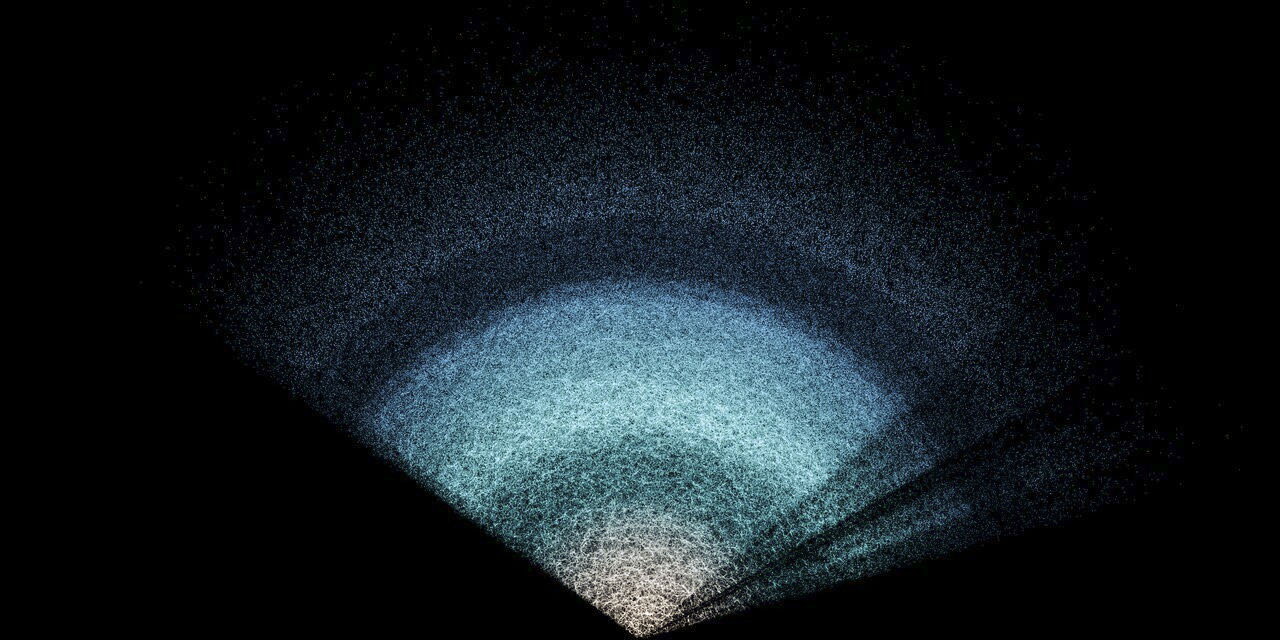
DESI maps the positions of galaxies and quasars. A characteristic spacing in that map, left by sound waves in the early universe, provides a measuring stick for cosmic distances. According to Berkeley Lab’s account of the three-year results, some combinations of DESI, supernova and cosmic microwave background data fit a model with changing dark energy better than a model with a cosmological constant.
Why the result remains open
The size of the effect depends on which supernova dataset researchers use. Surveys also need to account for differences in calibration and in which objects they detect. Independent measurements and further observations can test whether the same pattern persists. For now, these results offer a way to test the standard model without establishing which explanation is correct.
Related Articles
 New research confirms: The mystery of 'dark energy' may not exist
 The universe will end in 20 billion years with a 'Big Bang'
 Dark matter, dark energy and unexplored mysteries
 Elements of the universe
 The 9 biggest mysteries of modern physics make scientists headaches (Part 1)
 9 amazing facts about the universe amaze you
Reader Comments 0
Sign in with email or Google to join the discussion.