Table of Contents
Explore scientific breakthroughs in 2025 that could change everything.
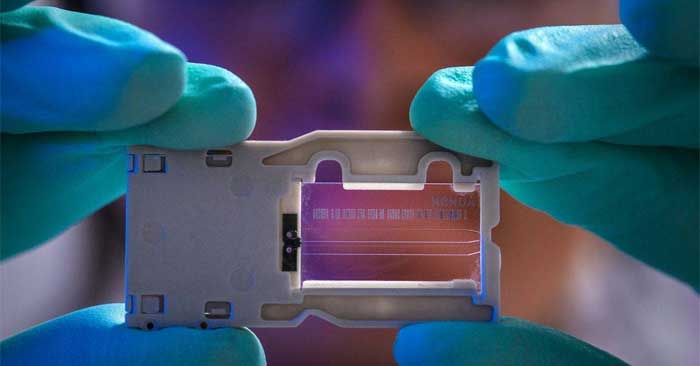
These achievements in fields from materials science to genetics demonstrate that the next revolution is already underway, often in ways the public has not even begun to know about.
The first nanoscale AI chip for optical fibers
In a major step toward ultra-efficient quantum communications and medical imaging, researchers have developed an AI chip smaller than a grain of salt that can be mounted directly on the end of an optical fiber. The chip uses a 'diffracting neural network' to process images by exploiting the natural diffraction phenomenon of light, eliminating the need for bulky electronics or external processors.
This breakthrough addresses two major limitations in miniaturization: power consumption and speed. By processing information at the speed of light using passive optical layers, the chip dramatically reduces power consumption and heat generation. Diffraction neural networks don't require electricity to compute—they're essentially stacks of tiny, precisely patterned surfaces that perform calculations as light passes through. The immediate impact is twofold. First, it enables real-time, high-resolution medical imaging inside the human body through tiny fiber-optic endoscopes. Second, it lays the foundation for secure low-power quantum communications networks by enabling fast, local processing of delicate quantum optical signals.
Recyclable bioplastics from grain waste
The global plastic crisis calls for materials that are both high-performance and truly sustainable. Researchers at the University of British Columbia have achieved a major milestone by creating a strong, flexible, and transparent biodegradable film – branded Grasstic – made entirely from agricultural waste such as wheat straw and grain.
Unlike many other bioplastics that require specialized crops or industrial composting, Grasstic uses lignocellulosic biomass that would otherwise be burned or disposed of. This waste stream is one of the world's most abundant renewable resources. The process transforms rigid plant waste into a polymer that is as strong and clear as petroleum-based packaging, but is completely biodegradable. The impact is both environmental and economic. Environmentally, it is a practical alternative to single-use polyethylene packaging. Economically, it provides farmers with a new source of income by converting agricultural by-products into high-value materials. This research represents a significant shift towards a fully circular, low-waste bioeconomy.
Discovery of antibody class for next-generation malaria treatment
Malaria remains one of the world's deadliest parasitic diseases, with drug resistance posing a growing threat. In early 2025, researchers identified a new class of anti-malarial antibodies in human blood that target Plasmodium falciparum – the parasite responsible for most severe cases of malaria – in a way never seen before.
Unlike traditional therapies that target the parasite's rapidly changing surface proteins, this class of antibodies binds to a more stable internal structure that the parasite has difficulty modifying. Furthermore, these antibodies show exceptional potency at extremely low concentrations. This discovery opens up a whole new avenue for vaccine development. Instead of just building incremental improvements, scientists can now design vaccines specifically designed to trigger this powerful immune response. With P. falciparum causing hundreds of thousands of deaths each year, this breakthrough could be the key to a truly widespread and sustainable malaria vaccine.
AI Platform Achieves Human-Level Text Conversation Capabilities (GPT-4.5)
While large language models have been advancing rapidly, 2025 marks a controversial but important milestone. A new model— OpenAI 's GPT-4.5 —which is said to be indistinguishable from humans in many text-based conversations has actually 'passed' the Turing test under standard benchmarking settings.
The breakthrough goes beyond the production of coherent prose. The model demonstrated memory continuity across long conversations, the ability to appropriately express uncertainty, and sophisticated context-switching skills that AI systems have previously struggled with. Reports highlight that GPT-4.5 demonstrates conversational rhythms and conceptual reasoning that testers describe as ' eerily human-like .' If verified, the development could have huge implications for law, medicine, education, and the creative industries. This suggests that AI can now serve not just as a tool, but as a functional conversational partner, capable of assisting with complex, high-context tasks that were previously the preserve of trained experts.
Targeted gene therapy for drug-resistant epilepsy
Focal seizures affect millions of people worldwide, and drug resistance leaves many patients with no choice but surgery—an invasive and often risky intervention. In 2025, researchers at University College London reported a major advance: targeted gene therapy that delivers the crucial LGI1 gene directly to dysfunctional brain regions using adeno-associated viral (AAV) vectors.
The protein LGI1 regulates electrical signaling between nerve cells. In some forms of partial epilepsy, this protein is missing or dysfunctional, allowing uncontrolled electrical activity to cause seizures. Genetic restoration restores the protein—and, in preclinical models, stabilizes nerve activity at its source. The approach represents a shift from symptom management to root-cause intervention. While still in the early stages of development, the therapy has the potential to become a one-stop treatment for a debilitating condition that has long resisted traditional medications.
Final Thoughts
Understanding scientific breakthroughs in 2025 that could change everything makes it easier to evaluate the information and apply the most relevant recommendations. Focus on the key points above and verify details that may change over time.
FAQ
What is scientific breakthroughs in 2025 that could change everything?
Explore scientific breakthroughs in 2025 that could change everything.
What key points does this article cover?
The article focuses on The first nanoscale AI chip for optical fibers, Recyclable bioplastics from grain waste, Discovery of antibody class for next-generation malaria treatment, with practical explanations and examples.
How can you use this information in practice?
Use the explanations to compare options, verify important details, and make a more informed decision. Apply the recommendations that best match your goals and situation.
Related Articles
 The Biggest Scientific Breakthroughs of the Last 25 Years —— and Some Intriguing Mysteries to Look Forward to20 minutes read
 Photos of the 'Old Earth and Now': How Has the Earth Changed over the Last 100 Years?5 minutes read
 23 False Scientific Facts That We Still Believe: Tongue12 minutes read
 Opera 10 Alpha and Breakthroughs: What You Need to Know3 minutes read
 4 Most Outstanding Technological Breakthroughs in 20174 minutes read
 The Top 10 'Inventive' Scientific Inventions That Are Great10 minutes read
Reader Comments 0
Sign in with email or Google to join the discussion.