Table of Contents
This guide provides a clear, practical overview of "Revealing a New Creature That Could Change the Definition of Life". It organizes the most useful details, explains important considerations, and highlights the steps or choices that matter most.
In the ever-expanding universe of microscopic life, scientists have discovered something that could force us to redraw the boundaries of what counts as " living ."
Meet Sukunaarchaeum mirabile , a strange little creature recently discovered by researchers in Canada and Japan, according to a new paper published on the preprint server bioRxiv. It's not quite a virus and it's not quite a living cell, but it has characteristics of both.
Named after a Japanese deity famous for its diminutive size, Sukunaarchaeum possesses one of the smallest genomes ever recorded—just 238,000 base pairs, less than half that of the previous smallest known archaeal genome.
And while viruses are often excluded from the tree of life because they depend on host cells to perform key functions, this organism complicates that definition in a special way.
Like viruses, Sukunaarchaeum depends on its host to perform many of its biological tasks. But unlike viruses, it has the ability to build its own ribosomes and messenger RNA. These are the basic building blocks that allow organisms to translate genetic code into proteins, something viruses cannot do on their own.

Its stripped-down genome shows a heavy focus on replication. It contains very little other than the machinery needed to replicate itself.
" Its genome is almost completely stripped, lacking virtually all recognizable metabolic pathways and encoding primarily the machinery for its replicative core: DNA replication, transcription, and translation ," the researchers wrote.
This means it relies heavily on its host for everything from energy to nutrients.
Molecular biologist Ryo Harada and his team at Dalhousie University were examining the DNA of a species of marine plankton when they found a sequence of genetic material that didn't match any known organism. After digging deeper, they determined it was part of the Archaea domain—a group of ancient bacteria from which modern complex cells likely evolved.
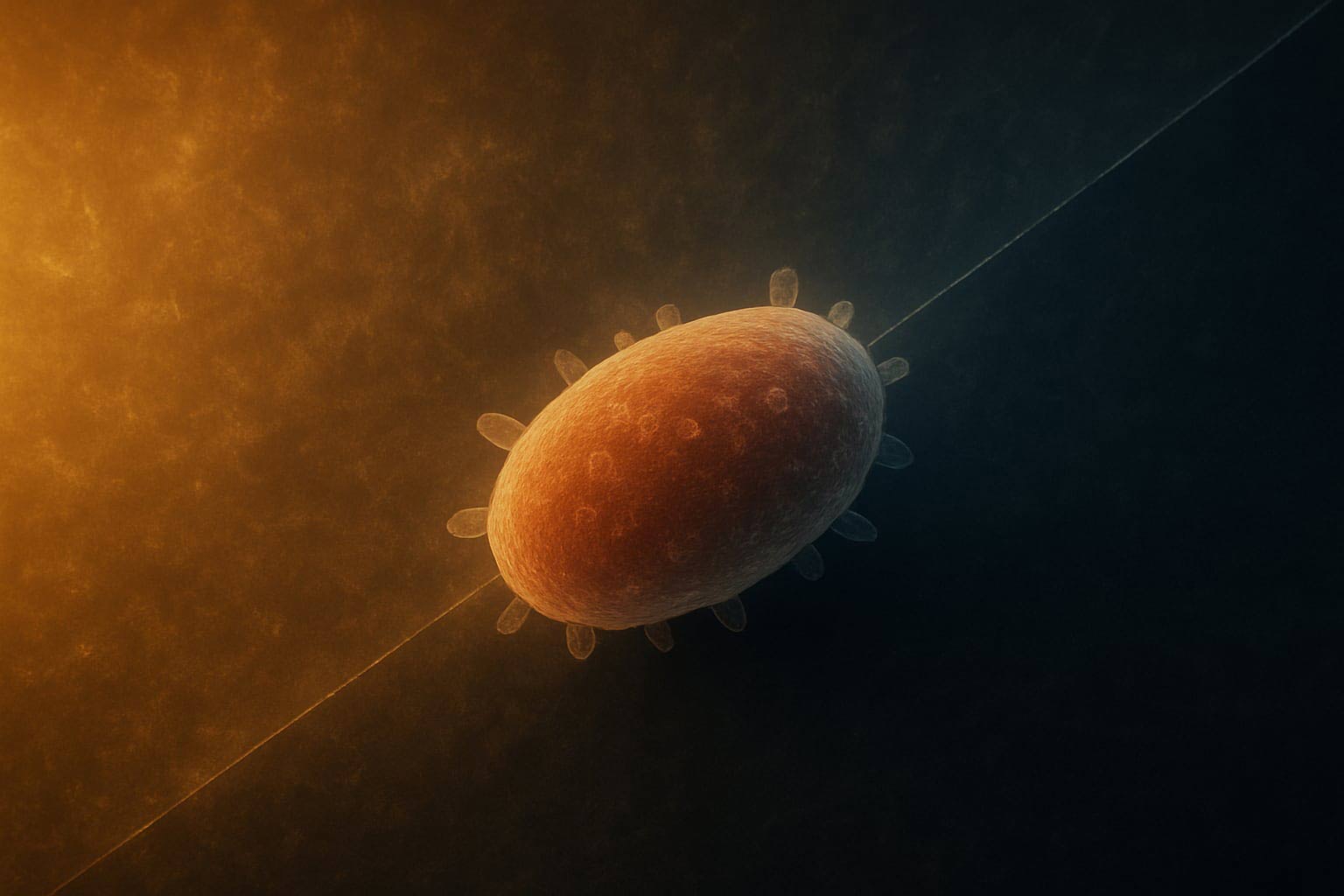
The discovery of Sukunaarchaeum proves that nature does not follow any fixed definition. In fact, the discovery could fundamentally reshape the way we think about cellular evolution and the blurred line between life and non-life.
FAQ
What does this guide cover?
This guide explains revealing a new creature that could change the definition of life, including the main steps, important details, and practical considerations.
Who is this guide for?
It is designed for readers who want a clear, practical overview and a reliable process they can follow without unnecessary complexity.
What should you check before getting started?
Review the requirements, confirm that your software or device is up to date, and save any important data before changing settings.
Related Articles
 Whoever Expected the Creature to Be 10cm Long and Only Known on This Table Could Change the World5 minutes read
 What Kind of Creature Is the Real Life Pokemon in Gia Lai3 minutes read
 The Computer Has Just Created a Living Creature That Is Unmatched3 minutes read
 The Cave of Death Kills Any Creature That Enters: Main Insights5 minutes read
 Harmful Myths When Adjusting the TV Definition5 minutes read
 The Wreck of Marine Life Is Like the Loch Ness Monster Floating2 minutes read
Reader Comments 0
Sign in with email or Google to join the discussion.