Table of Contents
Explore could life exist on mars? yeast offers a surprising answer.
To understand how living cells respond to such conditions, Dr. Purusharth I. Rajyaguru and his colleagues conducted experiments on Saccharomyces cerevisiae – a species of yeast commonly used as a model organism in biology. Yeast was chosen not only because it is easy to study, but also because it has appeared in numerous previous studies related to the space environment.
In many life forms, from yeast to humans, when cells are under stress, they form ribonucleoprotein condensates, or RNP condensates. These are structures made up of RNA and protein that protect the RNA and regulate how mRNA molecules are processed and used within the cell. When the adverse conditions pass, these condensates – including stress granules and P-bodies – spontaneously disintegrate, returning the cell to its normal state.
To simulate extreme Martian conditions in the laboratory, the research team created artificial shock waves using the High-Intensity Shock Tube for Astrochemistry (HISTA) system at the Physical Research Laboratory in Ahmedabad, India. The results showed that yeast could survive exposure to shock waves up to Mach 5.6, although its growth rate was significantly reduced. A similar phenomenon was observed when the yeast was treated with 100 mM sodium perchlorate (NaClO₄), a concentration equivalent to what the scientists found in Martian soil.
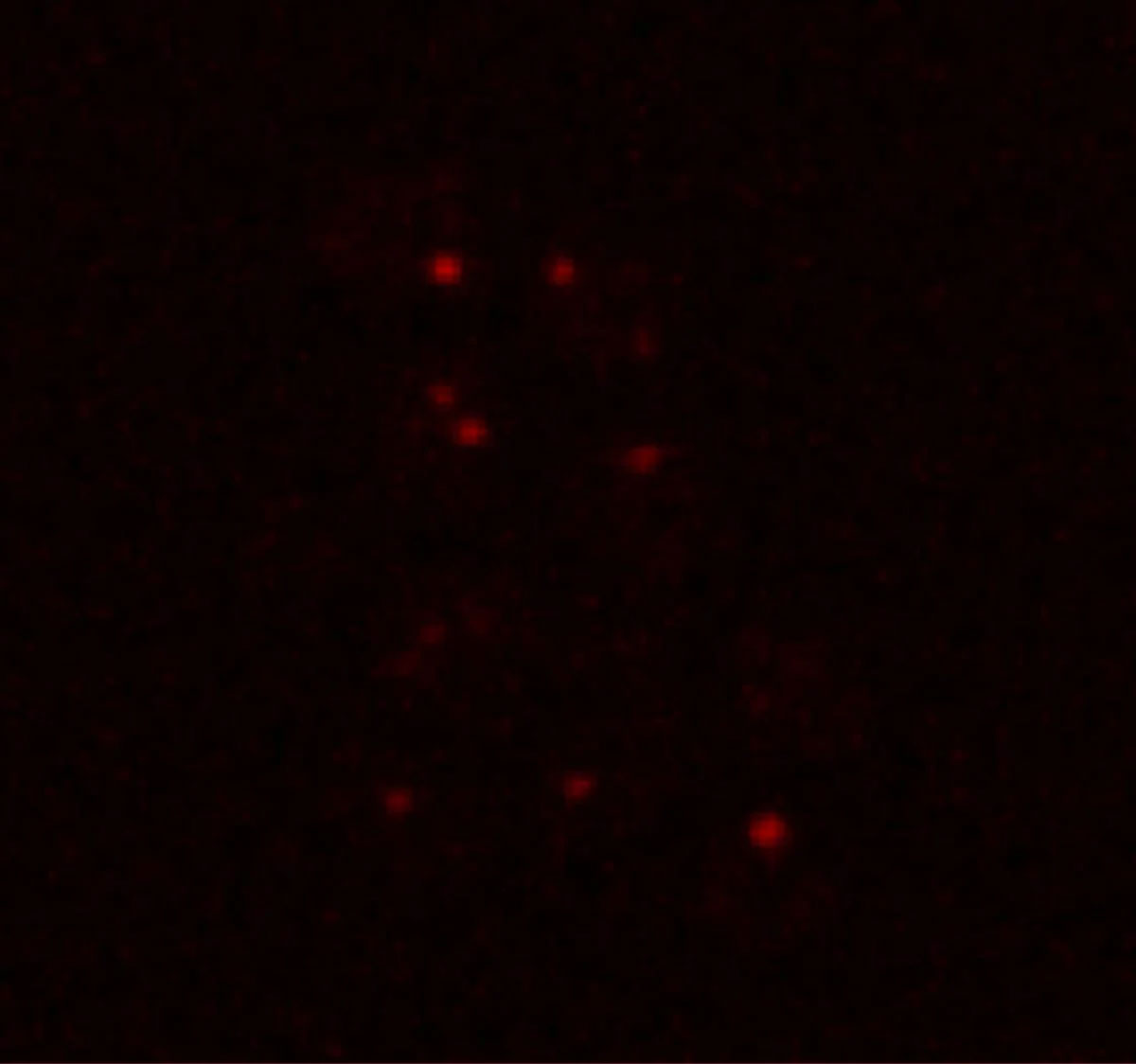
Remarkably, the yeast survived when subjected to both forms of stress simultaneously: shock waves and perchlorate. In both cases, the cells formed RNP condensates, suggesting this may be a core survival response.
Further analysis revealed the crucial role of RNA condensates in survival. Shock waves triggered the formation of both stress granules and P-bodies, while perchlorate only caused cells to produce P-bodies without forming stress granules. Notably, mutant yeast strains – which were unable to assemble RNP condensates – had very low survival rates when placed under conditions simulating the Martian environment.
Transcriptome analysis also helped the research team identify specific RNAs that were scrambled under Martian-like conditions. According to the authors, this result underscores the importance of yeast and RNP condensates in better understanding the impact of the Martian environment on life, as well as the ability of biological systems to survive in extreme extraterrestrial conditions.
Final Thoughts
Understanding could life exist on mars? yeast offers a surprising answer makes it easier to evaluate the information and apply the most relevant recommendations. Focus on the key points above and verify details that may change over time.
FAQ
What is could life exist on mars? yeast offers a surprising answer?
Explore could life exist on mars? yeast offers a surprising answer.
What key points does this article cover?
The article explains the core concept, important considerations, and practical details readers should understand.
How can you use this information in practice?
Use the explanations to compare options, verify important details, and make a more informed decision. Apply the recommendations that best match your goals and situation.
Related Articles
 Early Mars Had an Environment Suitable for Life6 minutes read
 How to Store Fresh Yeast: Step-by-Step Guide5 minutes read
 Find Strong Evidence of Life on Mars3 minutes read
 There Are Major Changes in the Atmosphere of Mars3 minutes read
 Mars: Overview of the 4th Planet in the Solar System: Red Planet6 minutes read
 Stunned to Discover River Fossils on Mars3 minutes read
Reader Comments 0
Sign in with email or Google to join the discussion.