Table of Contents
Explore ram prices hit $400, gpus soared to $3,700, including the key concepts, practical examples, important considerations, and useful guidance.
I've thought about it, and one thing is almost certain: the picture ahead is going to be very bad. This collapse could be one of the most serious crashes the PC market has ever experienced, and it's not just RAM that's affected. Even seemingly unrelated components are at risk of taking a heavy hit.
Look at the big picture
RAM prices have been fluctuating wildly for months. A 32GB DDR5 kit that used to cost around $150–170 has now skyrocketed to $350–400, or even higher, while many models are constantly out of stock. If you're planning to upgrade your RAM, the most practical advice right now is… put that idea on hold for at least the next few years.
However, the increase in RAM prices is not an isolated phenomenon. Many market trackers and analysts point to the same root cause: memory manufacturers are prioritizing server and AI needs, especially HBM. With limited capacity, the consumer PC segment becomes the easiest to squeeze, as profit margins are already thin. Micron's case is a clear example, as the company gradually phased out its Crucial brand for mainstream users to focus resources on the enterprise segment.
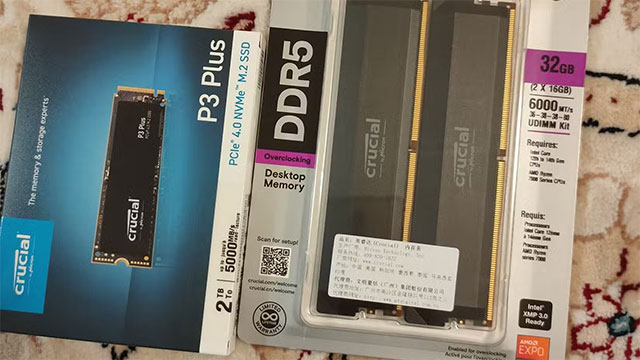
The scary thing isn't that RAM is expensive today, but the possibility that it will remain expensive for the next few months, even a year or more. DRAM contract prices are still on an upward trend. TrendForce forecasts that traditional DRAM prices could rise by another 55–60% in Q1 2026. Reuters also suggests that supply is unlikely to improve before 2027 or 2028. These warnings are repeatedly echoed by many industry sources, indicating that we haven't yet reached the bottom of the crisis.
And while it may sound unpleasant, this is just the tip of the iceberg.
What happens after RAM?
The PC market is no stranger to supply crises. The most recent was the GPU shortage in 2021. But this time it could be even worse, for a very simple reason: you can't build a PC without RAM.
Theoretically, you can still build a PC without a dedicated graphics card. It won't be a gaming machine, but it will be sufficient for basic tasks. RAM is different. It's a mandatory component, even for the cheapest PC. Storage is the same, and NAND flash is following a very similar path to DRAM, with prices rising rapidly.
With HDDs becoming almost obsolete beyond their pure storage purpose, the high cost of SSDs will only exacerbate the problem. A RAM shortage will lead to a decrease in the number of new PCs produced. This, in turn, will result in lower consumption of motherboards, CPUs, power supplies, and a host of other components. Even components that seem unaffected could encounter problems simply because there isn't enough RAM for the consumer market.
Will CPUs become scarce?
CPUs are not directly dependent on DRAM supply like GPUs. In theory, manufacturers could still produce CPUs even if RAM is scarce. But the more important question is: do they have the incentive to do so?
This is the real risk, and it's often overlooked. When RAM is scarce, PC assemblers can't produce enough PCs, and individual users struggle to build new configurations. As a result, the entire market could slow down.
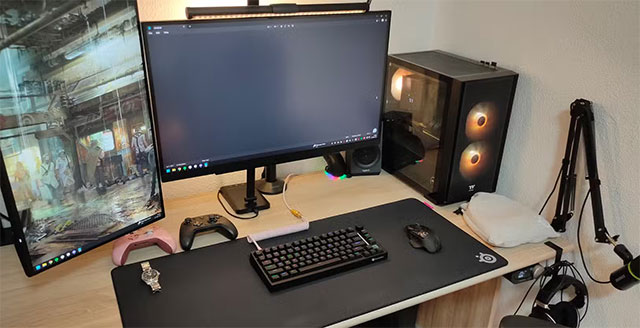
With component prices soaring, many people will choose to postpone major upgrades, investing only in smaller, less expensive changes. This could lead to two consequences. First, CPU production could be cut due to weakening demand. Intel and AMD will certainly carefully consider this, and if necessary, they may shift more resources to the data center sector, while tightening the supply of CPUs for mainstream users. Over time, this could completely create a 'CPU crisis' of some degree.
CPUs probably won't disappear completely from store shelves, but a more likely scenario is that prices will rise while supply becomes less abundant than it is now. The era of cheap and readily available CPUs may be coming to an end.
Are GPUs about to sell out?
While CPU shortages are primarily driven by supply and demand, GPUs are particularly vulnerable to memory crises because they are closely tied to VRAM pricing. As manufacturers continue to prioritize HBM and servers, VRAM costs will rise and eventually pass into consumers' pockets. In fact, this has already begun, and high-end GPU prices are even worse than when the RTX 50-series first launched.
Just searching for the RTX 5090 on Amazon right now is enough to shock anyone. The suggested retail price of $1,999, already high, now seems "reasonable" compared to reality. The cheapest model I found was around $3,720, while some overclocked versions were pushed up to $5,495.
The RTX 5080 isn't doing much better, with its $999 MSRP far behind. The lowest current price is around $1,300, and Amazon's tracking data shows a significant increase from October 2025 to the present. Even mid-range models like the AMD RX 9070 XT are increasingly moving away from their list price, now costing no less than $700.
Will GPUs completely sell out? Most likely not. But their prices will almost certainly continue to climb.
It's not yet time for panic buying, but it's not safe either
Analyzing the current market situation shows that prices are very high and show no signs of cooling down. Does that mean you should buy now before things get worse? A few weeks ago, I might have answered 'yes'. But now, I'm not so sure anymore.
We are currently in a phase where many components have become unreasonably overpriced. Regardless of the circumstances, spending $400 on 32GB of RAM or $5,000 on a graphics card is not a worthwhile investment.
Ultimately, it all depends on your circumstances. If waiting another year or two (or even longer) to upgrade your PC is unacceptable, buying now might be a less bad option than buying a few months from now. If you absolutely must upgrade, prioritize components that haven't been severely affected, such as the CPU or motherboard. Other components are still available, but they will certainly hurt your wallet.
Final Thoughts
Understanding ram prices hit $400, gpus soared to $3,700 makes it easier to evaluate the information and apply the most relevant recommendations. Focus on the key points above and verify details that may change over time.
FAQ
What is ram prices hit $400, gpus soared to $3,700?
Explore ram prices hit $400, gpus soared to $3,700, including the key concepts, practical examples, important considerations, and useful guidance.
What key points does this article cover?
The article focuses on Look at the big picture, What happens after RAM?, Will CPUs become scarce?, with practical explanations and examples.
How can you use this information in practice?
Use the explanations to compare options, verify important details, and make a more informed decision. Apply the recommendations that best match your goals and situation.
Related Articles
 How to Turn a Midlife Crisis into a Fresh Start6 minutes read
 10 Middle-aged Crisis Warning Signs Everyone Needs to Know10 minutes read
 Governments Are Injecting Hundreds of Billions of Dollars8 minutes read
 US Stocks Recovered, Oil Prices Extended Their Decline: Complete Overview7 minutes read
 How to Become a Crisis Text Line Crisis Counselor8 minutes read
 RAM Is So Expensive That… Samsung Doesn't Dare Sell RAM to Samsung Itself5 minutes read
Reader Comments 0
Sign in with email or Google to join the discussion.