Table of Contents
Faucet heads, whether in the bathroom or kitchen, are prone to hard water deposits, calcium, limescale, and dirt buildup.
Faucets, whether in the bathroom or kitchen, are prone to hard water deposits, calcium, limescale, and dirt buildup. If not cleaned regularly, mold and mildew can grow. However, Cleaning your faucet is incredibly easy. Here are some detailed instructions.
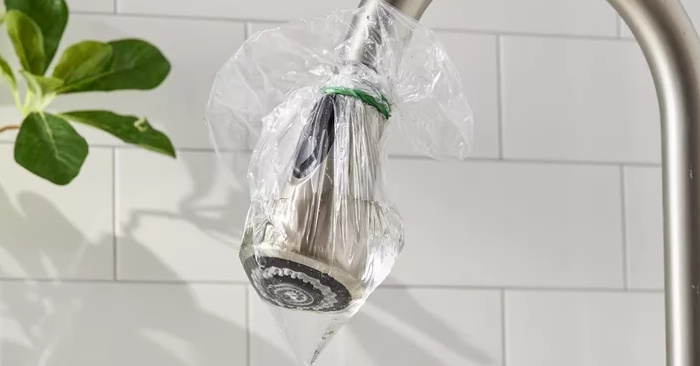
Materials needed to clean the faucet head
- Water
- Distilled white vinegar
- Bowl or zip bag
- Clips or rubber bands
- Soft-bristled brush (like an old toothbrush) or non-abrasive sponge
- Microfiber cloth
- Rubber jar lid liner (optional)
Instructions for cleaning faucet heads
Step 1: Remove dirt
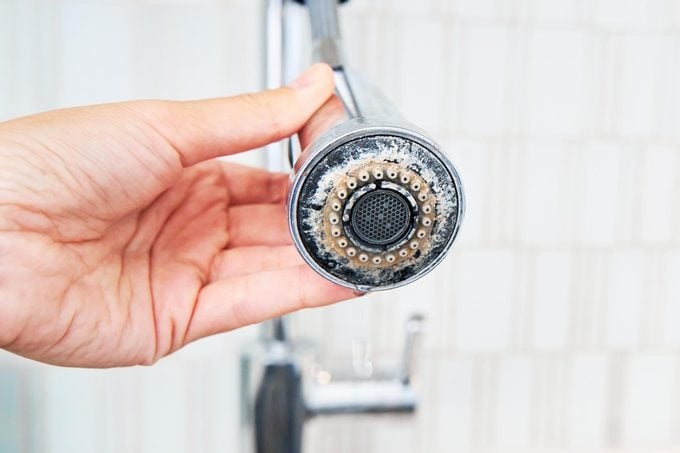
For spray nozzles (like those on a kitchen sink or shower), you should occasionally rub your thumb over the nozzle to remove any debris that may be blocking the water flow. Removing large debris will allow the cleaning solution to focus on more stubborn dirt.
Step 2: Remove the faucet head if possible
If your faucet has a removable head, removing it may make cleaning easier. (If your faucet head is not removable, skip to Step 3.)
Here's how to remove the faucet head:
- Pull the spray tube out of the faucet.
- Clamp the nozzle to prevent it from retracting.
-
Turn open the faucet.
Step 3: Mix the cleaning solution
Mix a 1:1 solution of water (any temperature) and distilled white vinegar. If you have removed the faucet head, place it in a cup or bowl and pour in enough solution to cover the underside of the faucet head where the water comes out.
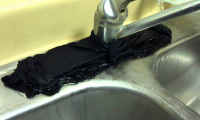
If your faucet is fixed, put about 2 tablespoons of the solution in a zip-top bag and secure it to the faucet end with a rubber band or clip. Again, try to coat the underside of the faucet end with the solution.
Step 4: Soak in solution
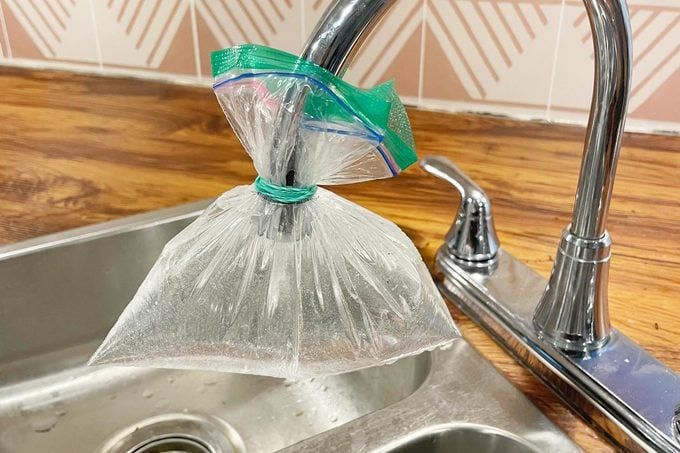
Let the solution soak for at least 30 minutes. If you're dealing with particularly stubborn stains? Let it soak overnight.
Step 5: Scrub the faucet head
Check the faucet head about every 30 minutes if possible, using a toothbrush or non-abrasive sponge to scrub the surface and remove debris.
For shower heads, the nooks and crannies can get clogged, so you should gently use a toothpick combined with a brush to open the holes.
Step 6: Repeat if necessary
If too much grime builds up, continue soaking the faucet head in the vinegar solution.
Step 7: Rinse and reassemble

Some people choose to use baking soda to enhance the scrubbing effect, but a vinegar soak can be just as effective. Simply remove the nozzle from the sink or bag and rinse it with water. Wipe it clean with a microfiber cloth. If you removed the nozzle, reinstall it.
How to clean a clogged faucet
Materials to prepare
- Dishcloth
- A rubber faucet cap opener, wrench, electrical tape pliers, or the aerator that came with the faucet if it has a hidden aerator.
- Bowl or cup
- Water
- Distilled white vinegar
- Soft bristle brush (like an old toothbrush)
Steps to follow
Step 1: Remove the aerator
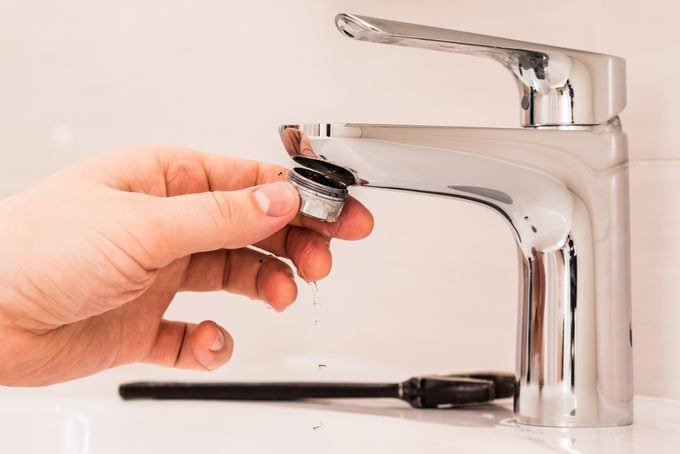
First, locate the faucet aerator. Next, line the sink with a dish towel to cover the drain hole and avoid any accidental debris. Then, remove the aerator by hand or with a rubber clamp or wrench,' says Schopp. 'Usually, it will come loose to the left, but you'll be working from the top of the faucet, so you'll actually turn it to the right to loosen it.'
If the aerator is hidden, the faucet will come with a toothed tool to remove it.
No matter what type of aerator you are dealing with, be careful when removing this small part of the faucet so as not to alter its shape.
Step 2: Clean the aerator
In a cup or bowl, make your own homemade cleaner. Mix one part distilled white vinegar with one part water. Mix enough solution to cover the parts. Let it soak for 30 minutes, scrubbing periodically with a toothbrush to remove residue.
Step 3: Repeat if necessary
Repeat the process if you see too much dirt buildup.
Step 4: Rinse and reassemble
Rinse the aerator with clean water and reinstall it on the faucet head.
FAQ
How do you clean faucet heads: step-by-step guide?
In practical terms, faucet heads, whether in the bathroom or kitchen, are prone to hard water deposits, calcium, limescale, and dirt buildup.
What should you check before getting started?
Review the requirements, compatible device or software version, and any warnings described in the guide before making changes.
What should you do if the steps do not work?
Repeat the steps in order, confirm that your app or system is up to date, and review the troubleshooting details provided above.
Related Articles
 What Is Bitcoin Faucet? What Is Bitcoin Faucet?6 minutes read
 Which Type of Sink and Faucet Is Good and Cheap?6 minutes read
 This Way You Can Remove All Deposits from the Sink and Faucet3 minutes read
 How to Fix a Leaky Two-handle Faucet7 minutes read
 How Often Should I Clean My Shower: Explained6 minutes read
 7 Simple Steps to Make Your Laptop as Clean as New5 minutes read
Reader Comments 0
Sign in with email or Google to join the discussion.