Table of Contents
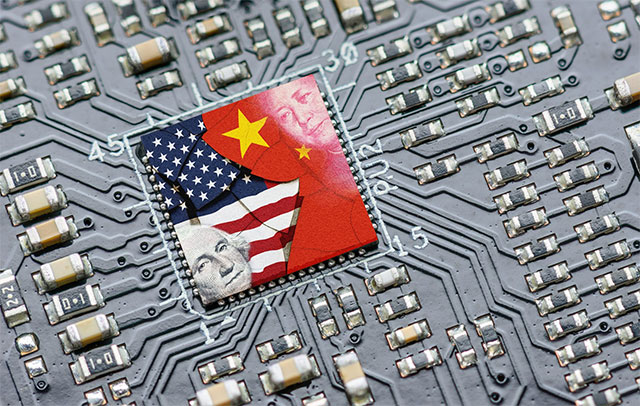
This updated guide answers the question 'How Does Chinese Big Tech 'evade' the US Semiconductor Embargo' with clear explanations and practical context. Chinese tech companies are finding ways to adapt to the US's export restrictions on semiconductors while maintaining a strong grip on the West in the AI race.
According to CNBC, Tencent, Baidu and other Chinese tech giants have come up with many ways to "get around" the US chip ban, including:
- Stockpile large quantities of chips made in the US.
- Develop more efficient AI models.
- Use domestic chips from domestic semiconductor companies.
Tencent, the parent company of WeChat, said it had 'extremely strong chip stocks' from previous purchases, echoing earlier reports that Chinese companies had been stockpiling US chips since before Trump took office.
The company also said it can train AI with fewer GPUs. 'This allows us to look at our existing high-end chip stack and be confident that it will be enough to train AI for generations to come,' said Martin Lau, president of Tencent.
Baidu: Focus on Software and the " Full - stack " Model
Baidu – the Chinese search engine giant – has chosen to optimize its software and develop high-performance AI models. The company promotes the idea of a Full-Stack, which includes:
- Cloud computing infrastructure.
- AI model.
- Practical applications based on those models.
Domestic Chip Manufacturing: Huawei Leads, SMIC Follows
China is accelerating its domestic chip production to move towards full self-sufficiency. Huawei is a pioneer in developing domestic AI chips, with support from companies such as SMIC (China's largest chipmaker).
A prime example of China's success is DeepSeek – a globally popular AI chatbot launched amid US chip export restrictions. DeepSeek is expected to be able to compete with Western rivals.
The Tighter, the More Adaptable
The US began tightening its export of chips and sensitive technology to China during Donald Trump's first term (2016-2020). At that time, Huawei – a Chinese technology icon – was sanctioned by the US for suspected government ties. The result: Huawei lost access to Western chips and was banned from using the Android ecosystem.
The situation has not improved under Biden, and has become even more severe under Trump's re-election. for instance, Nvidia was banned from selling its H20 series of chips (designed specifically for China) and forced to develop new chips for that market.
Lessons from Huawei: Self - reliance in the Midst of a " Siege "
Despite the difficulties, Chinese companies like Huawei have demonstrated remarkable adaptability:
- Self-manufacturing of replacement chips.
- Developing HarmonyOS operating system to "escape Android".
- Leading the 5G and AI race.
Despite its progress, China remains dependent on US technology in some key areas. But companies like Huawei have proven their ability to survive sanctions, from chip manufacturing to its Android alternative, HarmonyOS.
The chip and AI race between the US and China has no end in sight, but it is clear: the more it is tightened, the more determined China is to be self-sufficient – even if it has to pay a high price.
FAQ
What is the main takeaway about How Does Chinese Big Tech 'evade' the US Semiconductor Embargo?
The key is to understand the core idea, compare the available options, and apply the practical guidance that matches your situation.
What should beginners know about How Does Chinese Big Tech 'evade' the US Semiconductor Embargo?
Start with the essential steps and terminology. Avoid changing advanced settings until you understand how they affect performance, privacy, cost, or compatibility.
How can I use this information in practice?
Follow the relevant section in order, test one change at a time, and confirm the result before moving to the next step or recommendation.
Related Articles
 Roblox: Tips for Moving Faster in Evade9 minutes read
 Latest Evade Roblox Codes and How to Redeem Codes4 minutes read
 UK Pours £1 Billion in Semiconductor Industry Funding3 minutes read
 Chinese Translation Applications on Quality Phones8 minutes read
 Huawei Surpassed Qualcomm, Becoming China's Number One Chip4 minutes read
 China 'Pumped' Nearly 2 Billion USD of Investment into the Country's Largest5 minutes read
Reader Comments 0
Sign in with email or Google to join the discussion.